Vancouver to Banff Summer Road Trip: Lakes, Mountains & Photography Tips
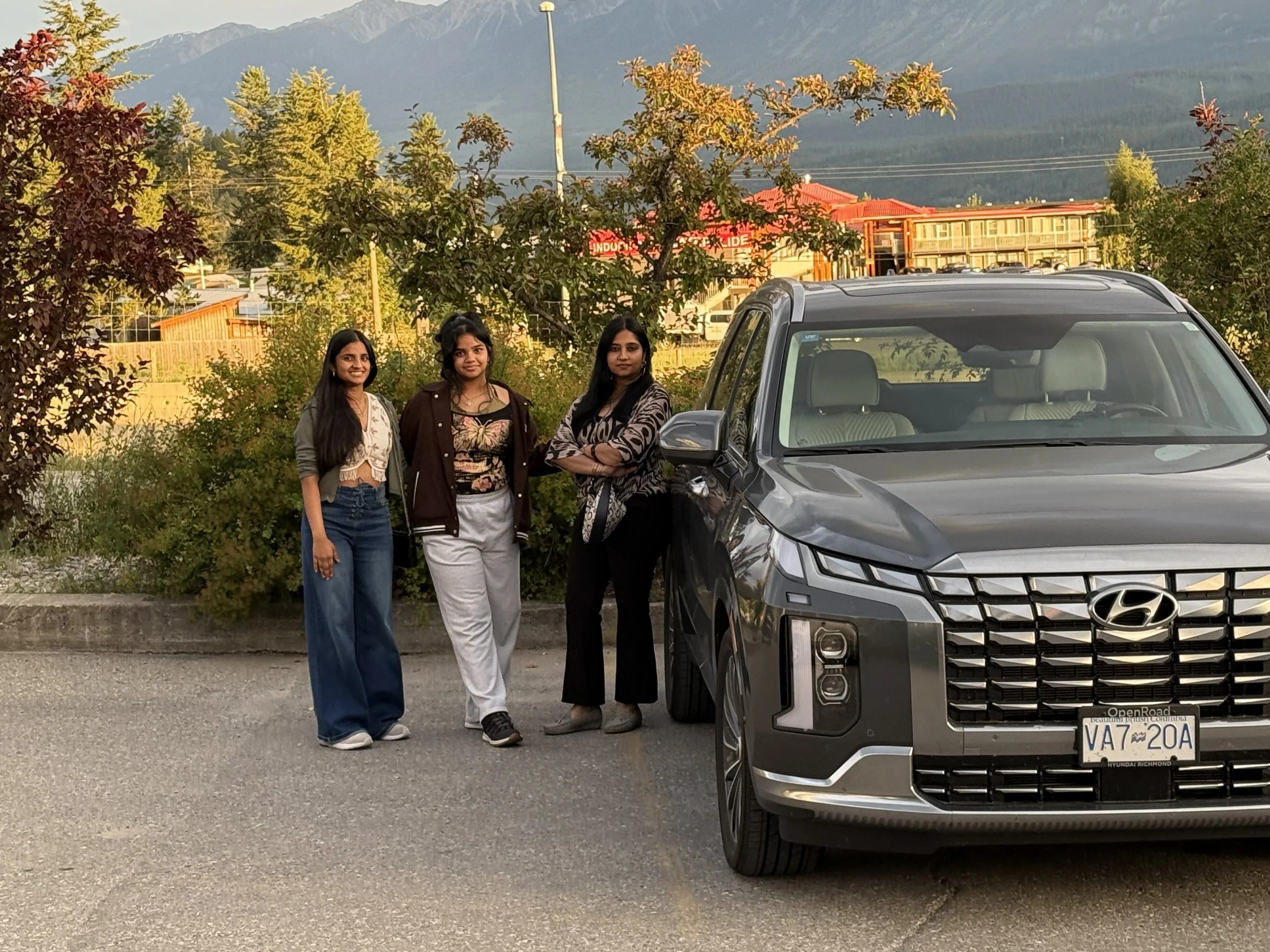
With our Reliable Ride for the trip the Hyundai Palisade
Some road trips are just drives. This one was different. When I packed the family into the car on the morning of July 4th — my wife, our two daughters, my Fujifilm GFX 100 II, and the DJI Osmo Pocket 3 for video — I knew we were heading into one of the most spectacular road trip corridors on the planet. The drive from Vancouver to Banff via the Trans-Canada Highway is not just a drive. It is a masterclass in what this country is made of.
This is the story of eight days, four provinces of wonder (all within British Columbia and Alberta), turquoise lakes that don't look real, a 4:45am shuttle that changed everything, and one very well-deserved DoorDash dinner at the end of it all. Whether you're a family planner, a travel enthusiast, or a photographer looking for your next great landscape, this guide is for you.
The Route at a Glance
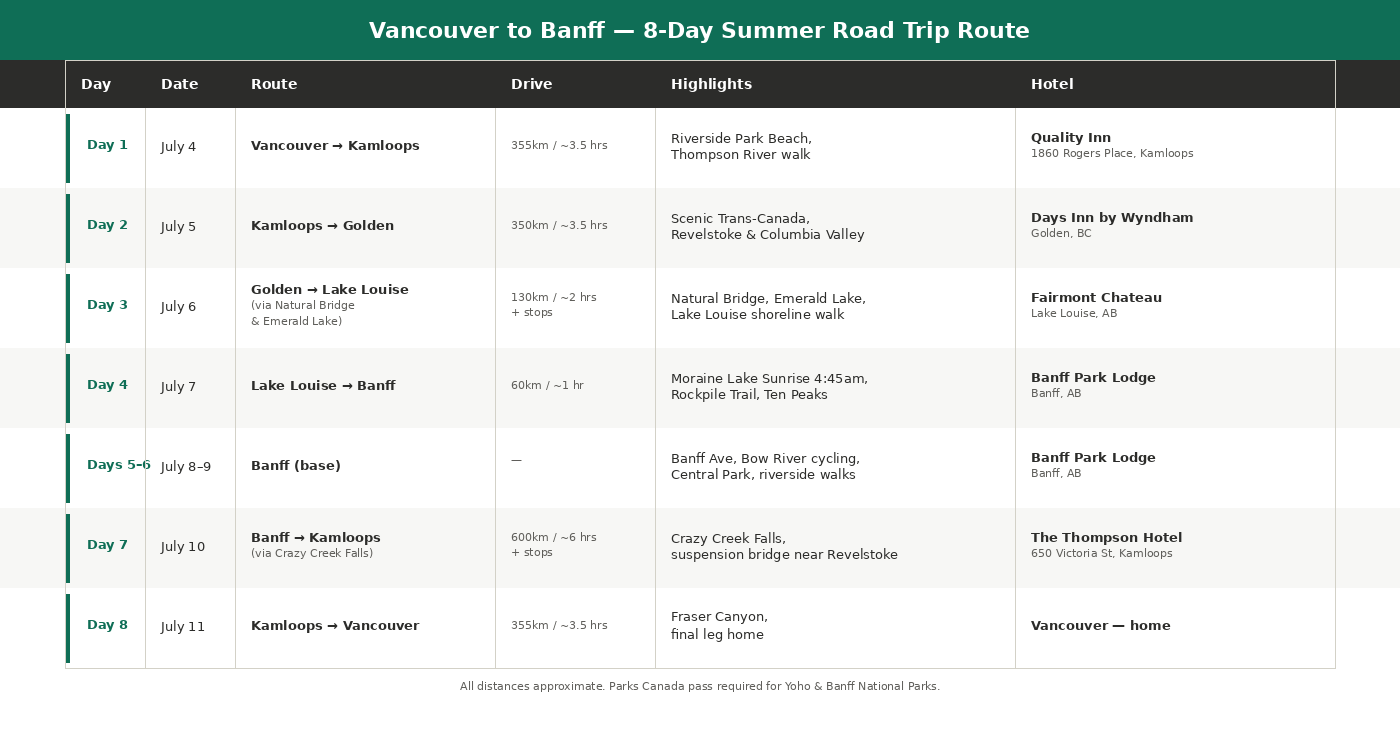
Vancouver → Kamloops → Golden → Natural Bridge & Emerald Lake → Lake Louise → Banff → Kamloops → Vancouver
Day 1 — Vancouver to Kamloops
Drive: ~355km, approximately 3.5 hours via Trans-Canada Highway 1
The first day is all about getting clear of the Lower Mainland and watching British Columbia open up around you. As you push east through the Fraser Valley, the flat farmland gives way to the dramatic canyon country of the Fraser River gorge. By the time you're climbing toward Cache Creek and descending into Kamloops, the landscape has already transformed completely.
Kamloops sits at the confluence of the North and South Thompson Rivers, cradled by the arid brown hills of the BC Interior. It's a functional stopover city — but don't dismiss it entirely.
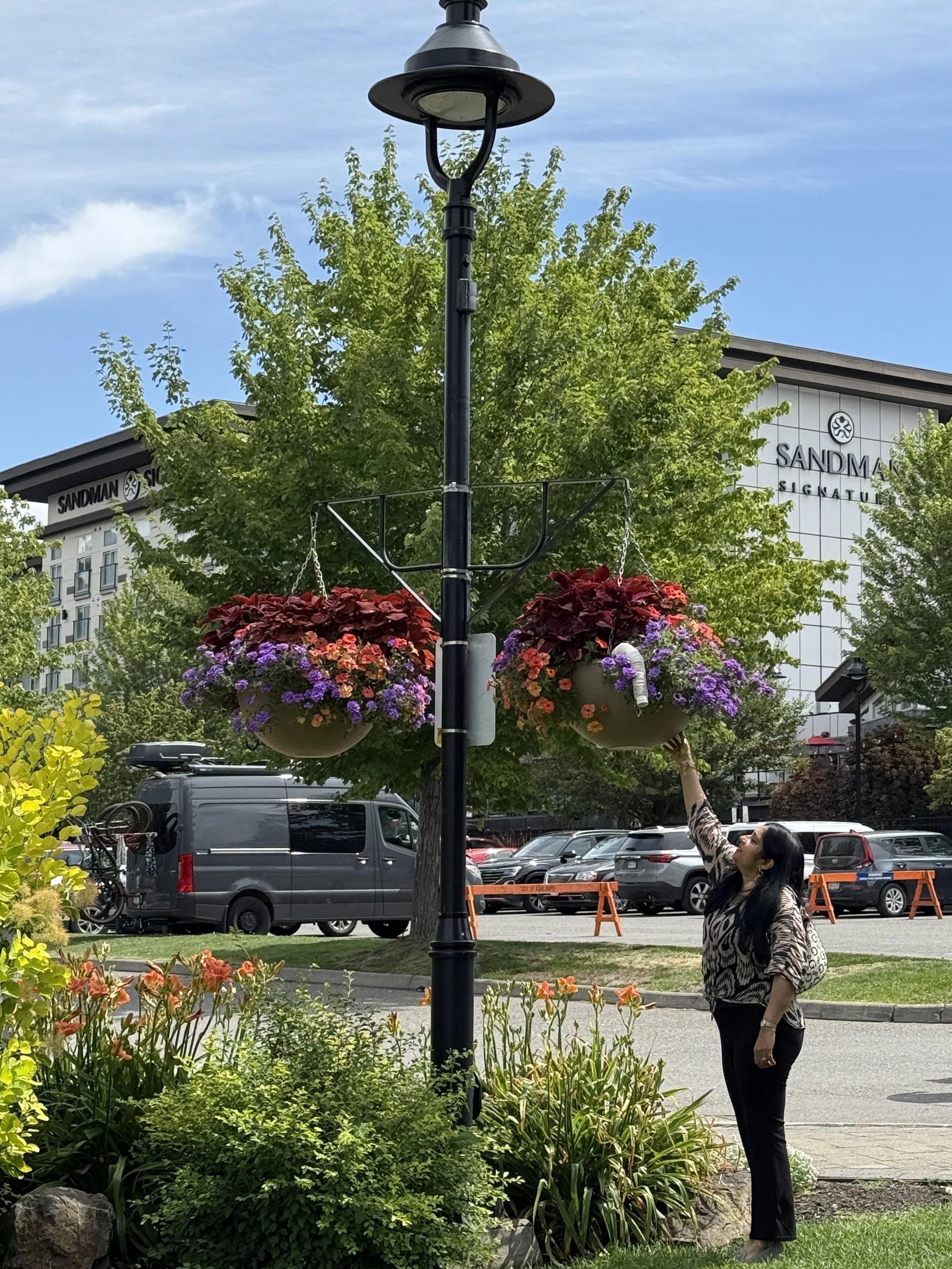
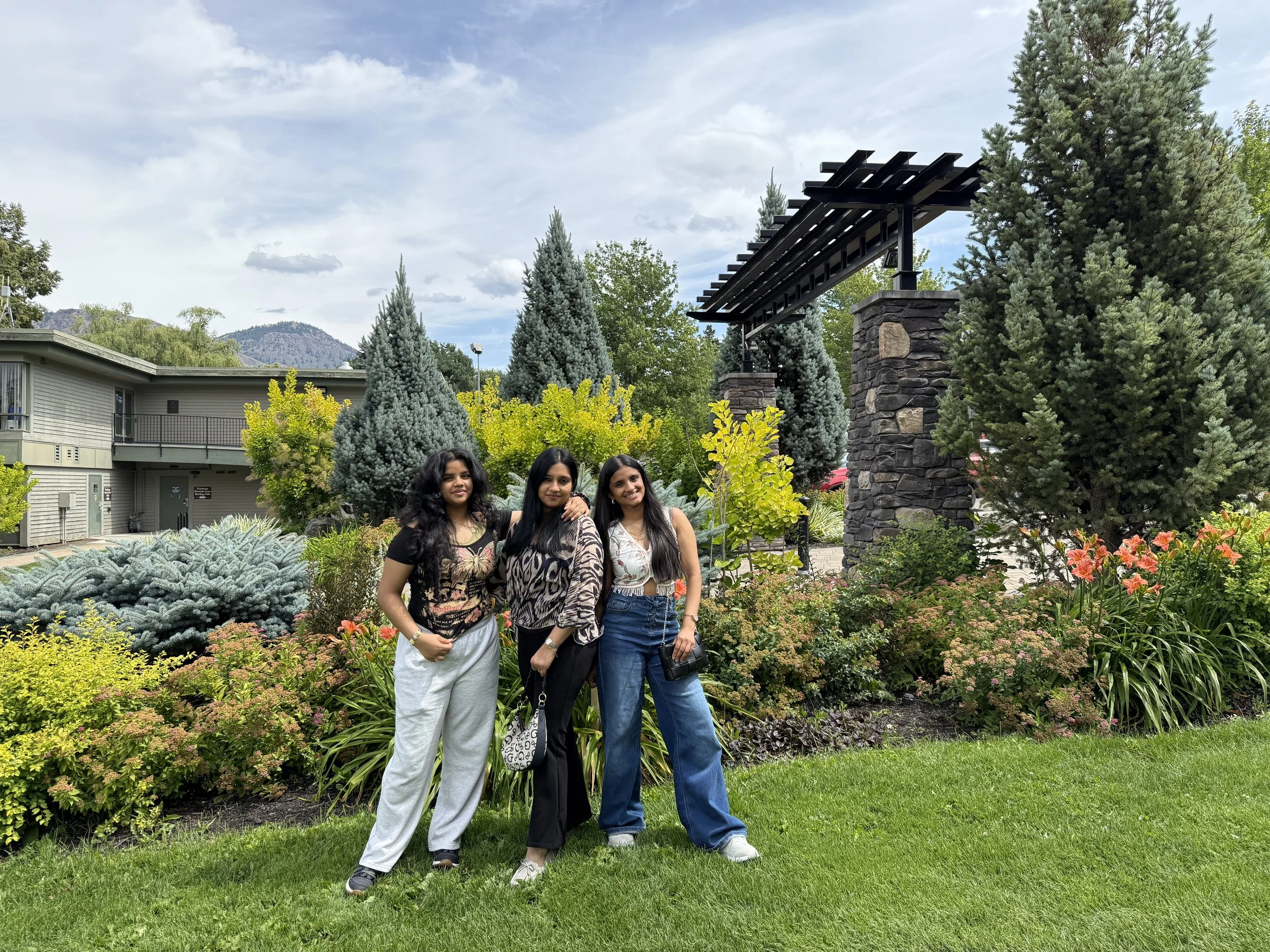
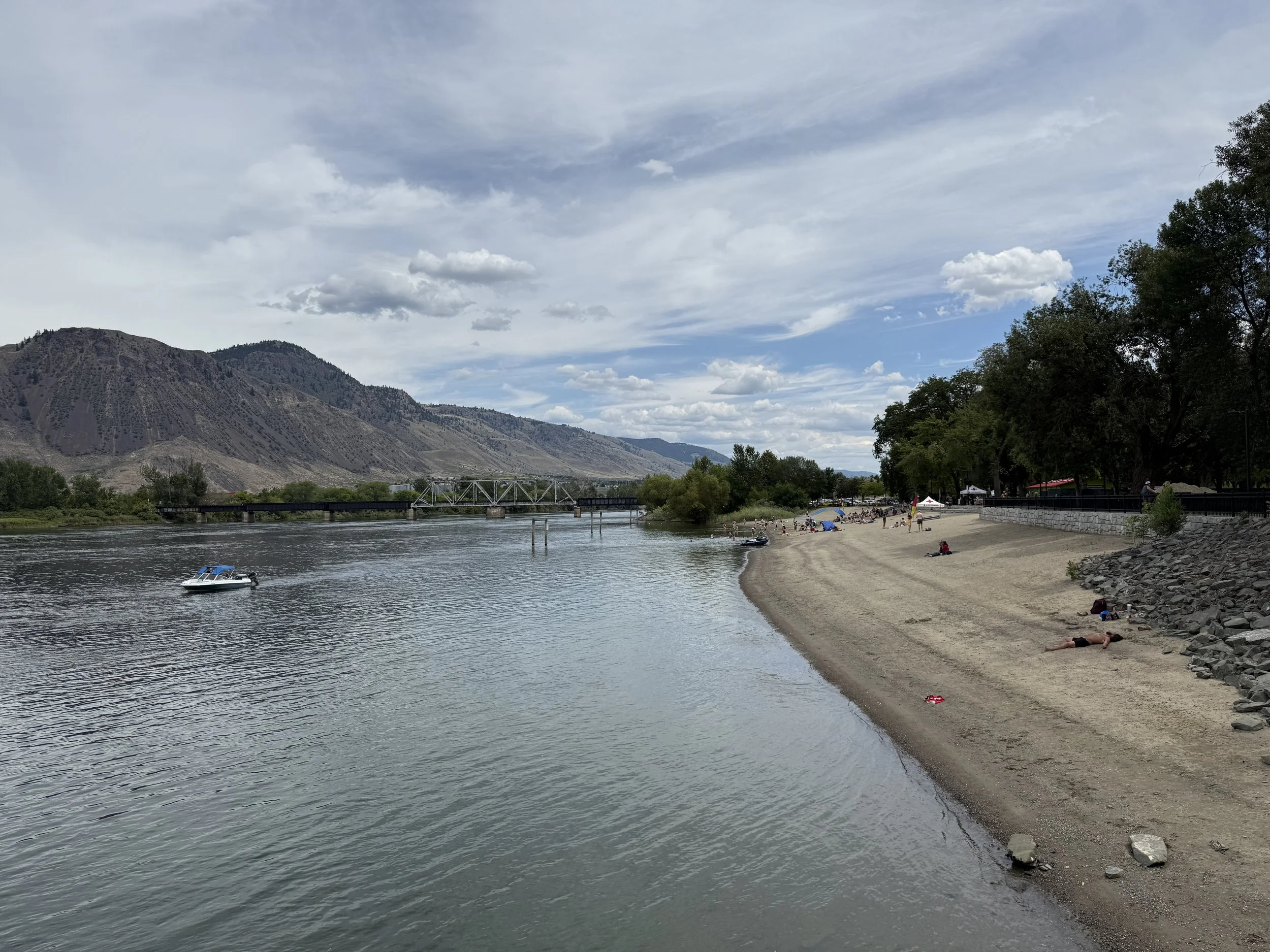
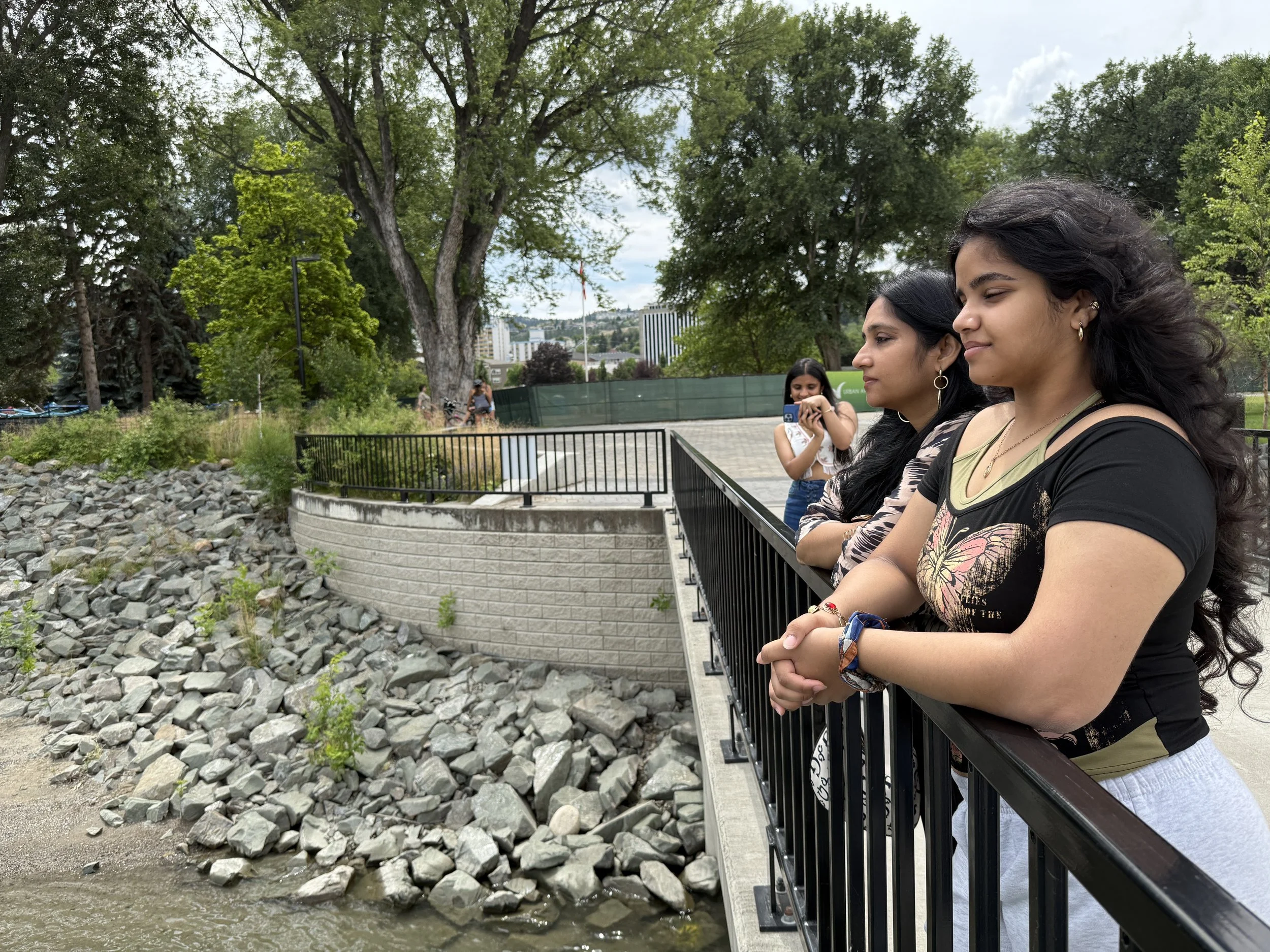
Riverside Park Beach is just a 1–2 minute walk (roughly 200 metres) from the main strip along Lorne Street. It offers a large sandy shoreline along the Thompson River, a splash pad, and shady picnic areas. After a day in the car, it's the perfect place to stretch your legs and let the kids unwind. In peak summer the river beach has a genuine holiday atmosphere — boats on the water, families picnicking, locals sunbathing on the sandy shore.
Where we stayed: Quality Inn, 1860 Rogers Place, Kamloops — a solid, comfortable highway stopover. Nothing fancy, everything you need.
📷 Photography note: The Thompson River at Riverside Park offers a nice wide river shot with the railway bridge and the arid BC interior hills. It's a great visual contrast to the mountain scenery you'll encounter over the following days.
Day 2 — Kamloops to Golden
Drive: ~350km, approximately 3.5 hours via Trans-Canada Highway 1 through Revelstoke
This is where the drive starts to get seriously beautiful. Leaving Kamloops you climb through the Highland Valley and descend into the Columbia River system. By the time you hit Revelstoke the mountains are closing in on both sides and the scenery is breathtaking.
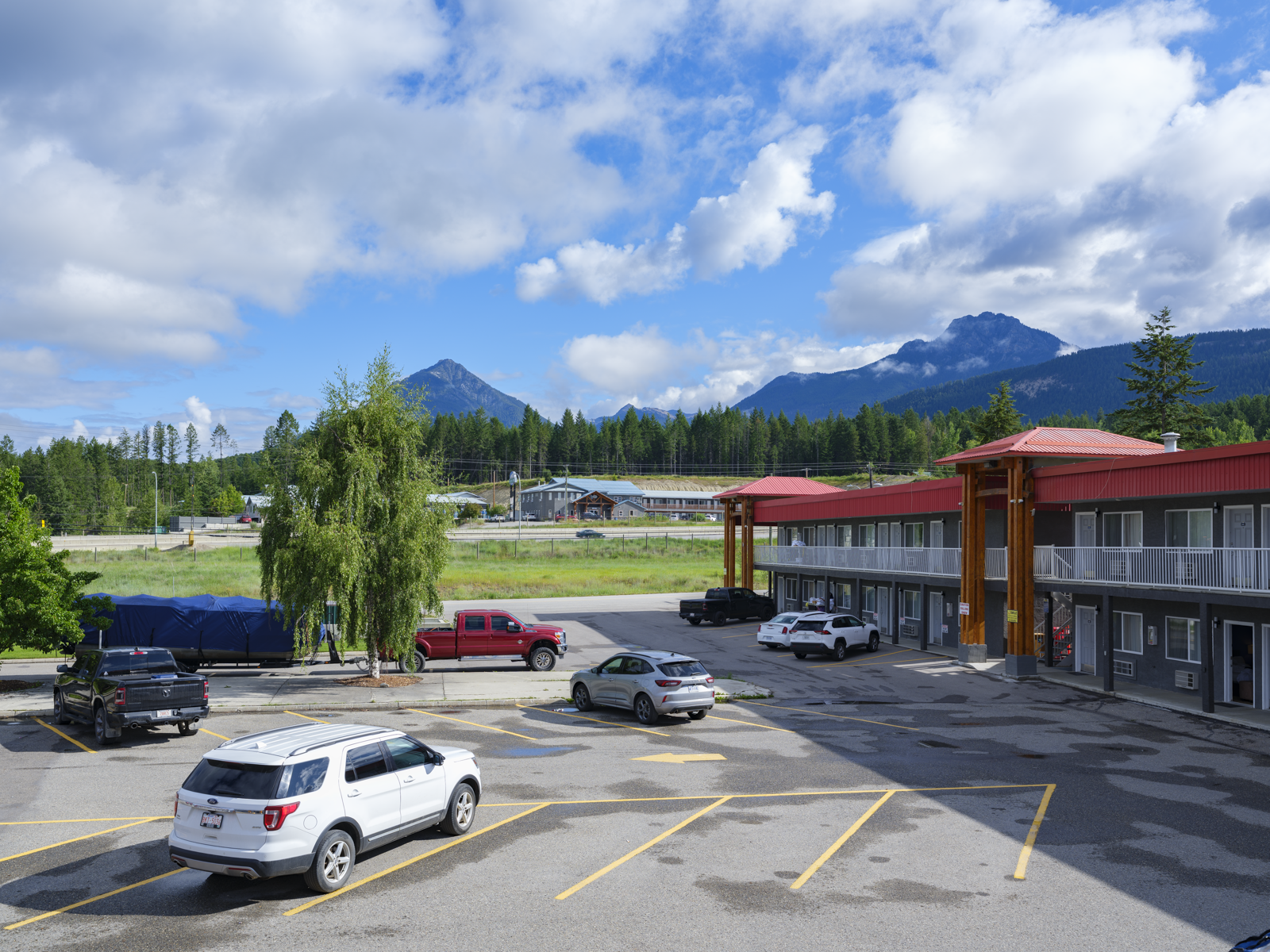
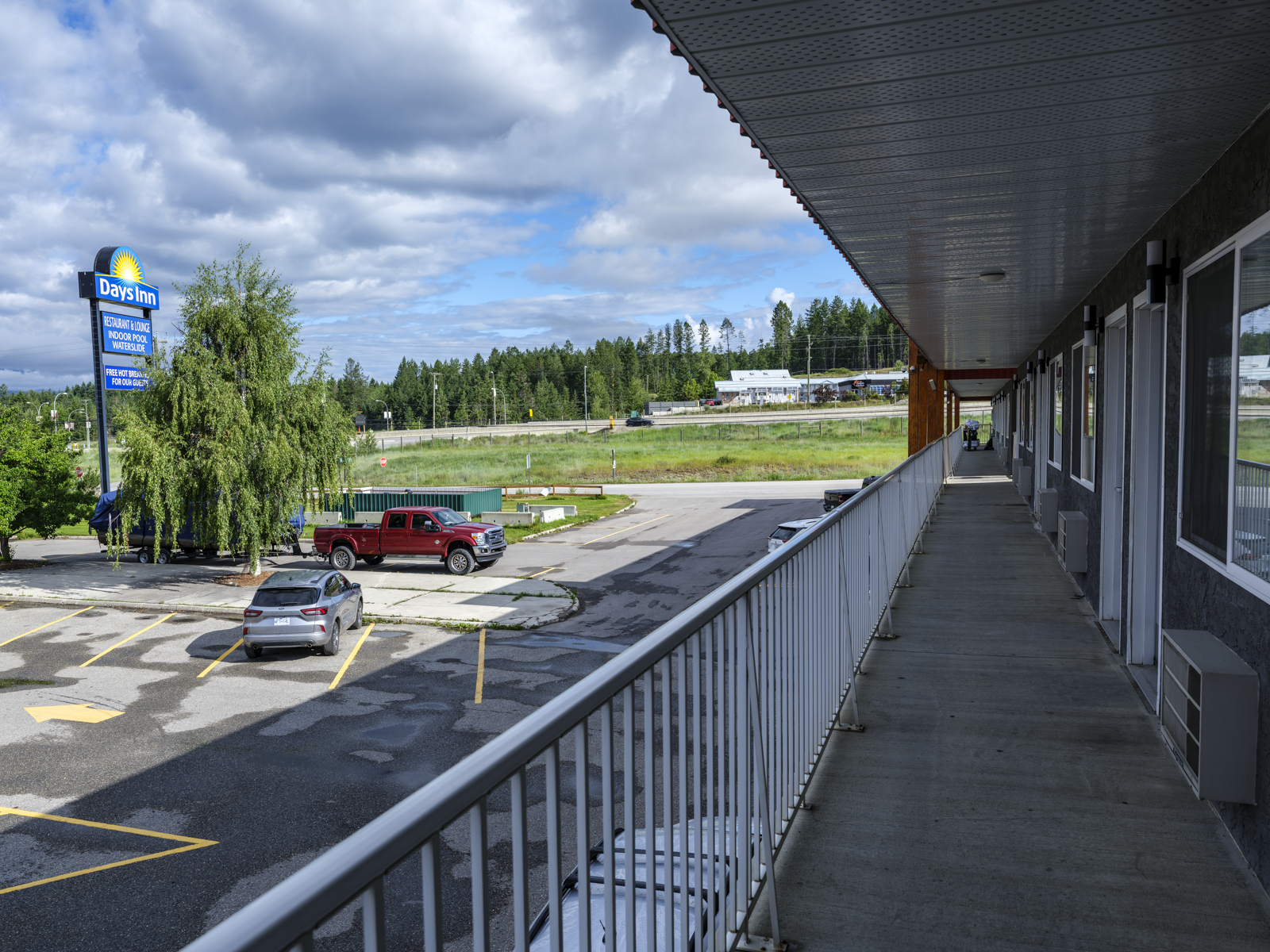
Golden sits in the Rocky Mountain Trench at the confluence of the Columbia and Kicking Horse Rivers, framed by the Purcell Mountains to the west and the Rockies to the east. Even the motel parking lot has a mountain backdrop that most hotels would pay a fortune for.
We stayed at the Days Inn by Wyndham Golden — a practical, comfortable two-storey motel right off the Trans-Canada. The mountain views from the upper floor are genuinely lovely, and the location is perfect for an early start the next morning.
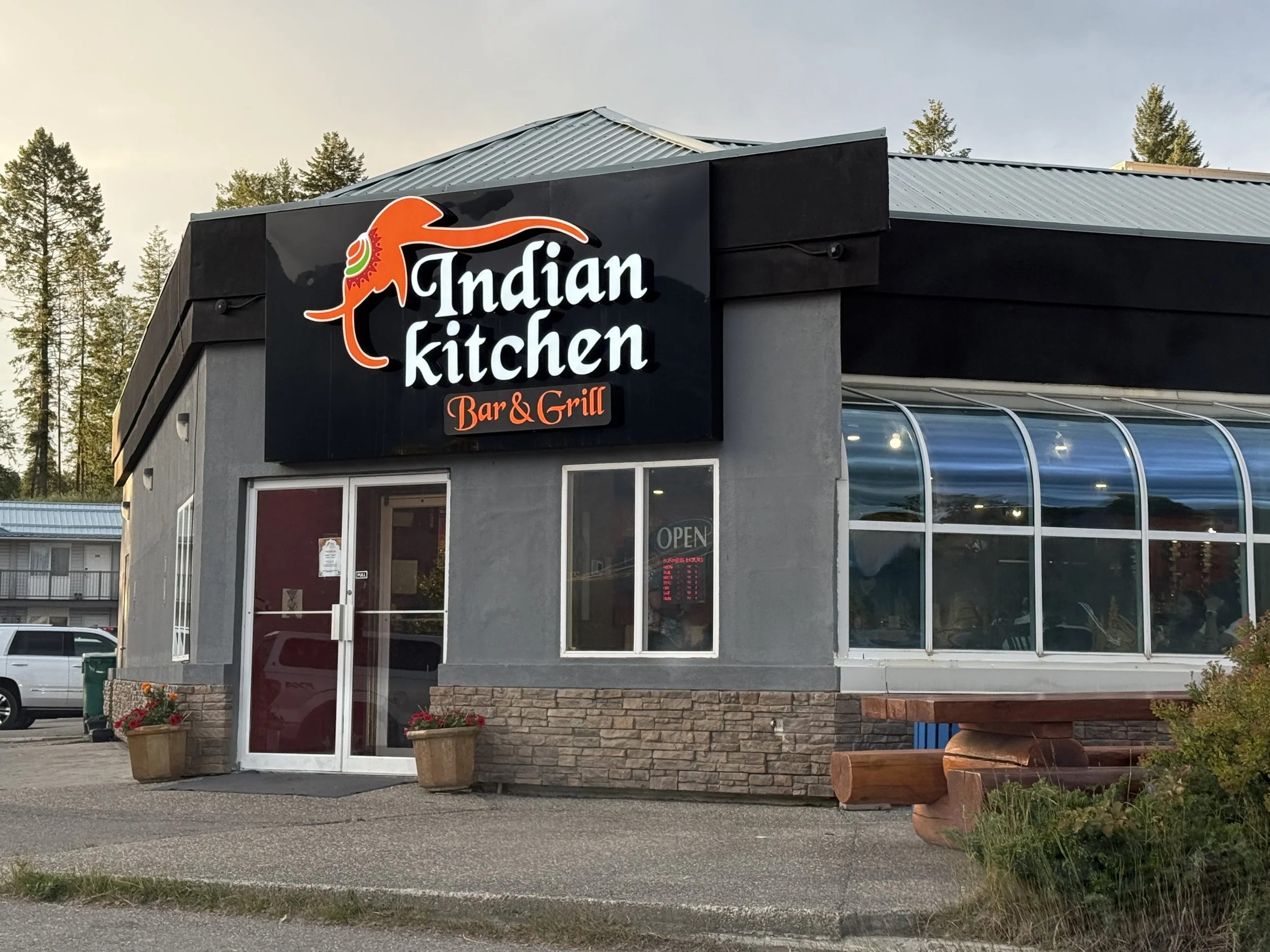
This is a popular dining option right off the highway opposite the Dayss Inn
Dinner tip: Directly across the highway from the Days Inn you'll find an excellent Indian restaurant — a welcome surprise in a small mountain town. After a day of driving through BC wilderness, a proper curry is exactly what you need.
The reason we chose Golden as our Night 2 stop was deliberate: it positioned us perfectly to make an early start the next morning and spend quality time at both Natural Bridge and Emerald Lake before pushing on to Lake Louise.
📷 Photography note: The Purcell Mountains visible from Golden have a lovely jagged profile that catches the last of the evening light beautifully. Worth a walk around town at golden hour.
Day 3 — Golden to Lake Louise via Natural Bridge & Emerald Lake
This is the day the Rockies announce themselves properly. Leave Golden early — we were on the road well before 8am — and head east on the Trans-Canada toward the BC/Alberta border.
Stop 1: Natural Bridge, Kicking Horse River
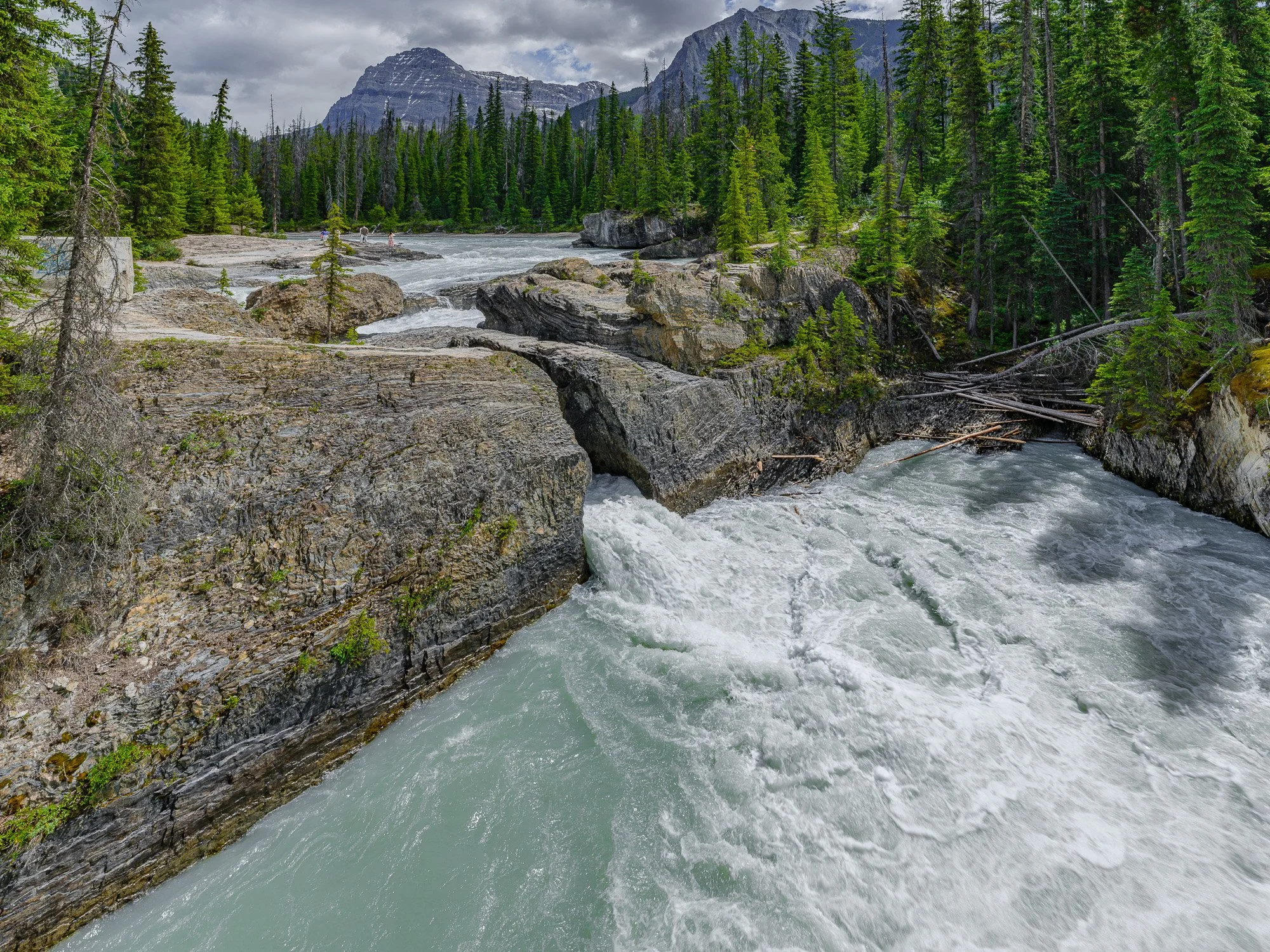
Kicking Horse Natural Bridge
About 12km east of Field (and roughly 55km from Golden), watch for the Natural Bridge parking lot on your left, signposted off the road toward Emerald Lake. This is a completely free, no-planning-required stop — pull off, walk two minutes, and prepare to have your breath taken away.
The Kicking Horse River has carved through solid limestone over thousands of years to create a natural rock arch — the "Natural Bridge" — through which the entire force of the river surges in a churning rush of glacier-blue water. In summer, with the snowmelt swelling the river, the power and sound of the water is extraordinary.
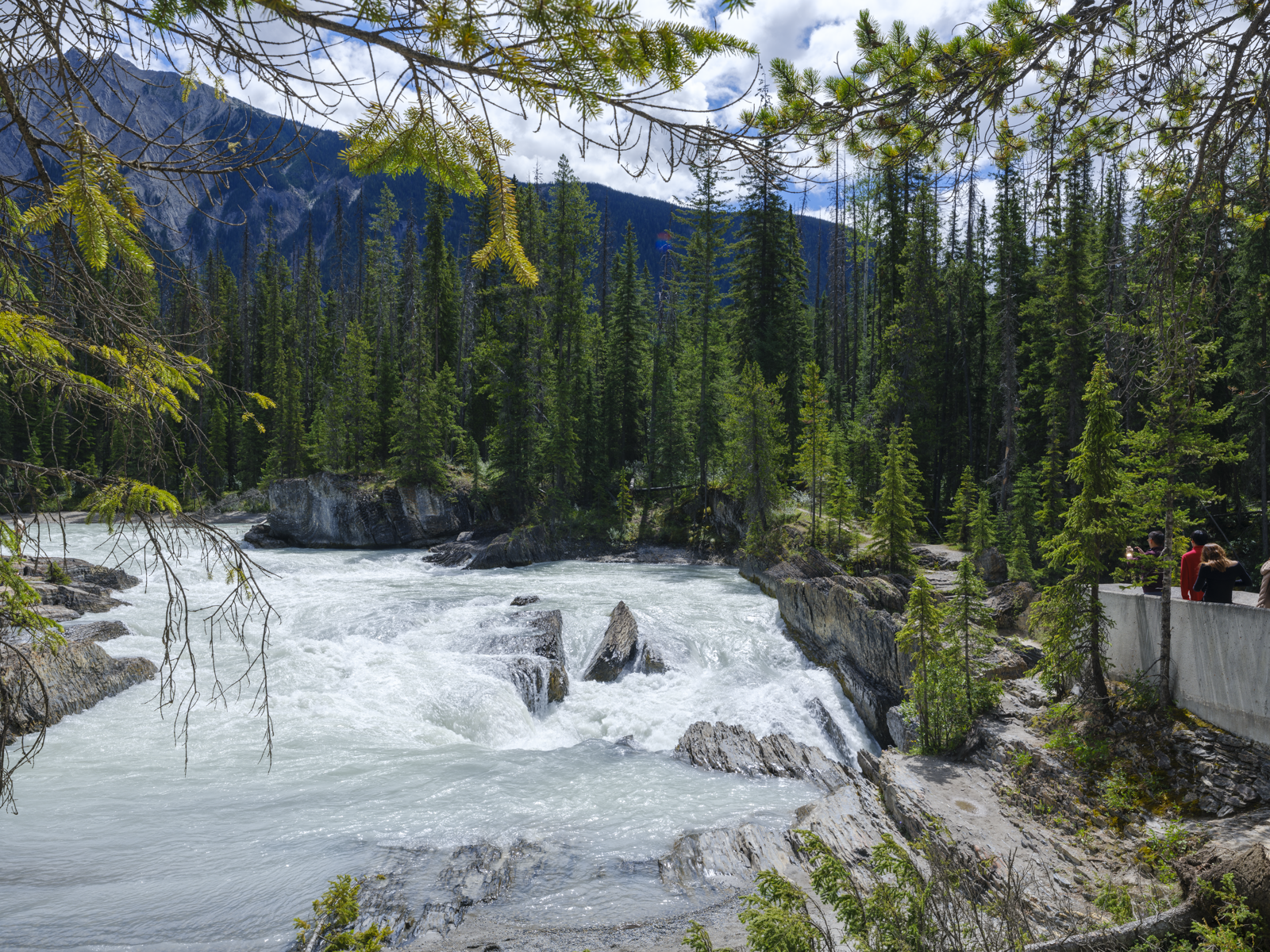
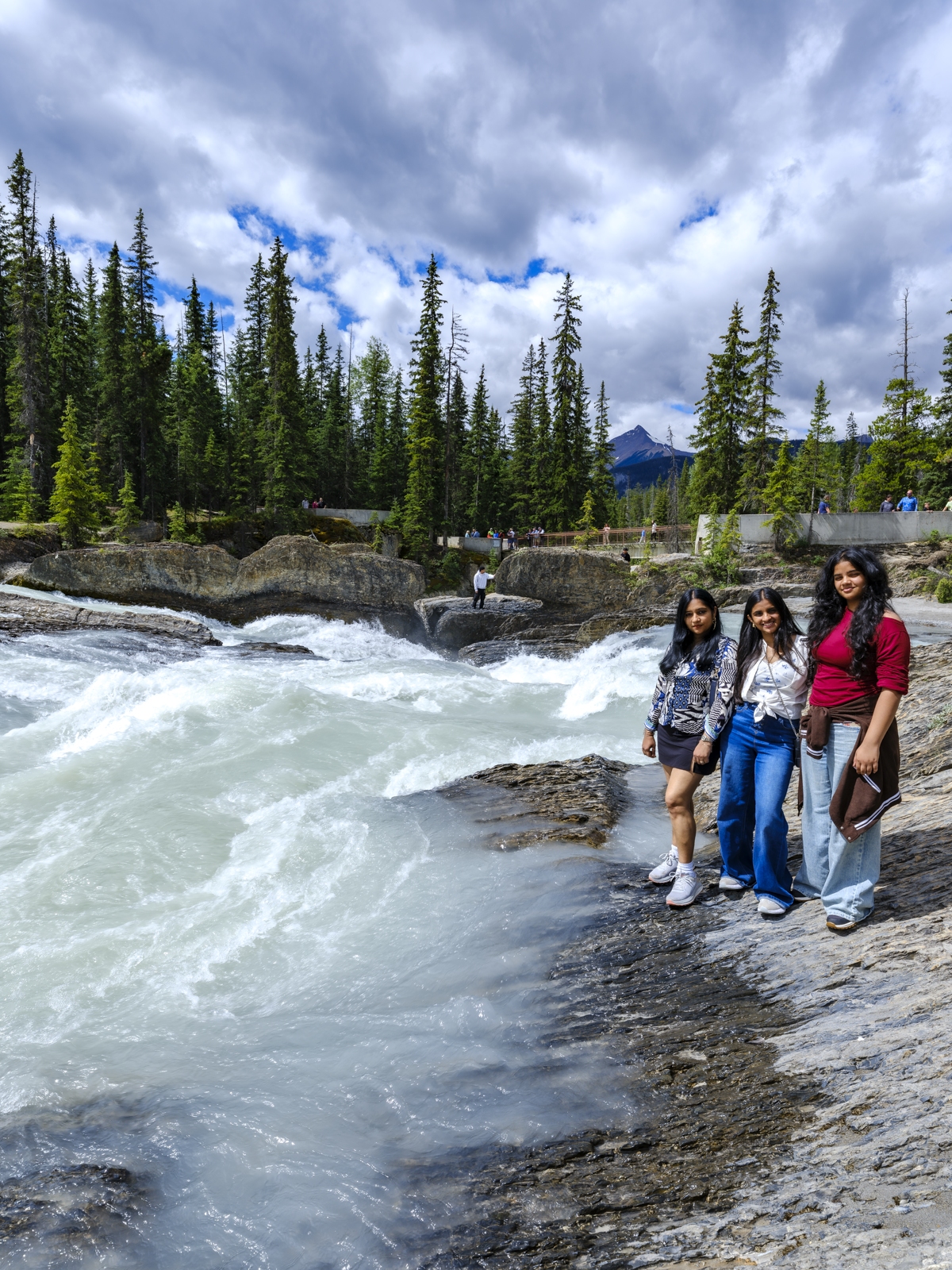
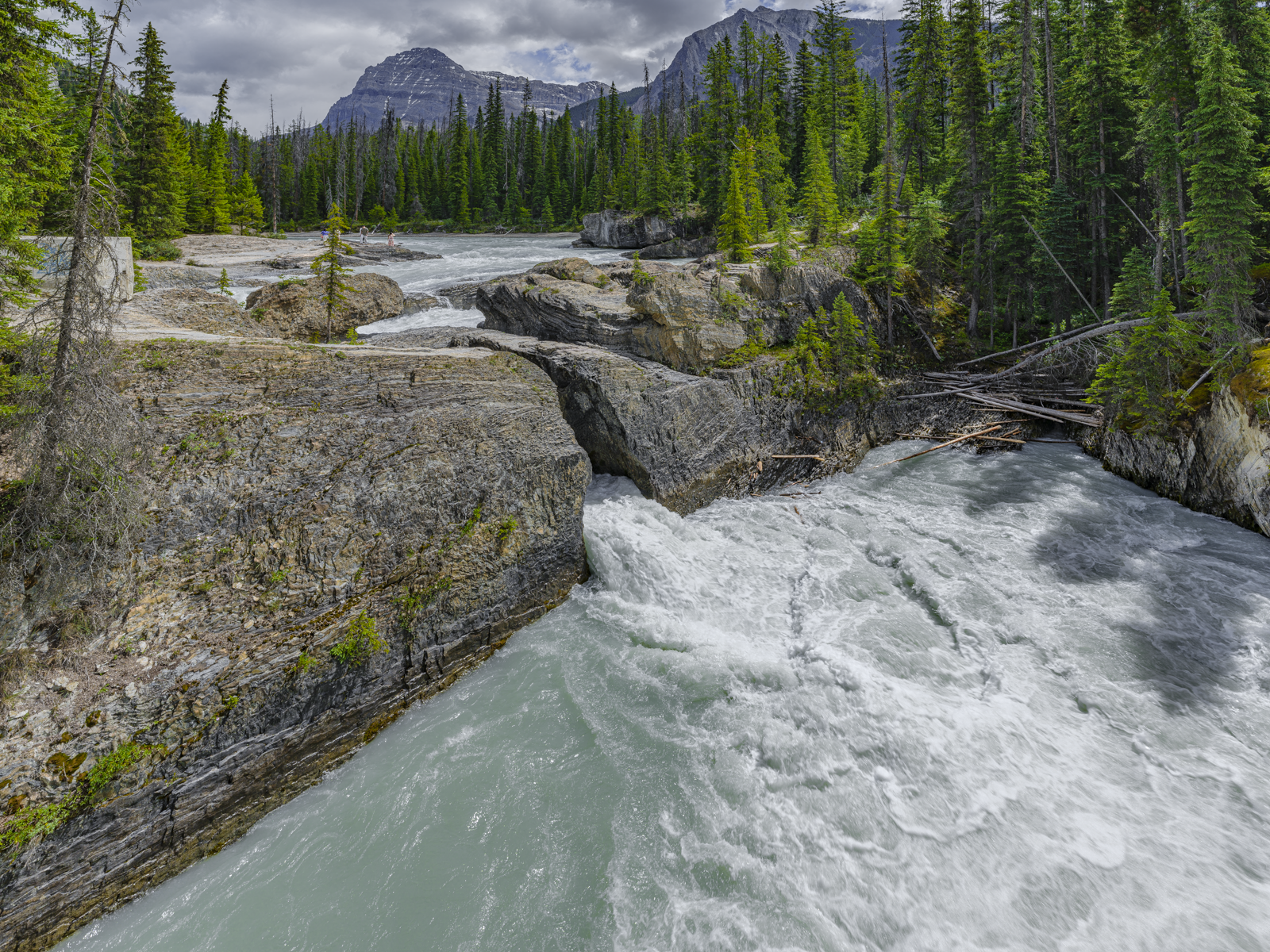
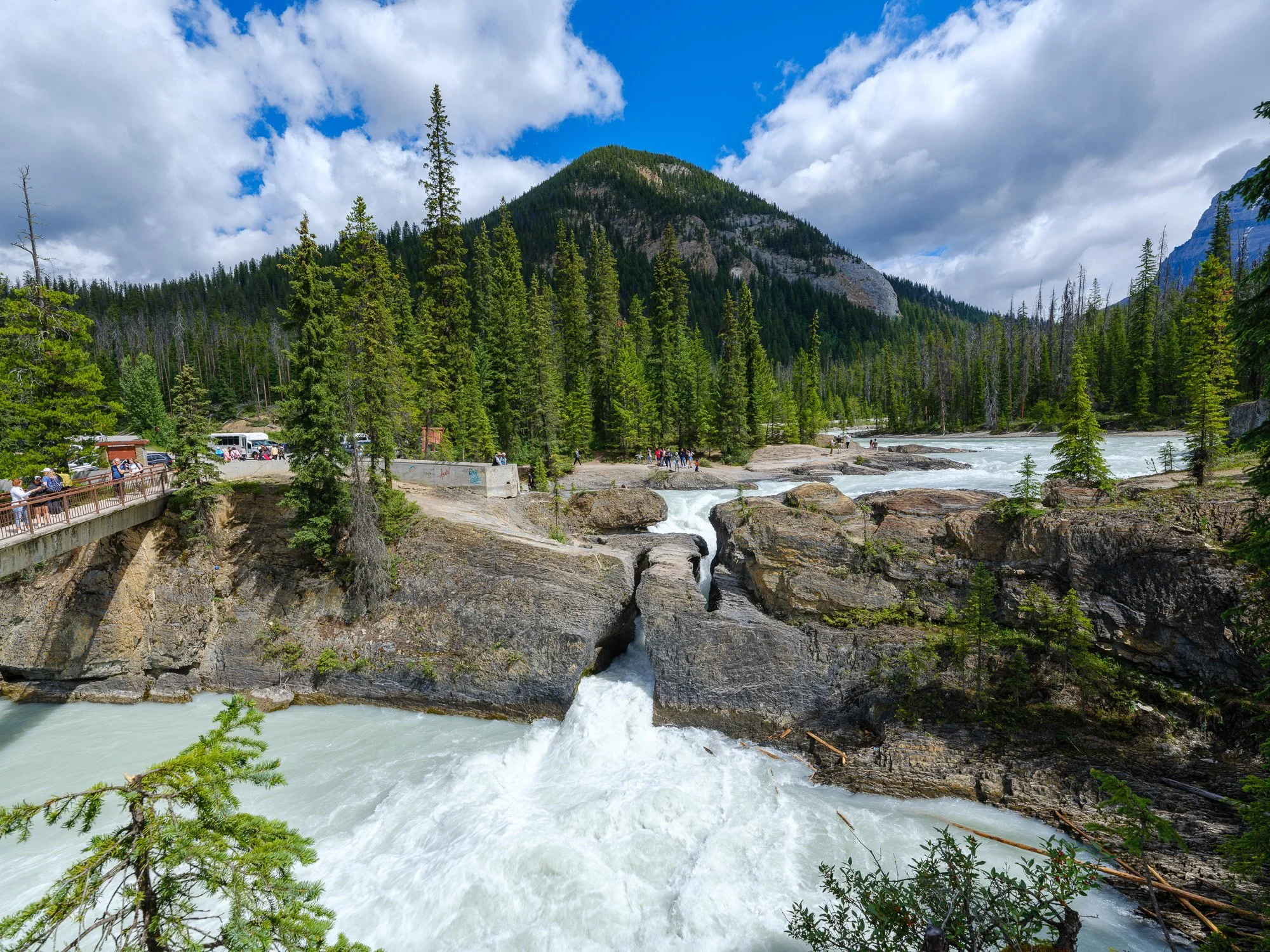
Practical tip: Go early. By mid-morning the tour buses arrive and the viewing platform gets crowded. We were there early enough to have relative peace and time to explore properly. The crowds you'll see in the wider shots are a warning — this place gets busy fast in peak season.
📷 Photography tips:
The viewing platform offers a great elevated wide shot showing the full context of the river and mountains
Climb down to river level for the powerful close-up shots of water forcing through the rock crack
Look upstream from the natural bridge for that stunning milky-blue river corridor framed by pines and snow-capped peaks — one of the best shots of the entire trip
The pine branches on the eastern bank make excellent natural foreground frames
Stop 2: Emerald Lake
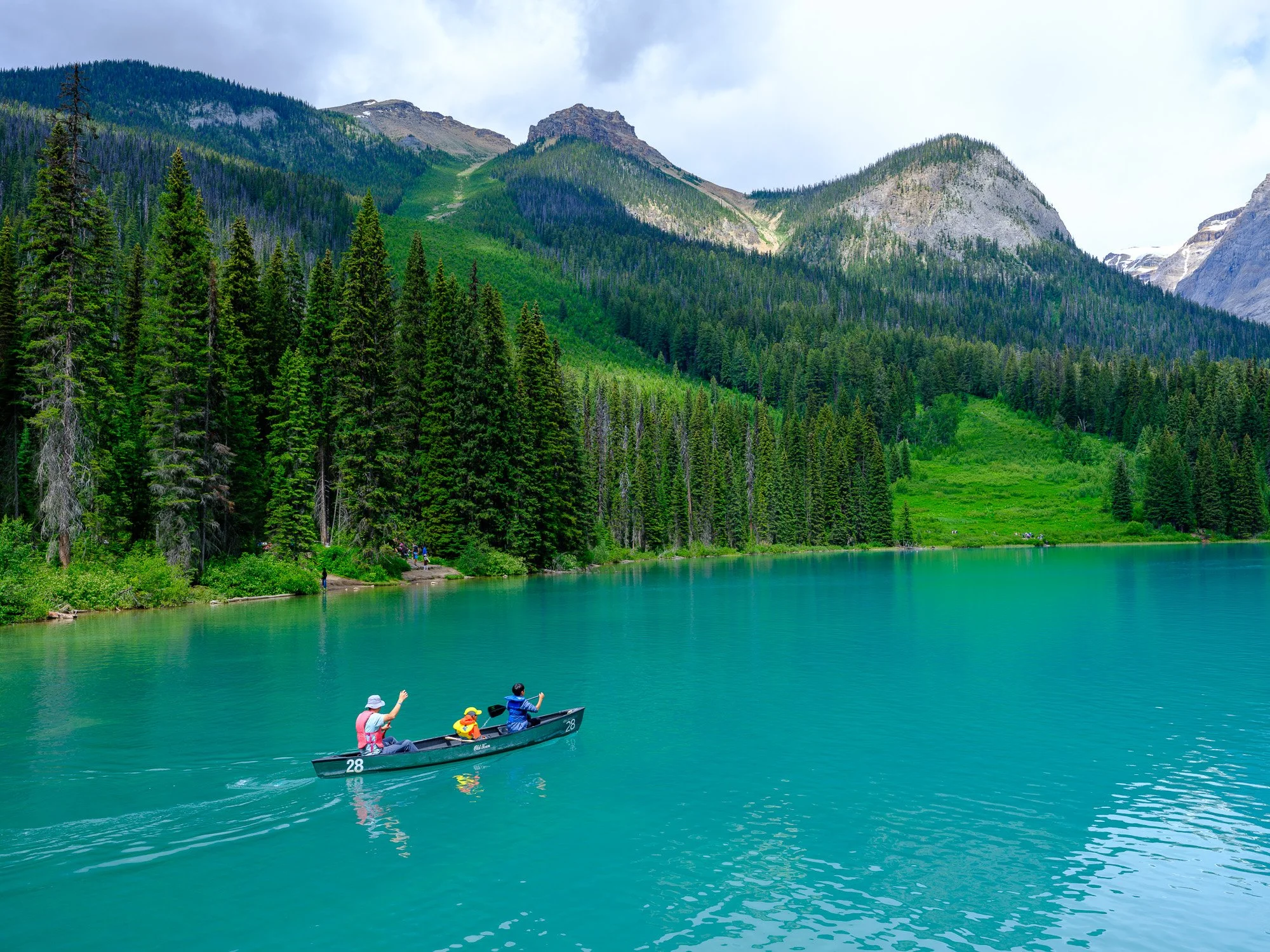
Canoers on Emerald Lake
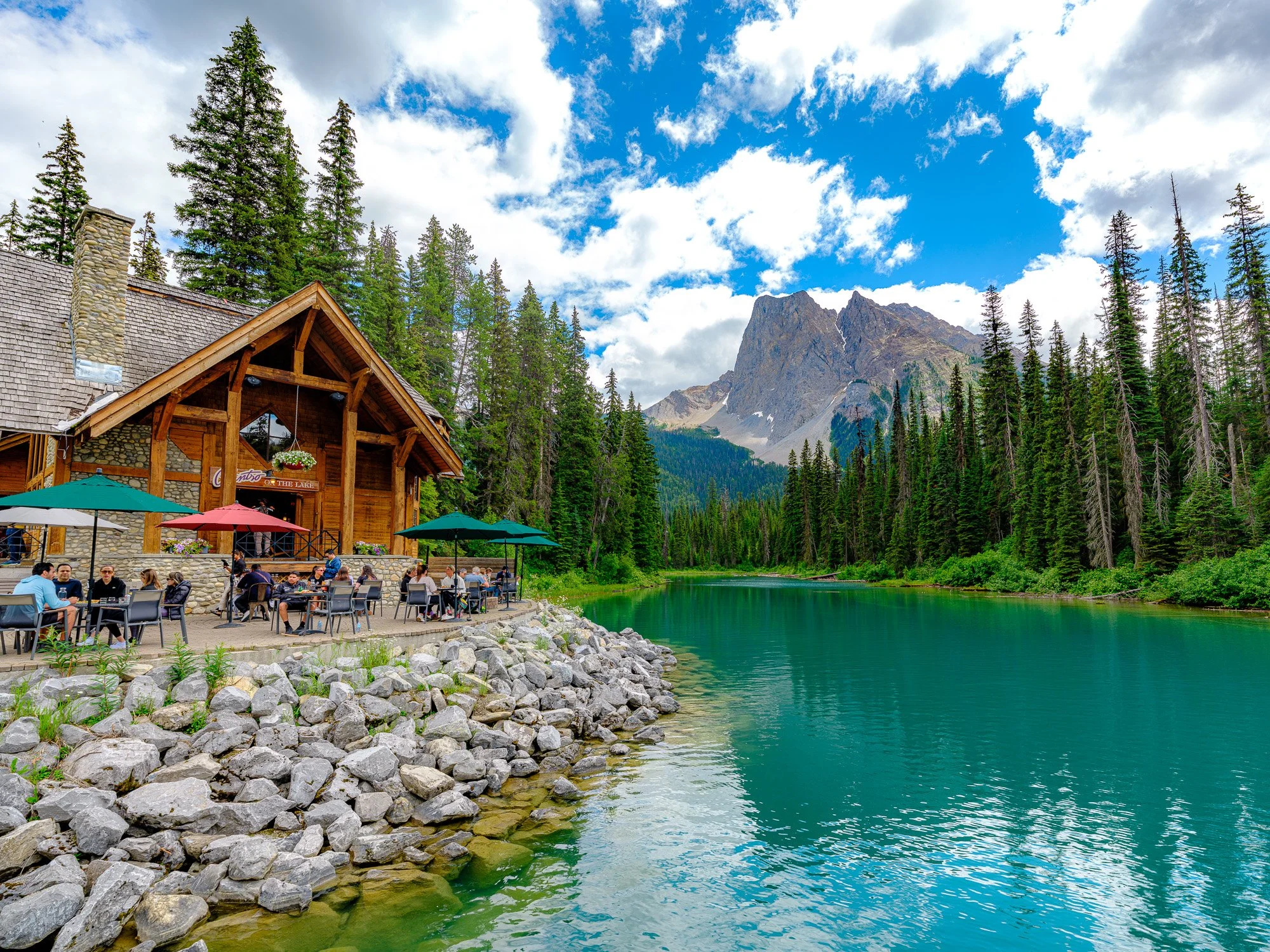
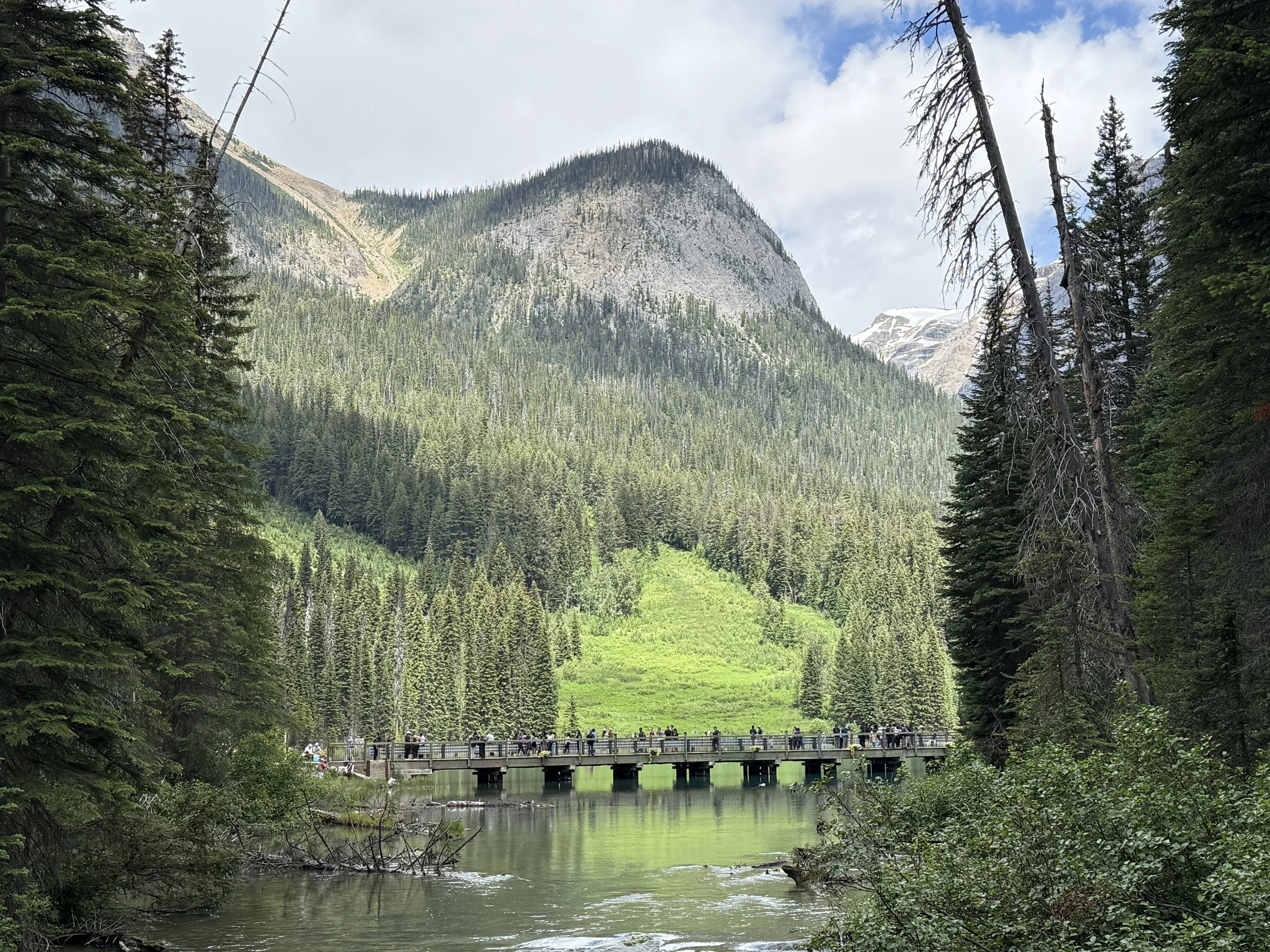
Continue 8km past the Natural Bridge turnoff and follow the signs to Emerald Lake — one of the most vividly coloured lakes in the entire Canadian Rockies. The name is no exaggeration.
The lake sits in a cirque surrounded by Cathedral Mountain, the President Range, and Michael Peak. The colour — an almost electric teal-green — comes from light refracting off rock flour suspended in the glacial water. No filter required. No camera trick needed. It simply looks like this.
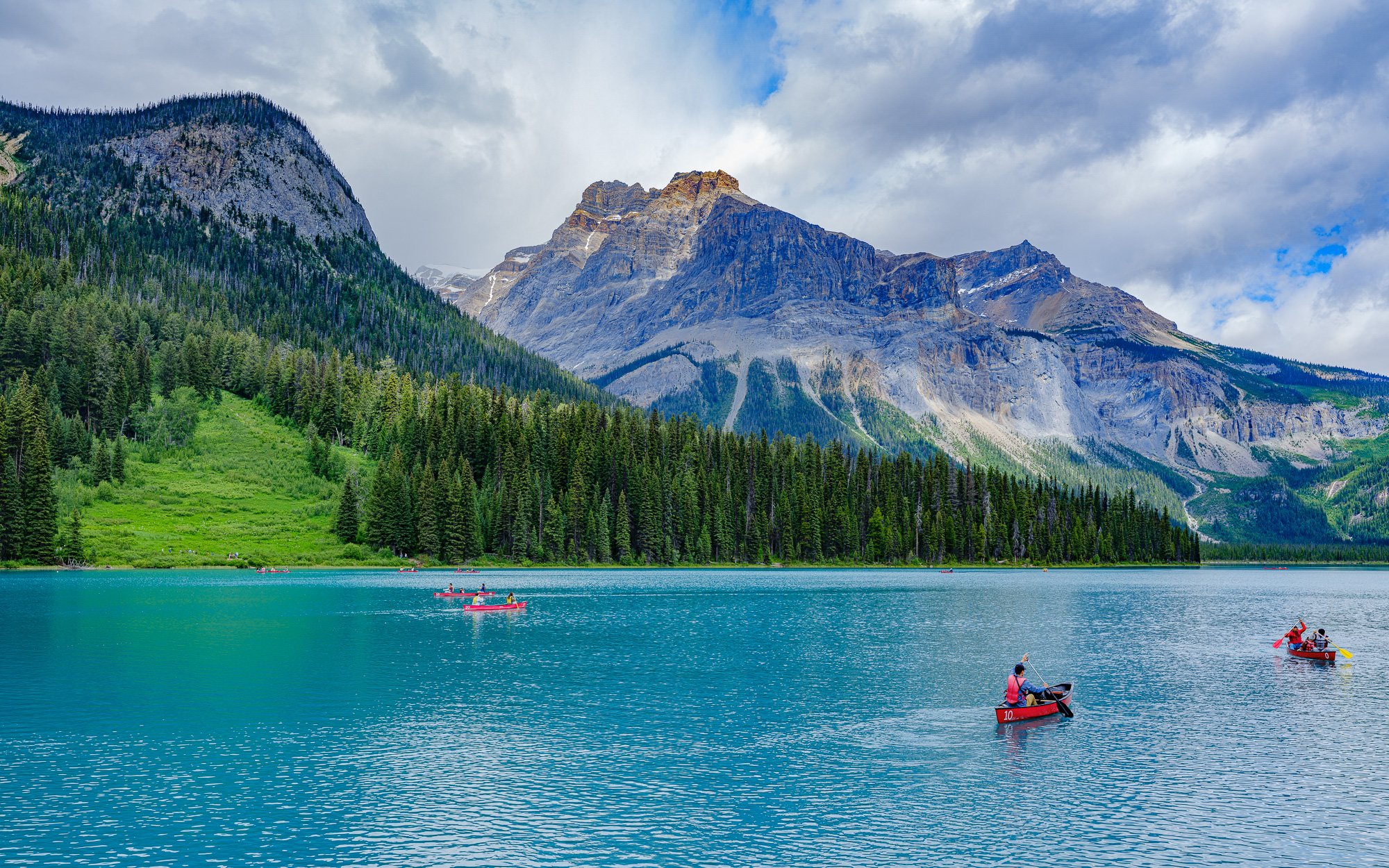
What to do:
Walk the 5km lakeside trail — it's flat, well-maintained, and beautiful at every turn
Rent a canoe from the boathouse — the red canoes on that turquoise water are one of the most photographed scenes in Canada, and for good reason
Stop for a coffee or lunch at Cilantro on the Lake (the café/restaurant on the western shore) — the outdoor patio right on the water's edge with Cathedral Mountain behind it is one of the best terraces in the Rockies
📷 Photography tips:
The classic wide shot from the eastern end of the lake looking west gives you the full mountain panorama with the canoes as foreground interest
Walk the full perimeter — the hidden coves on the northern shore offer intimate shots with summer wildflowers and boulder foregrounds that most visitors never find
The boathouse on the western shore framed beneath the sheer cliff face is a classic composition
Emerald Lake rewards patient walking — every corner of the trail reveals a new angle
Arrival: Fairmont Chateau Lake Louise
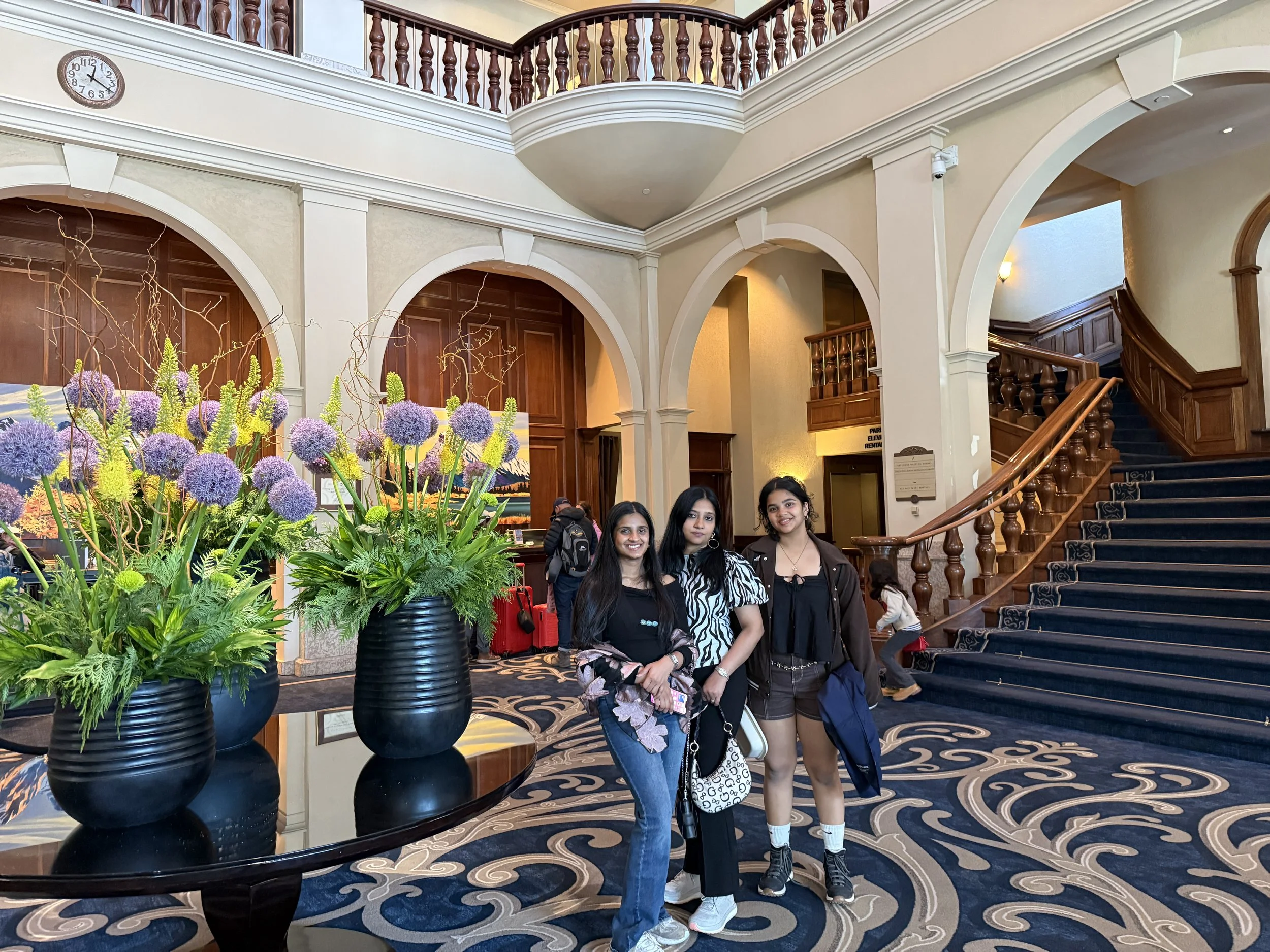
At the Reception Hall of the Chateau Fairmont, Lake Louis
From Emerald Lake, it's approximately 30 minutes to Lake Louise. Check in, drop your bags, and head straight down to the lake — you're going to want every minute of daylight here.
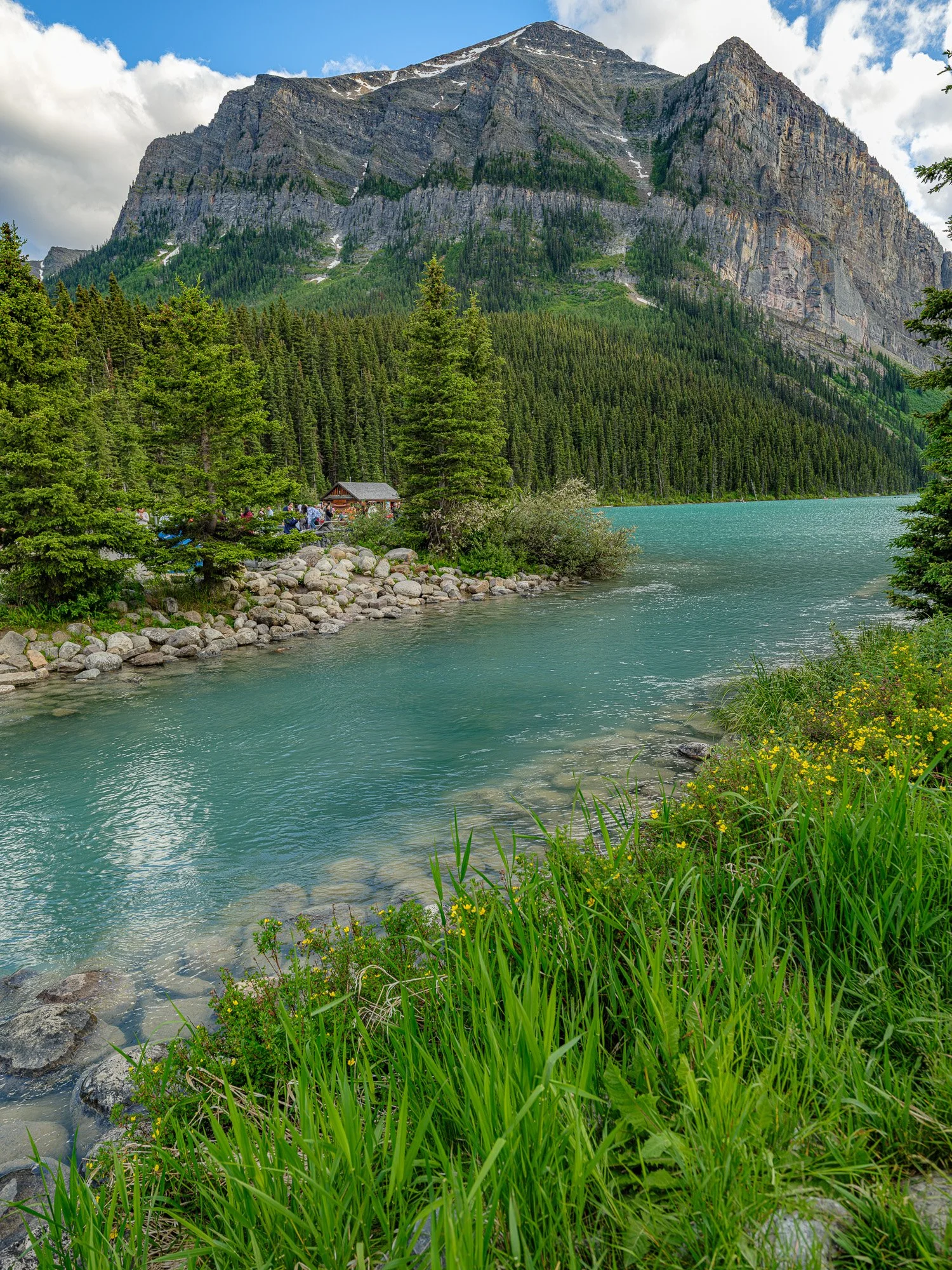
Lake Louise needs no introduction. But standing at its shore for the first time — or the fifth — the colour still stops you cold. That impossible glacier-fed turquoise, the Victoria Glacier hanging at the valley head, the sheer walls of Mount Fairview and Whitehorn on either side. It is genuinely one of the most beautiful places on Earth.
We walked the full perimeter of the lake, explored every angle of the shoreline, and spent a long, unhurried afternoon simply absorbing it. The wooden footbridge at the eastern end, the rocky beaches along the north shore, the little hidden meadows where wild roses bloom in July — Lake Louise rewards those who slow down.
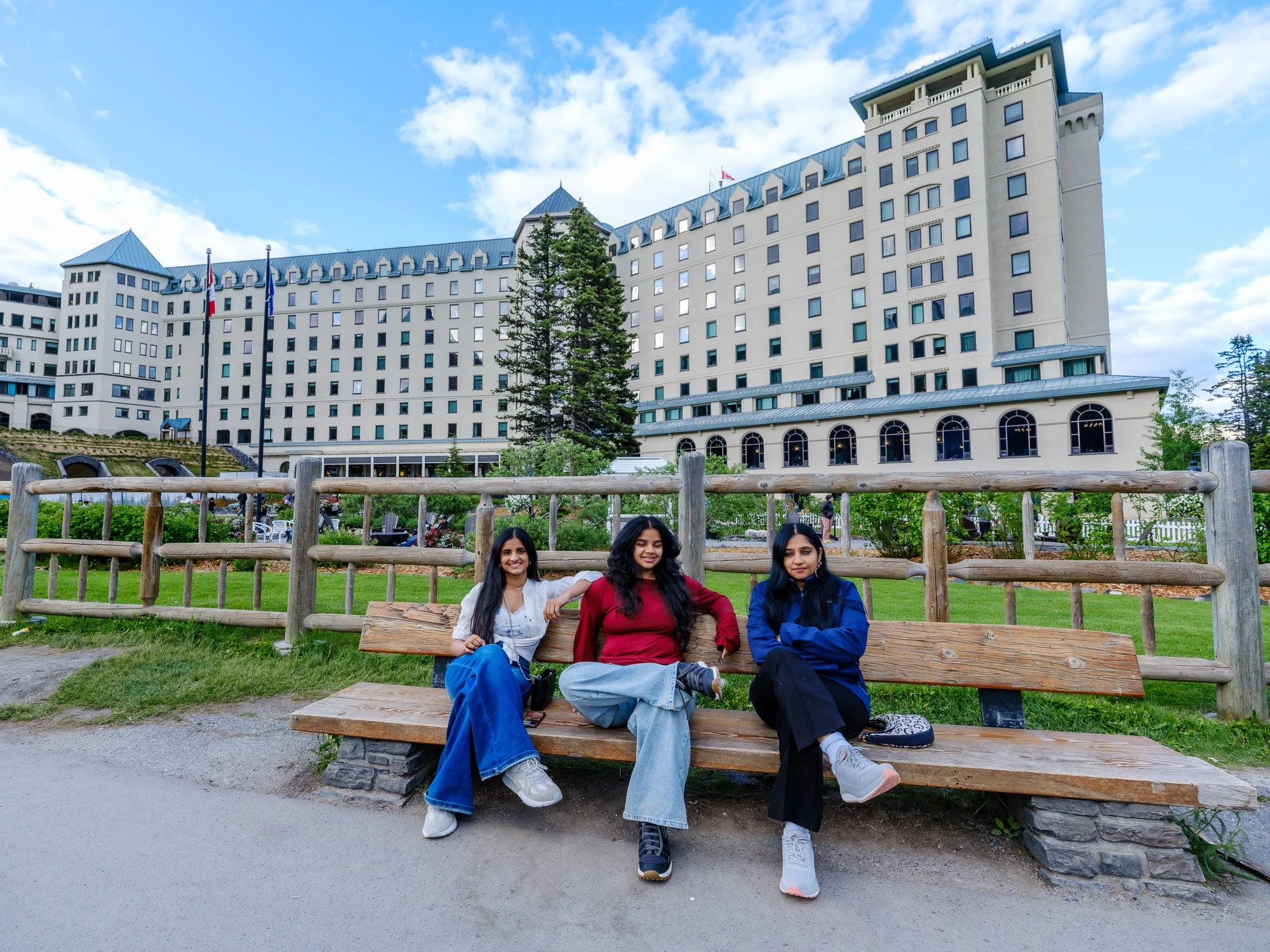
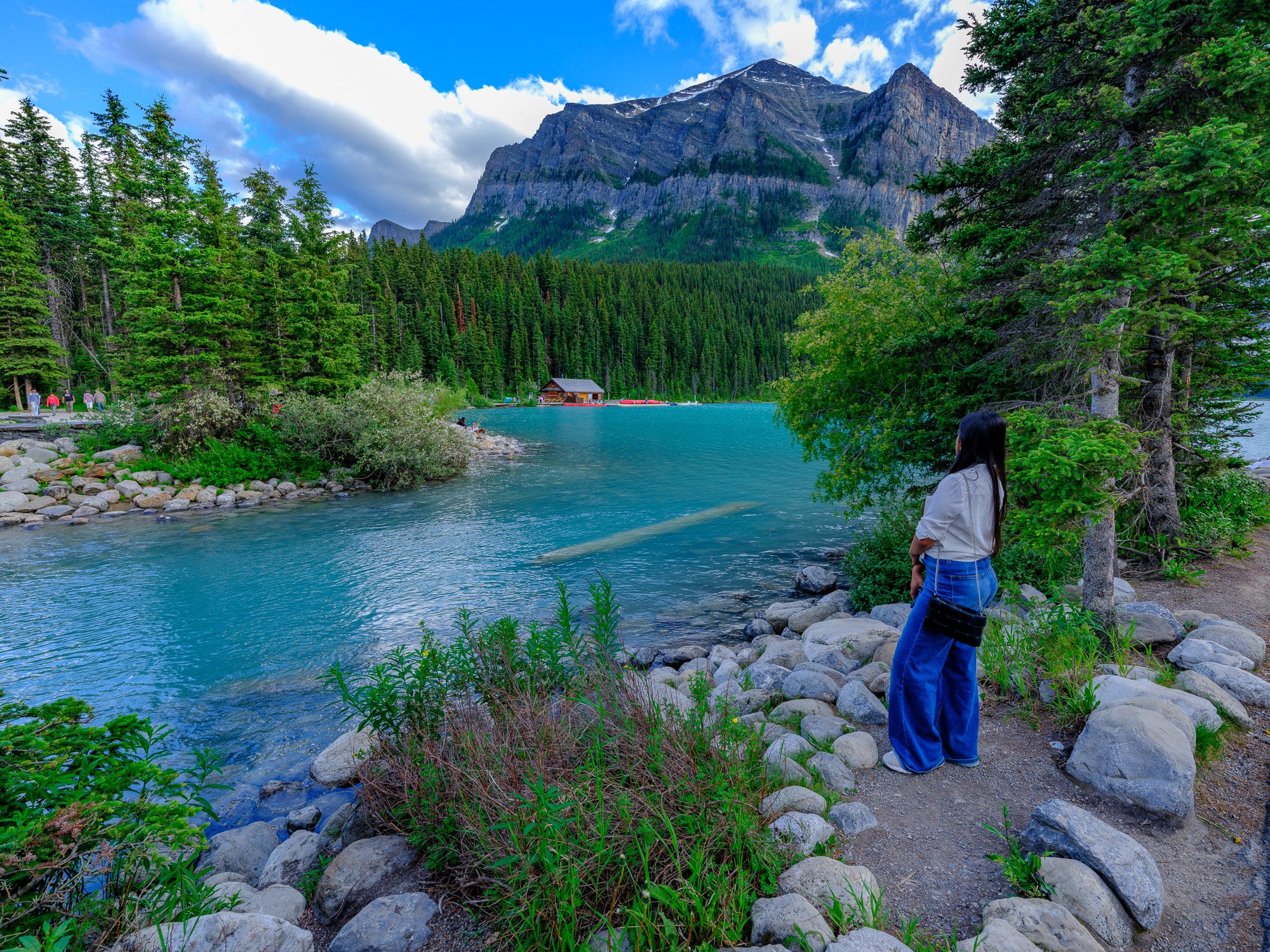
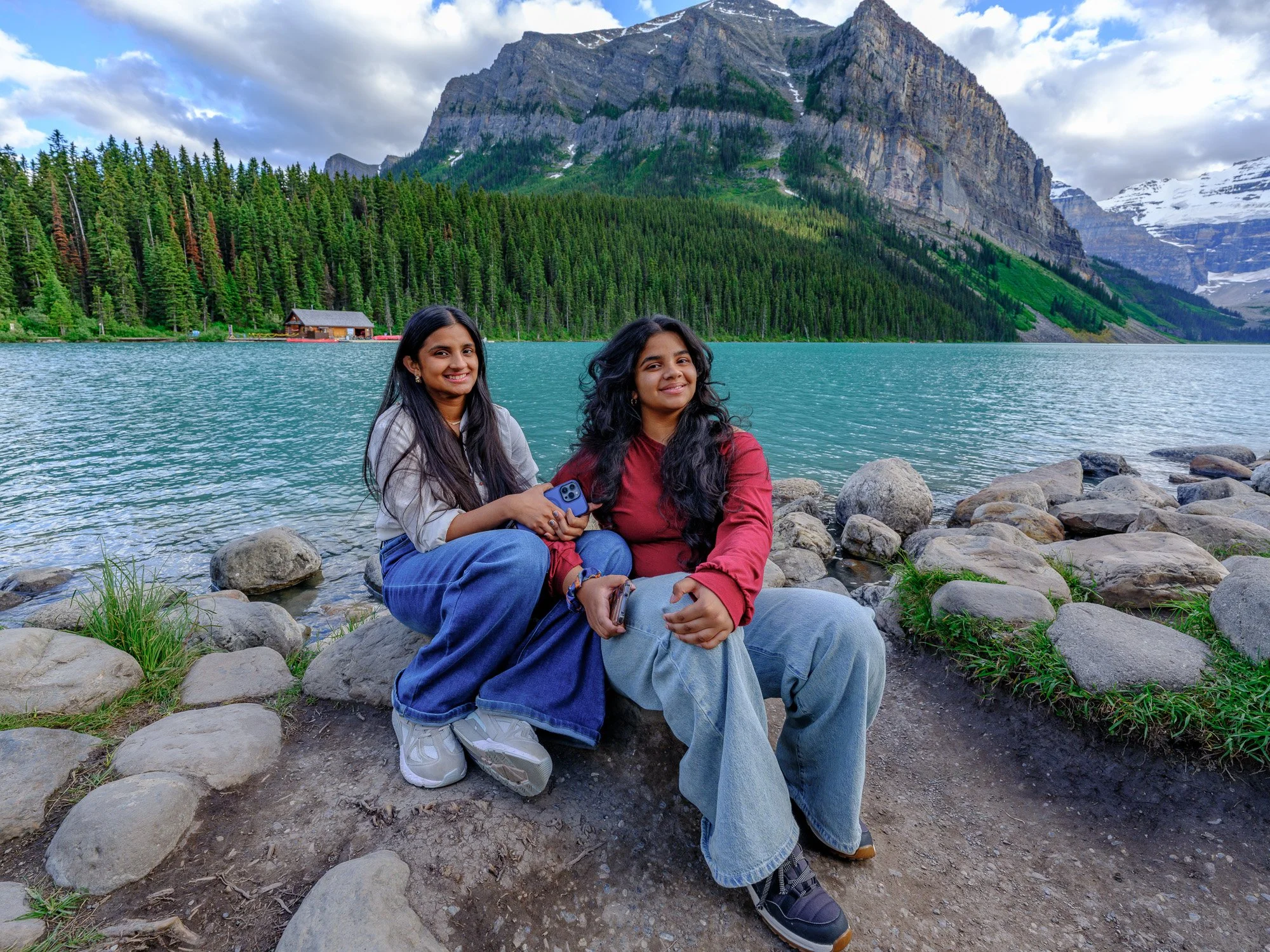
Where we stayed: The Fairmont Chateau Lake Louise — the grand castle-like hotel that sits at the eastern end of the lake. Yes, it is expensive. Yes, it is absolutely worth it. Here's why:
The hotel itself is magnificent — that sweeping dual staircase in the lobby, the ornate chandelier, the intricate carpets, the landscape paintings at reception. It exudes a century of Canadian grandeur. But beyond the luxury, staying at the Fairmont unlocks something that no other accommodation can offer: exclusive early morning access to Moraine Lake (more on that below).
Dining at the Fairmont: We kept it casual with both lunch and dinner at the Glacier Saloon on site — solid food, relaxed atmosphere, and the convenience of not having to go anywhere after a full day exploring the lake. For a family trip this was the perfect call.
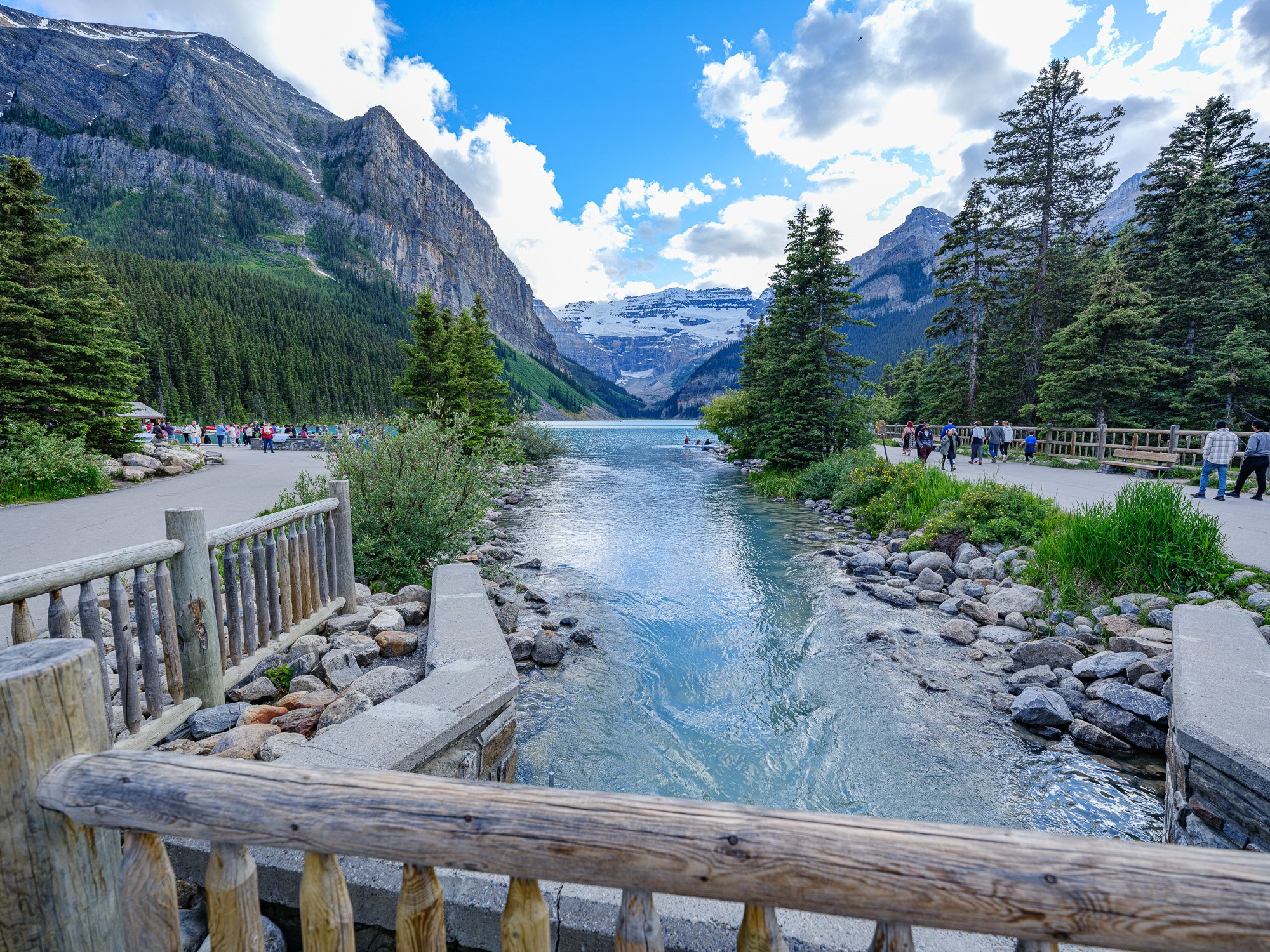
Lake Louis against a backdrop of Mount Victoria and Mount Lefroy
📷 Photography tips at Lake Louise:
The wooden bridge at the eastern end — stand on it and look west for a framed shot of the full lake with mountains beyond
The north shore rocky beach — low angle with the boulders as foreground, the boathouse and cliff face behind
Walk toward the far western end — the closer you get to the Victoria Glacier, the more dramatic the mountain walls become
The boathouse from the south shore trail — framed under the sheer cliff face with summer wildflowers in the foreground
Day 4 — Moraine Lake at Sunrise, Then On to Banff
The Moraine Lake Sunrise Experience
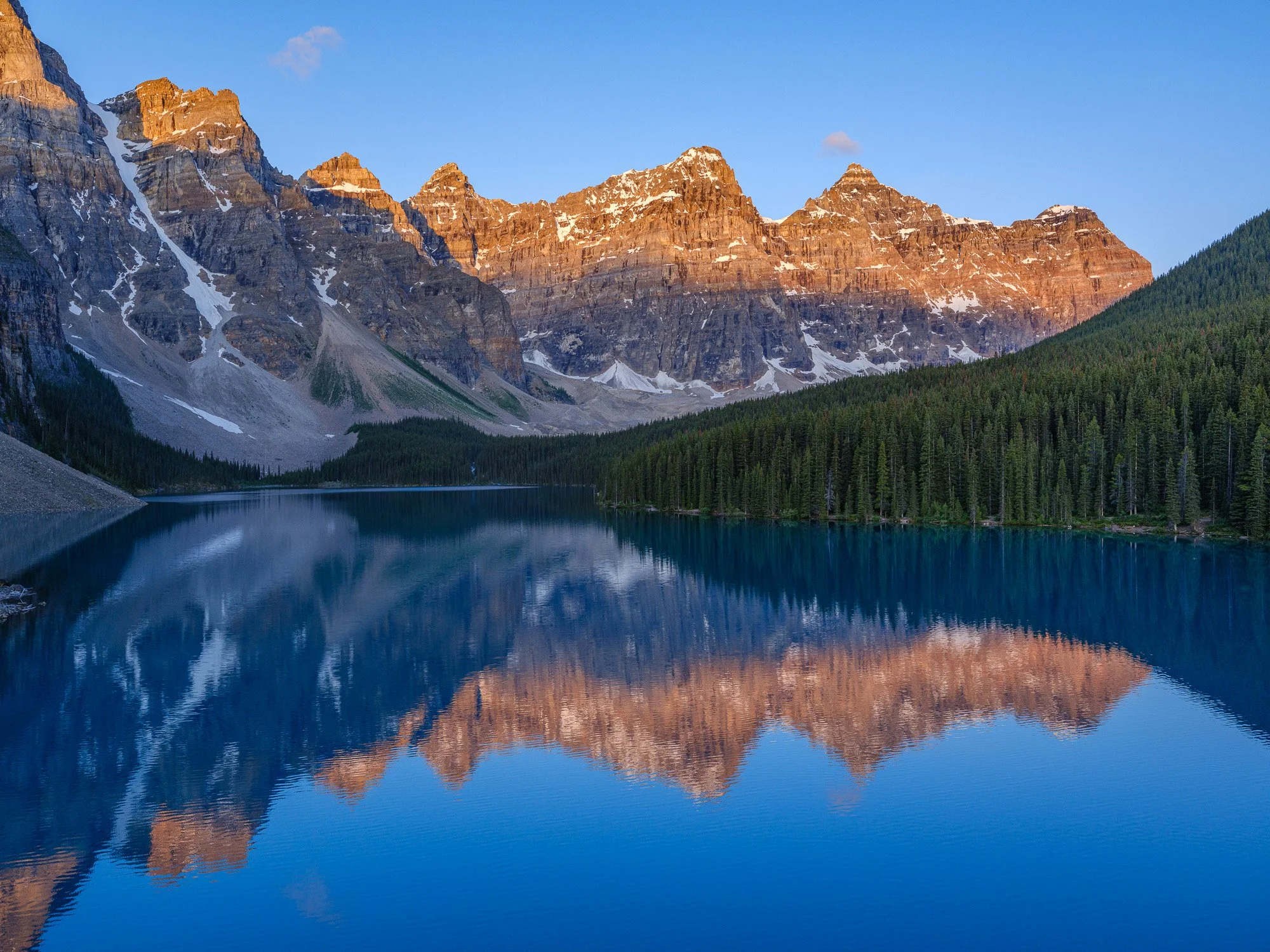
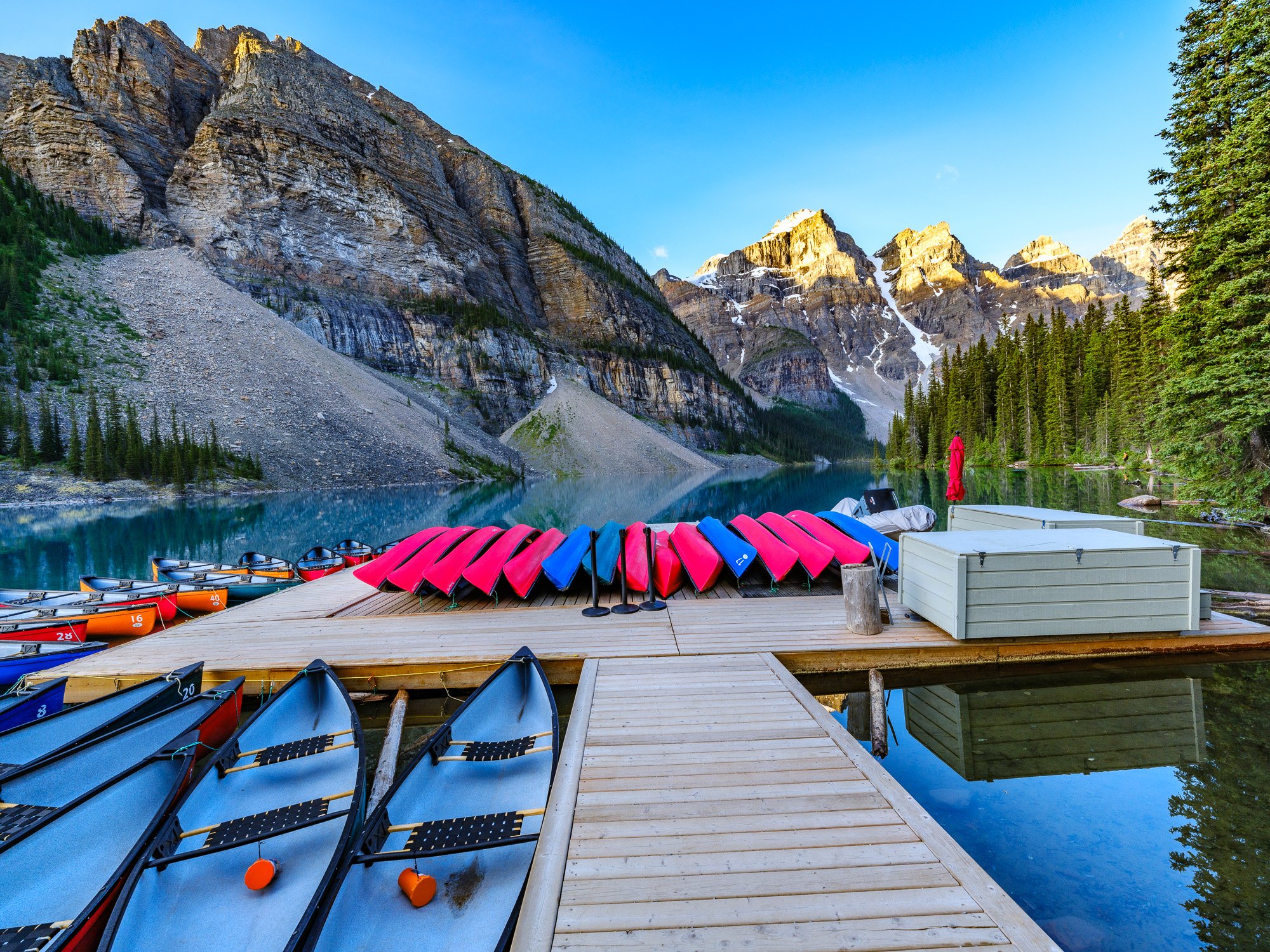
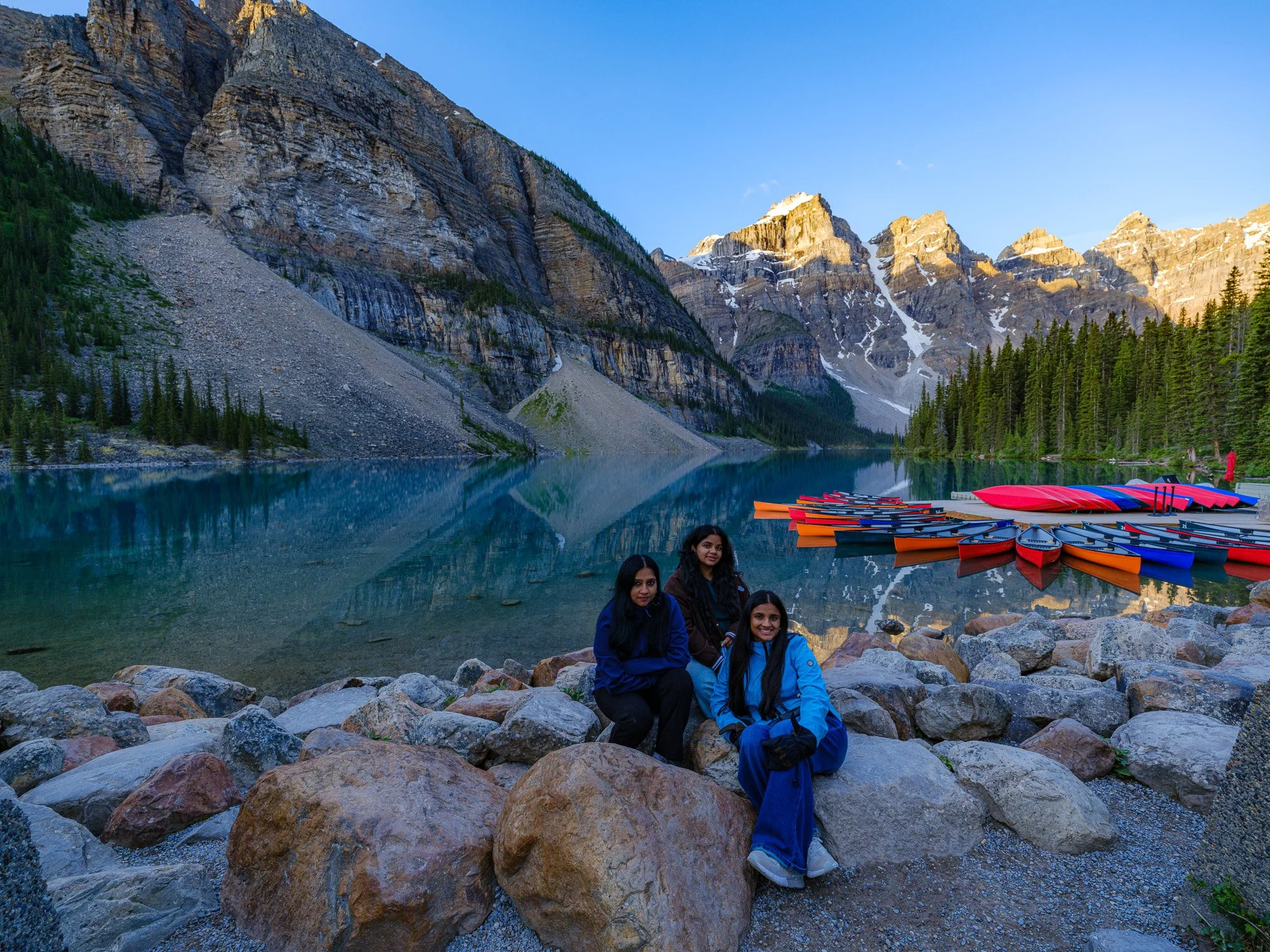
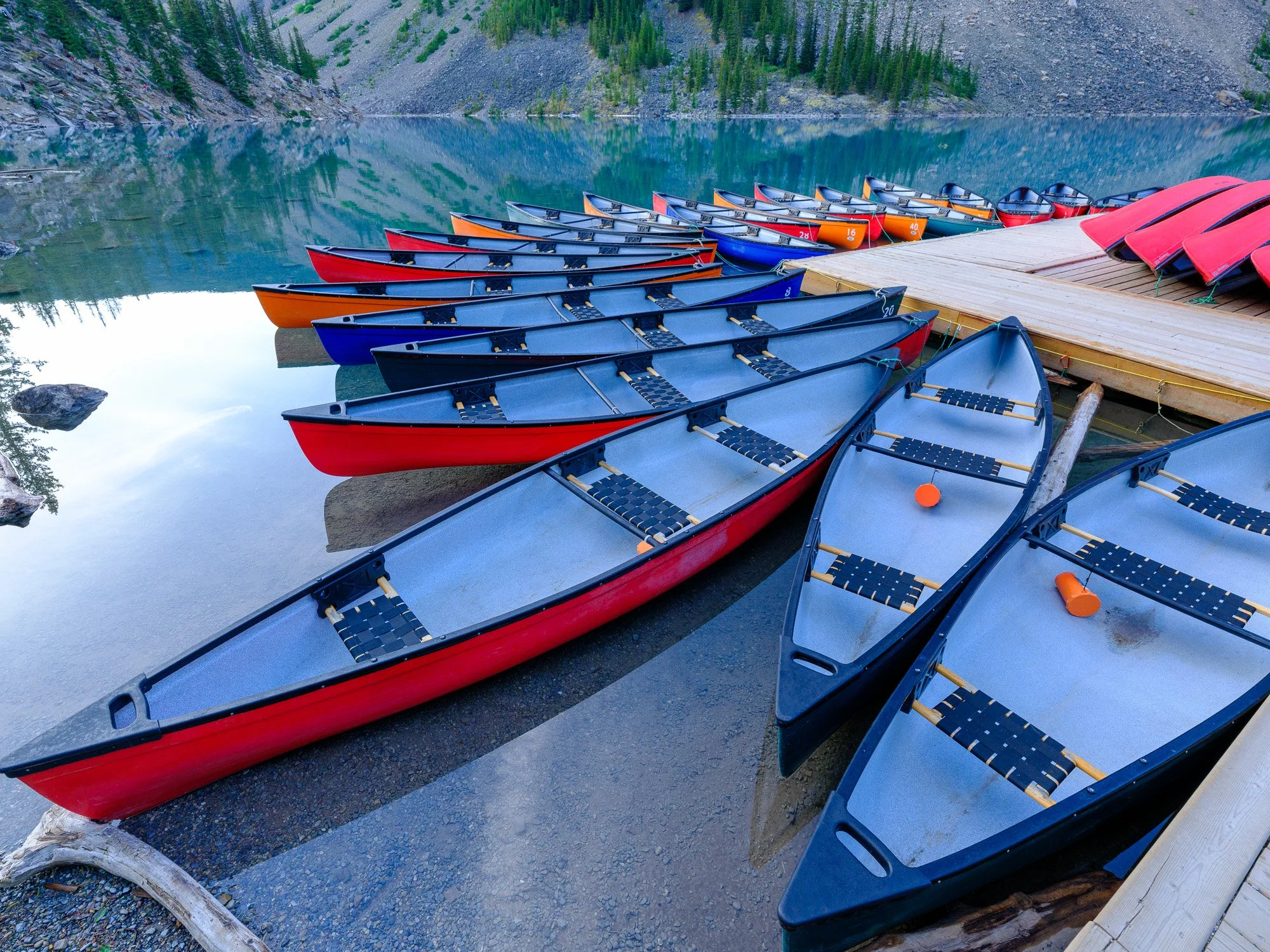
Calm Waters of Moraine Lake at Sunrise reflecting the Valley of the Ten Peaks
Set your alarm. This is the moment of the entire trip.
At 4:45am on July 7th, we boarded the exclusive Fairmont Chateau Lake Louise shuttle for the Moraine Lake Sunrise Experience — a Fairmont hotel guests-only experience that gets you to Moraine Lake before the general public, in the pre-dawn stillness, to witness the Valley of the Ten Peaks come alive with the first light of day.
Booking details:
Cost: CAD $504 for 4 adults (~$126 per person)
Time: 4:45am departure, returning by 7:00am
Availability: Fairmont Chateau Lake Louise hotel guests ONLY
Booking: We booked on the day we checked in — but if your stay is confirmed, contact the Fairmont in advance. In peak July season this experience can sell out. Don't leave it to chance.
What to expect: The shuttle drops you at Moraine Lake while it is still cool and quiet, the water perfectly mirror-still, reflecting the Ten Peaks in flawless symmetry. The canoes are still docked, the lake completely undisturbed. You have the place almost entirely to yourselves.
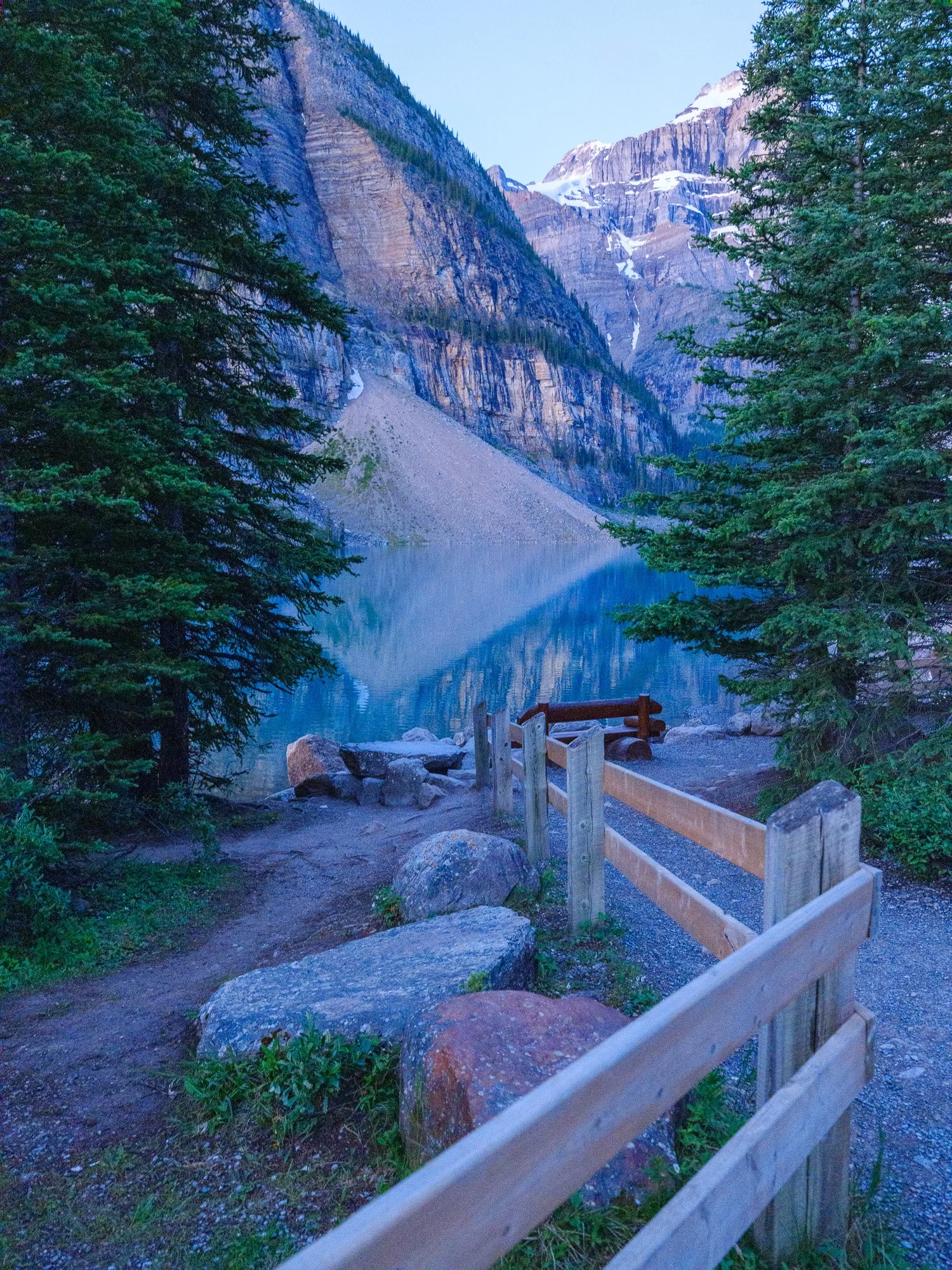
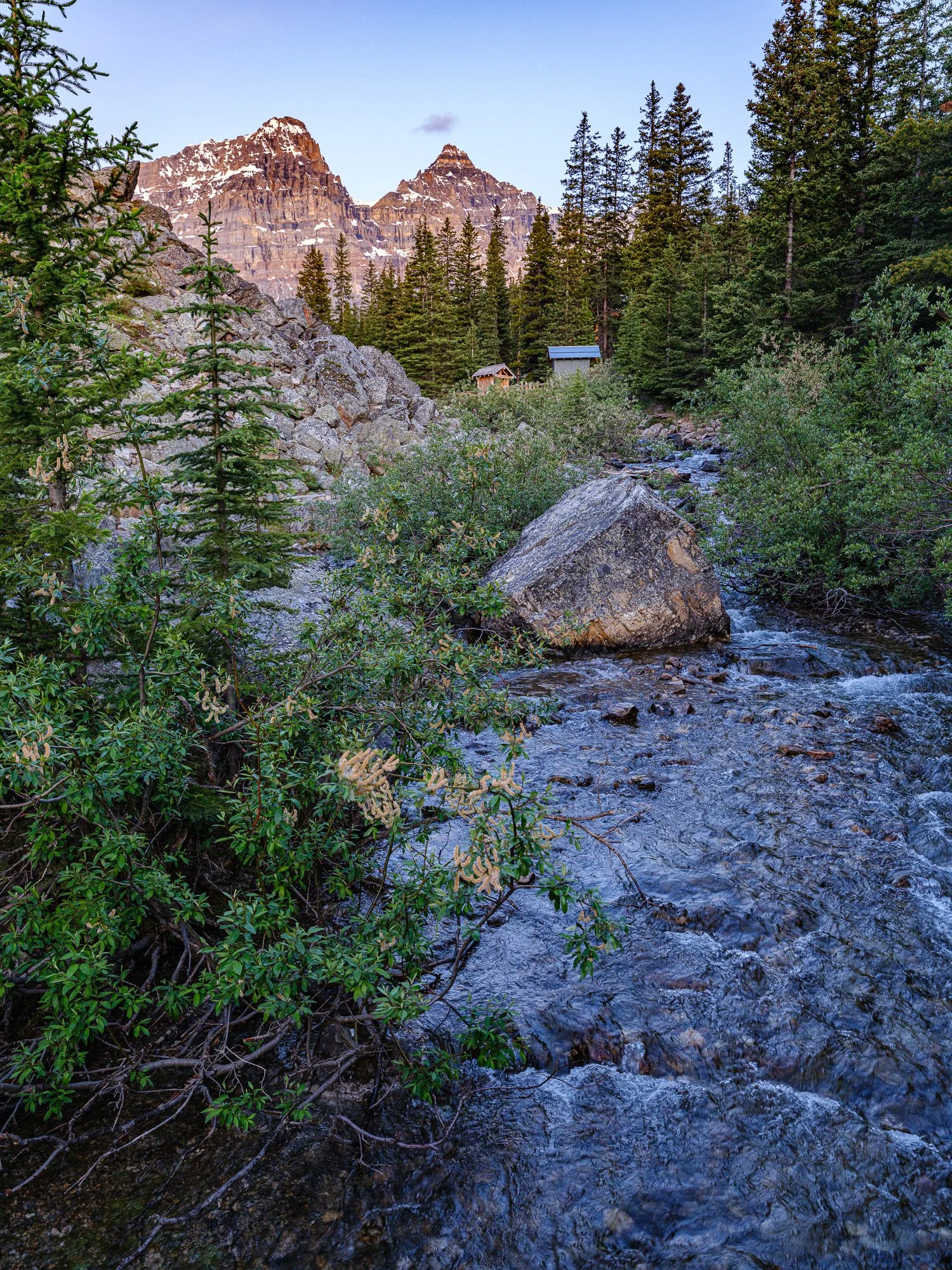
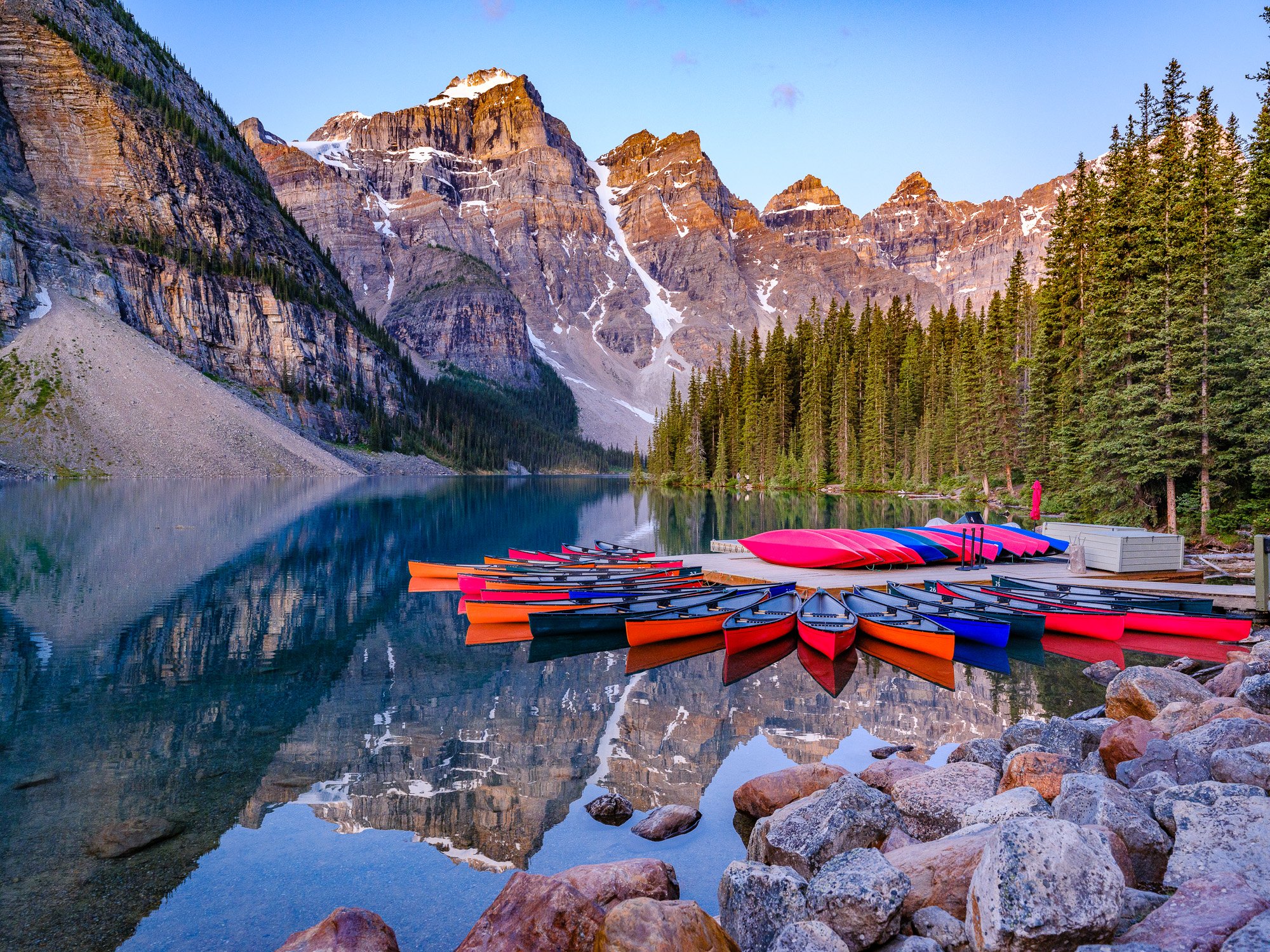
From the lakeside, climb the Rockpile Trail — a short but steep 10–15 minute scramble up the boulder moraine on the left side of the lake. The view from the top is the most iconic panorama in Canada: the full Valley of the Ten Peaks, the glacial blue lake below, and if you time it right, the first alpenglow painting those ten summits in warm amber light while the lake sits in cool shadow.
Dress for it: Even in July, early mornings at Moraine Lake are cool and crisp — expect around 8–10°C at that hour. Bring warm layers for the shuttle and the wait for sunrise. Once you start climbing the Rockpile and the sun appears, you'll warm up quickly.
This experience — those two hours at Moraine Lake in the dawn light — was the single most memorable moment of the entire trip. The photographs speak for themselves.
Checking In to Banff
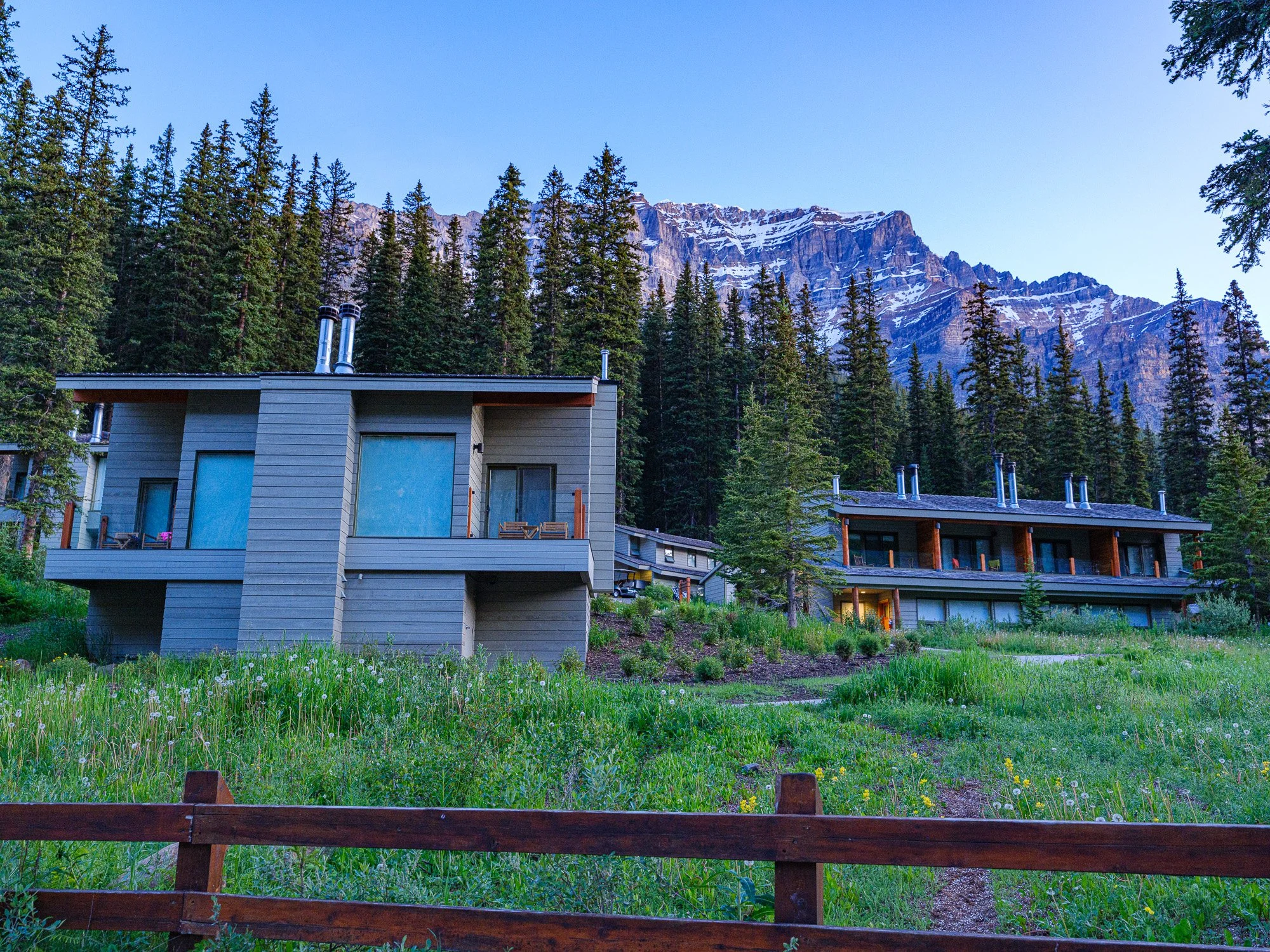
After returning from Moraine Lake, we checked out of the Fairmont and drove the 60km to Banff, arriving by late morning. The contrast between the intimate mountain grandeur of Lake Louise and the lively mountain town of Banff is striking and refreshing.
Where we stayed:Banff Park Lodge — a well-located property right in the heart of Banff town, close to Banff Avenue and a short walk to the Bow River. The on-site restaurants are a genuine bonus when you're tired after a full day of exploring. One honest note: there was some construction happening during our July stay which added a bit of dust and noise — this is likely resolved by now, but worth checking ahead.
Bike rental tip: The bike shop at Banff Park Lodge rents bicycles directly — no need to go anywhere else. We rented bikes and spent a glorious afternoon cycling along the Bow River Parkway, one of the most scenic and accessible cycling routes in the Rockies. The trail runs alongside the turquoise Bow River with mountains rising on all sides. Flat, well-maintained, suitable for all fitness levels, and absolutely spectacular. Highly recommended for families.
Days 5 & 6 — Exploring Banff
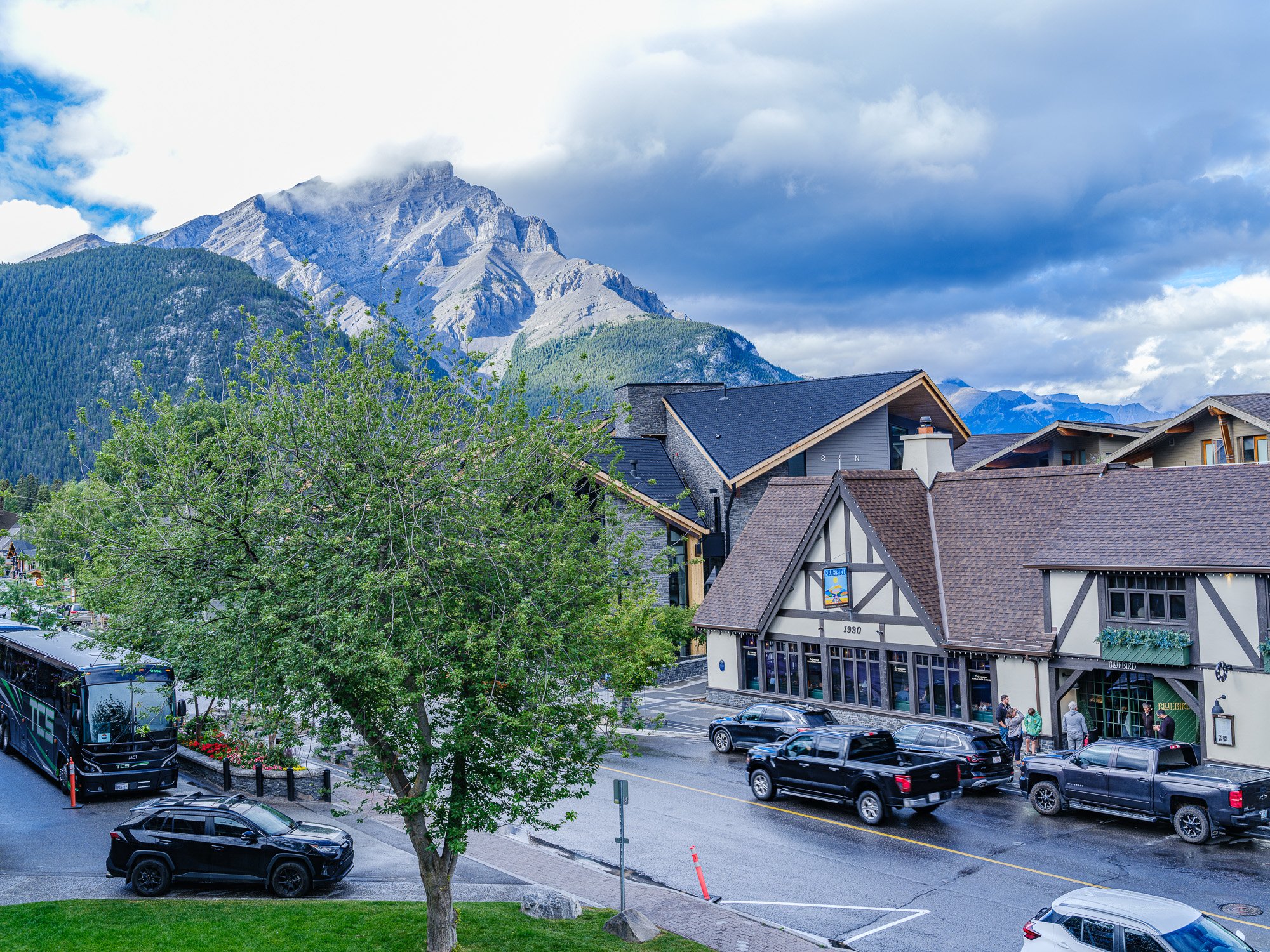
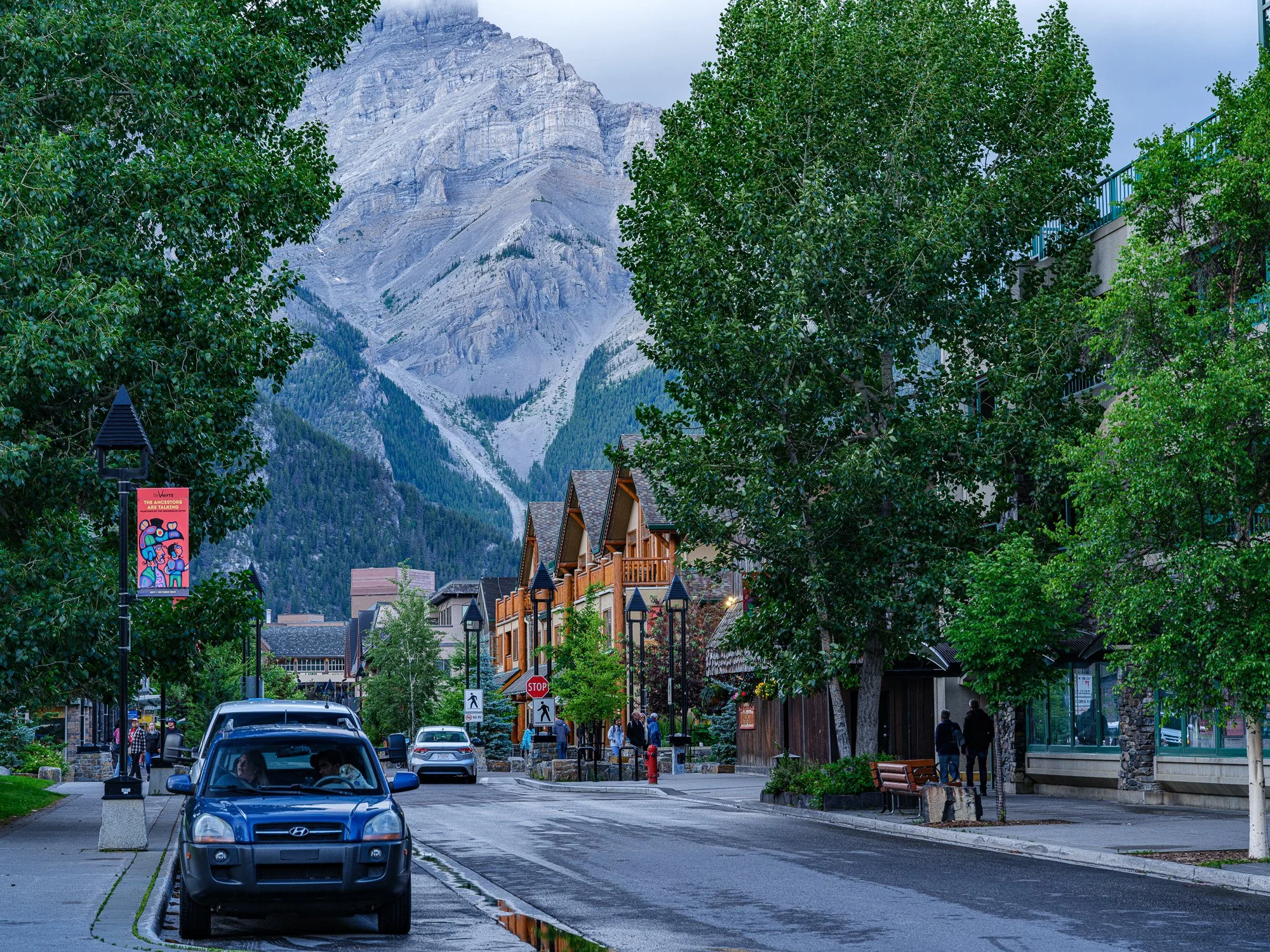
Banff town is endlessly walkable and endlessly photogenic. Cascade Mountain looms directly over the main street, making even a grocery run feel cinematic.
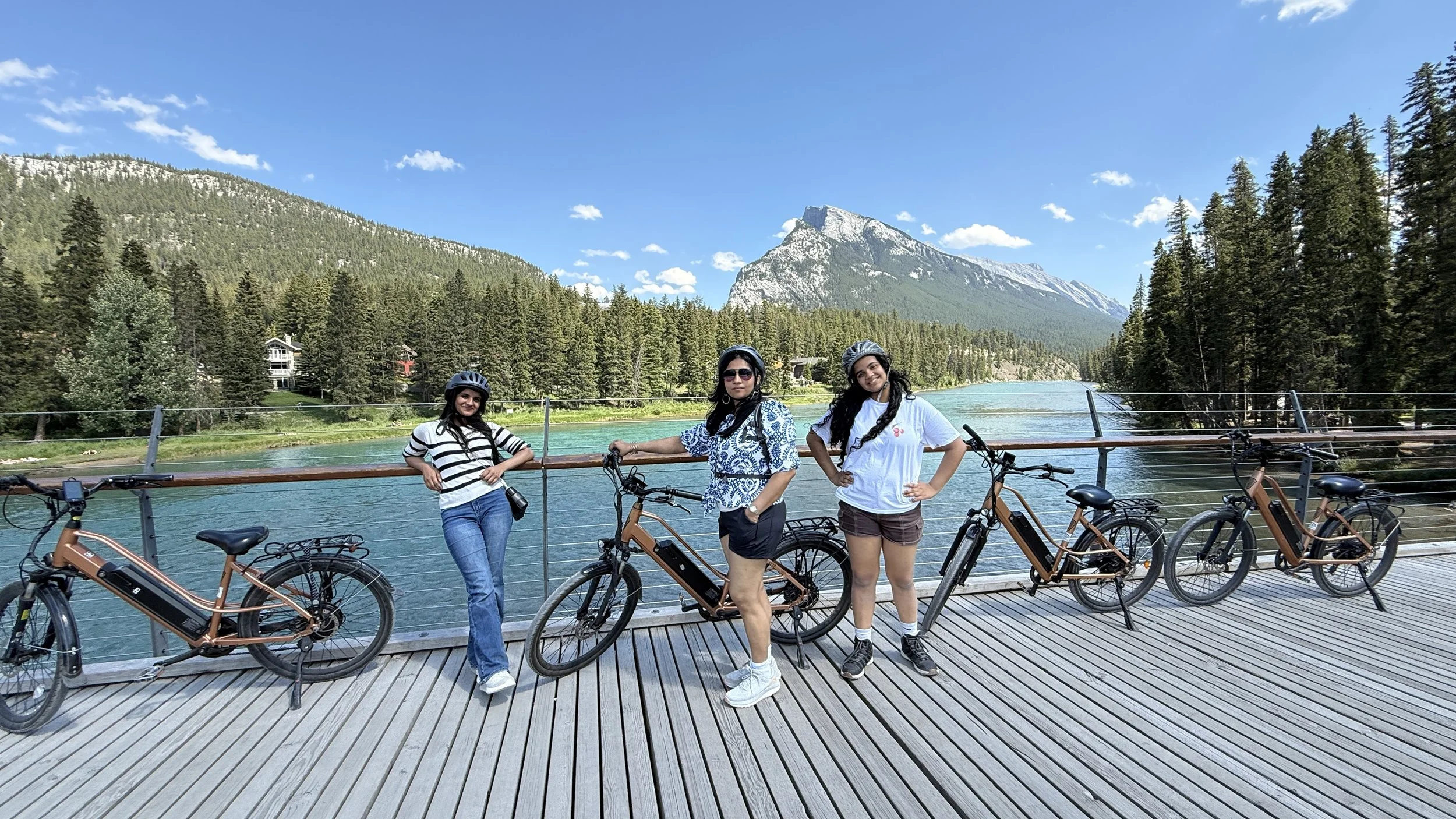
Cycling Aong the Bow River is a must do when at Banff
What we loved:
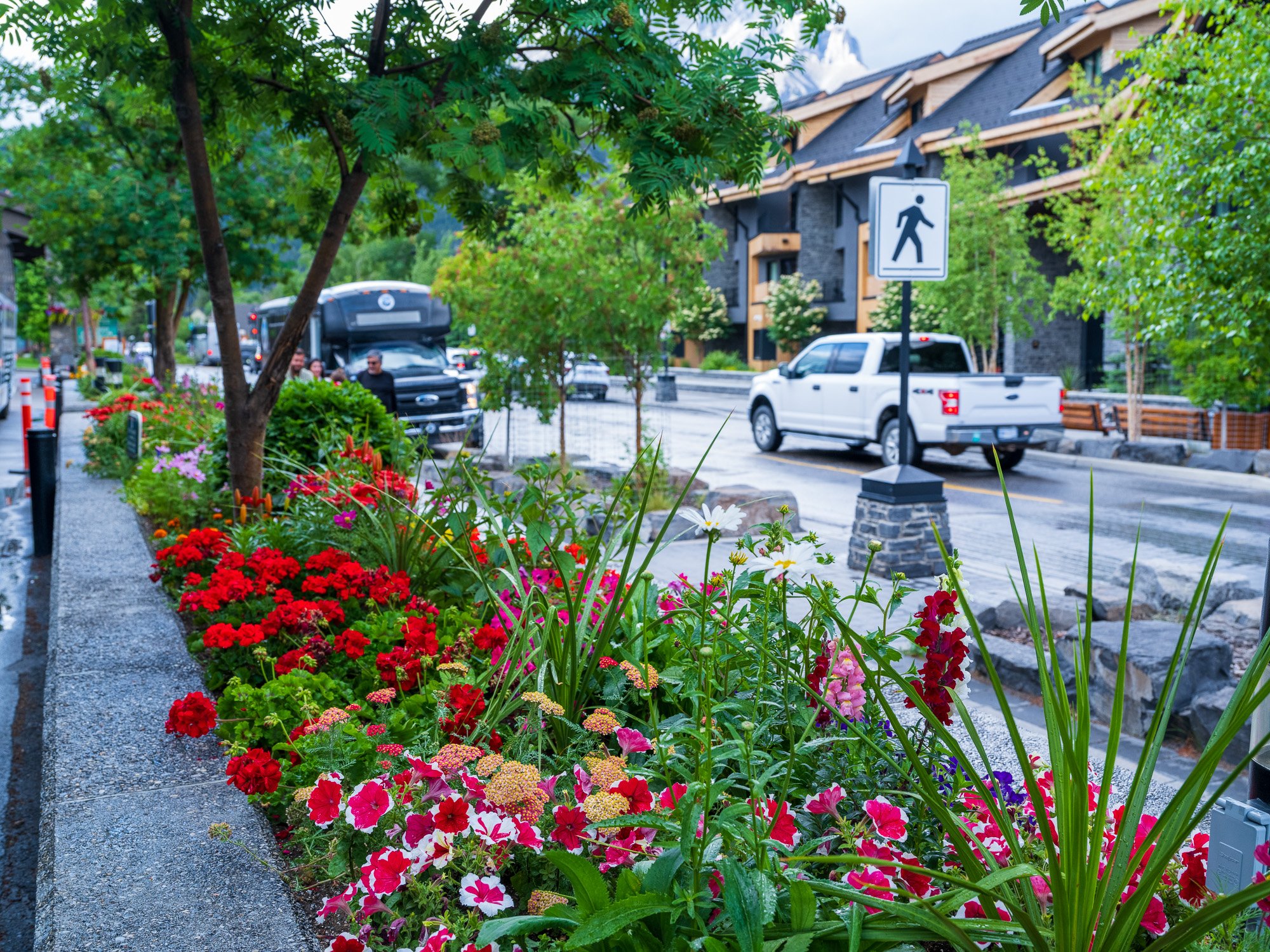
Banff Avenue — the main street lined with alpine-style buildings, excellent restaurants, and summer flower beds bursting with colour in July
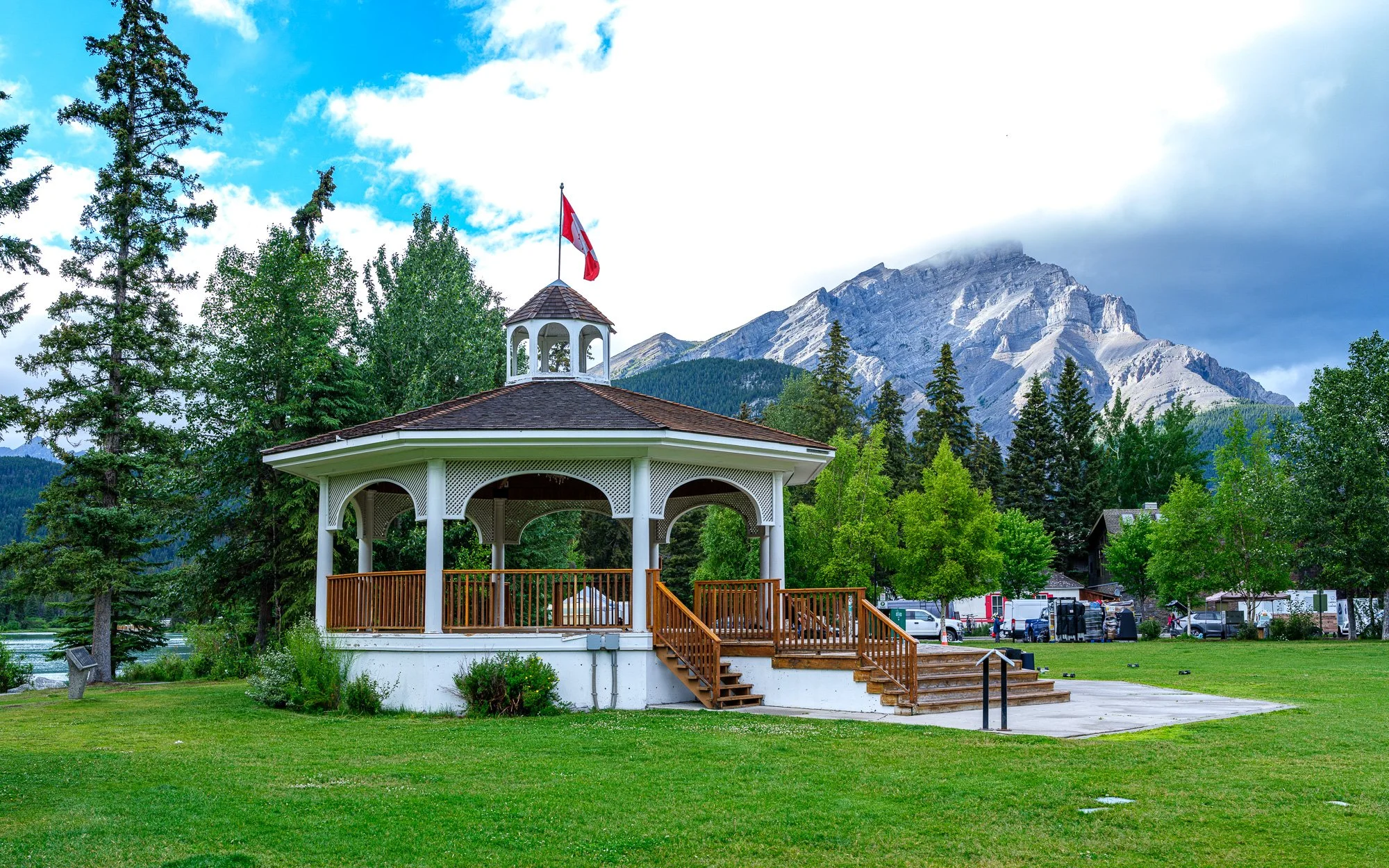
Central Park & the Gazebo — a lovely green space by the Bow River with the iconic white gazebo and Canadian flag, Cascade Mountain as backdrop
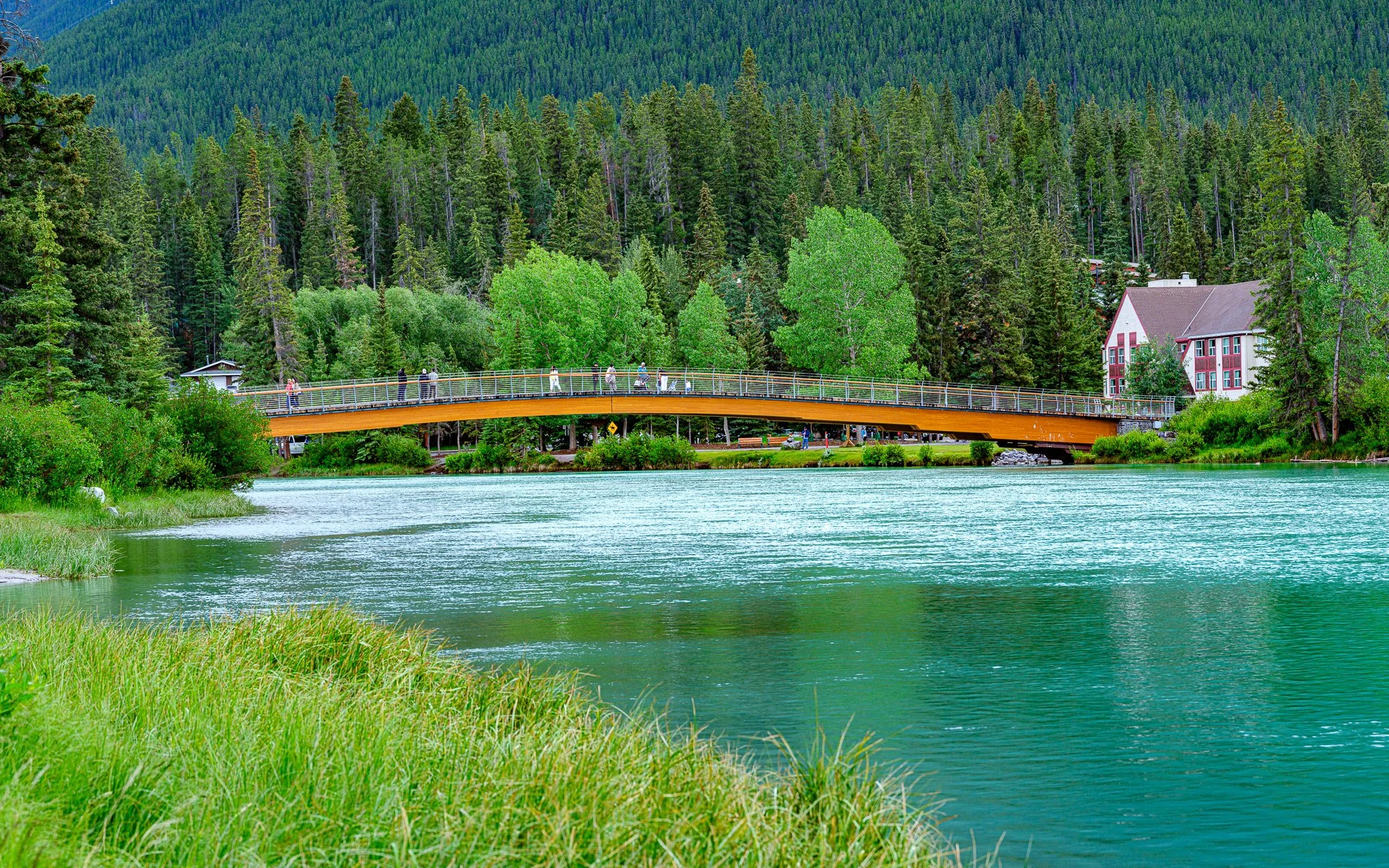
The Bow River pedestrian bridge — the warm wooden arch bridge over the turquoise Bow River is a beautiful spot, especially in morning light
Cycling the Bow River Parkway — as mentioned above, a highlight of the entire Banff stay
Walking Banff Avenue at dusk — the town comes alive in the evenings with visitors from around the world; the atmosphere is wonderful
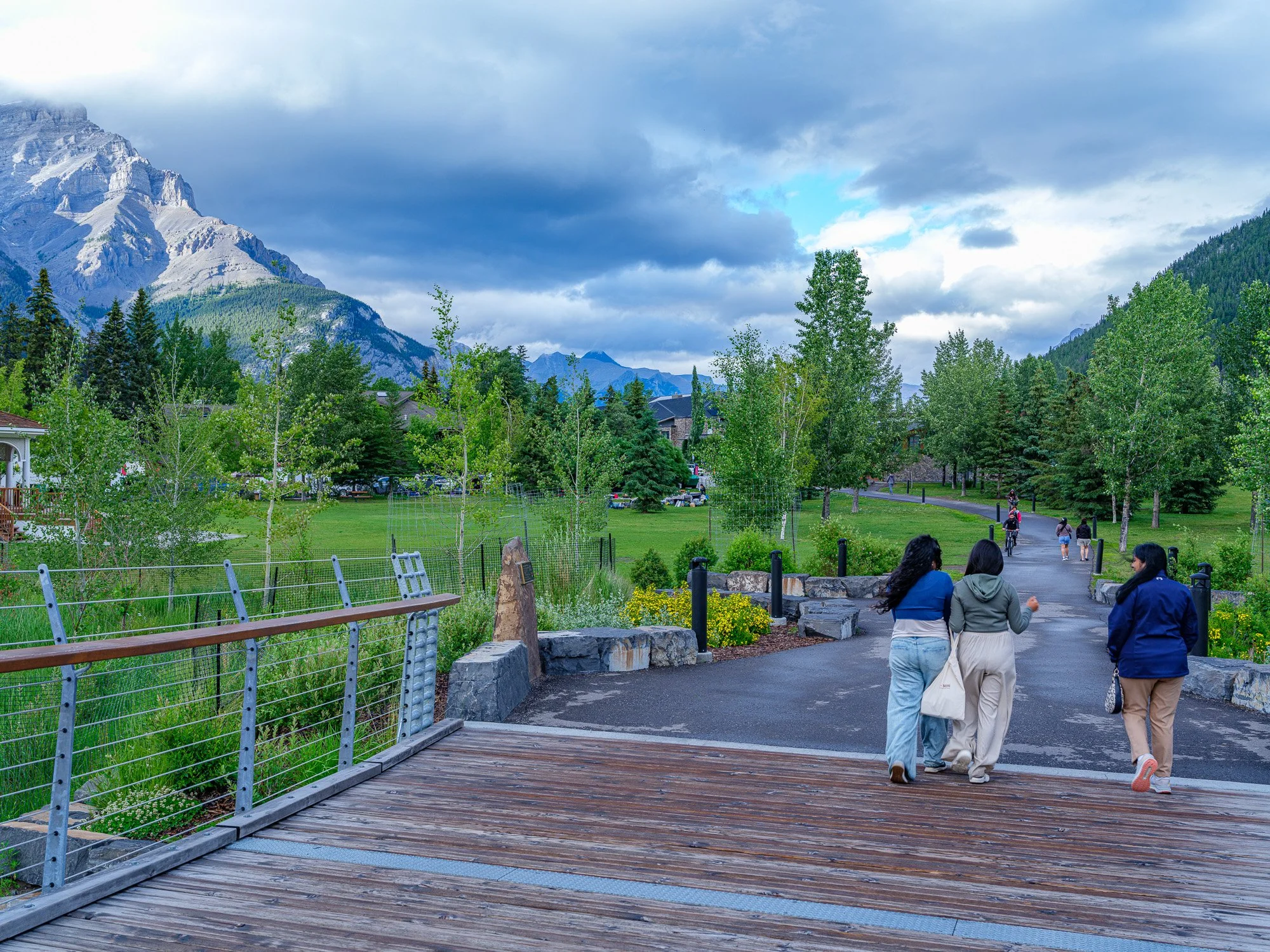
Dining in Banff: The Banff Park Lodge has solid on-site dining — we ate there on the evenings when we were too tired to venture out. Banff Avenue has excellent restaurant options across every cuisine and price point; explore and find what suits your family.
📷 Photography tips in Banff:
Bow River bridge — shoot from below/riverside for the arch reflected in the turquoise water
Banff Avenue looking north — use a longer lens to compress Cascade Mountain behind the rooftops for that classic "mountain town" shot
Central Park — the gazebo with Cascade Mountain is a classic composition, especially with dramatic clouds
Bow River Parkway cycling — bring the camera on the bike ride; the river views are stunning all along the trail
Day 7 — Banff to Kamloops via Crazy Creek Falls
Drive: ~600km, approximately 6 hours with stops
The return journey is essentially the same Trans-Canada route in reverse — but we made one stop that turned the long drive into an adventure of its own.
Crazy Creek Falls (near Revelstoke)
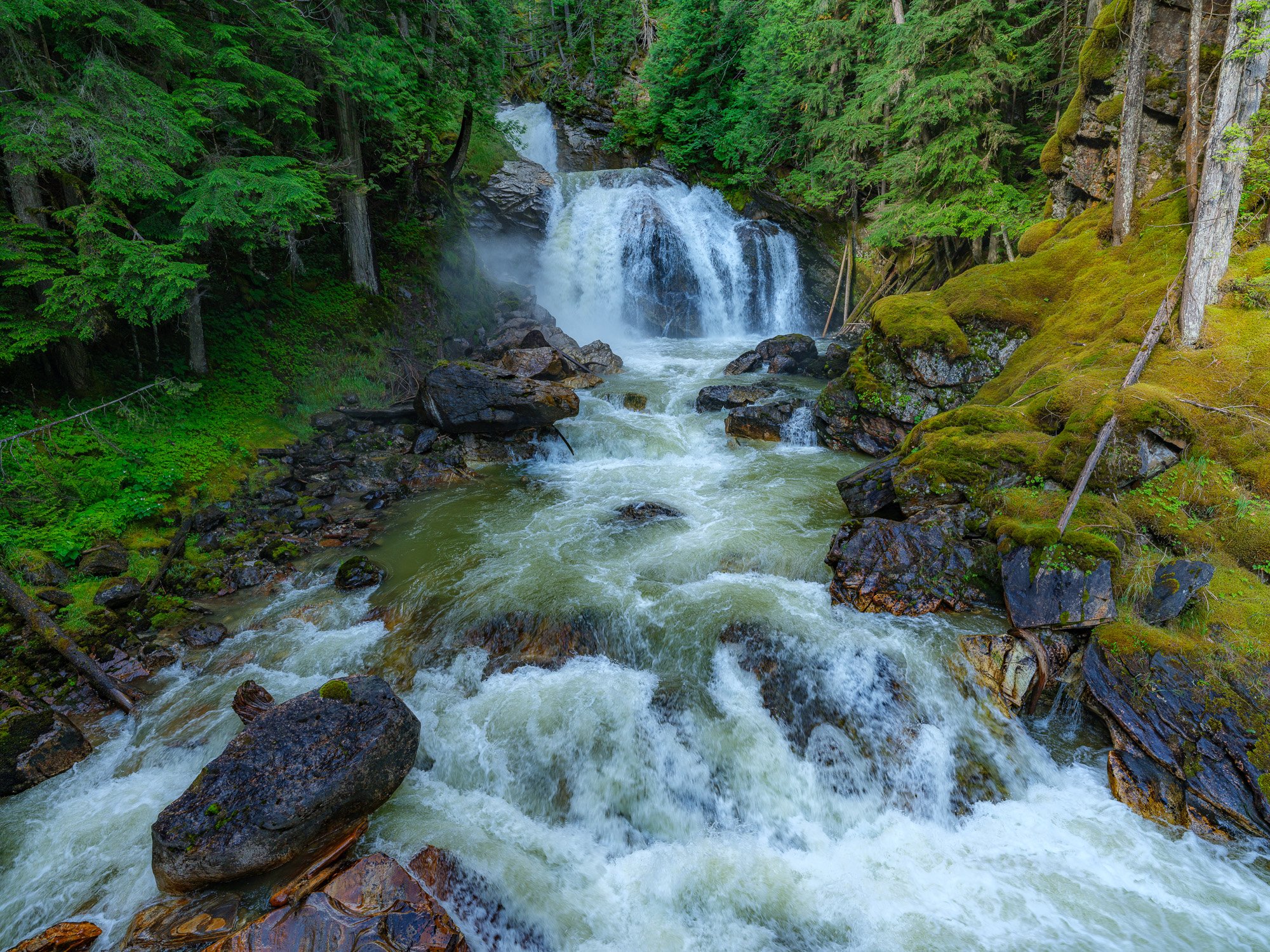
Crazy Creek Falls
About 100km west of Golden on the Trans-Canada, watch for the Crazy Creek Cascades sign. Pull off — this is worth every minute.
A short walk from the parking area brings you to a suspension bridge strung through old-growth forest above a churning creek. Cross the bridge, follow the trail, and you arrive at Crazy Creek Falls — a multi-tiered cascade tumbling through a moss-covered gorge, the forest so lush and green it almost glows.
For photographers, the falls are a dream subject: use a slow shutter speed (the GFX 100 II's long exposure capability is perfect here) to render the water as silky white ribbons against the dark wet rock and vivid green moss. I shot both colour and black-and-white versions — both tell a completely different story of the same place.
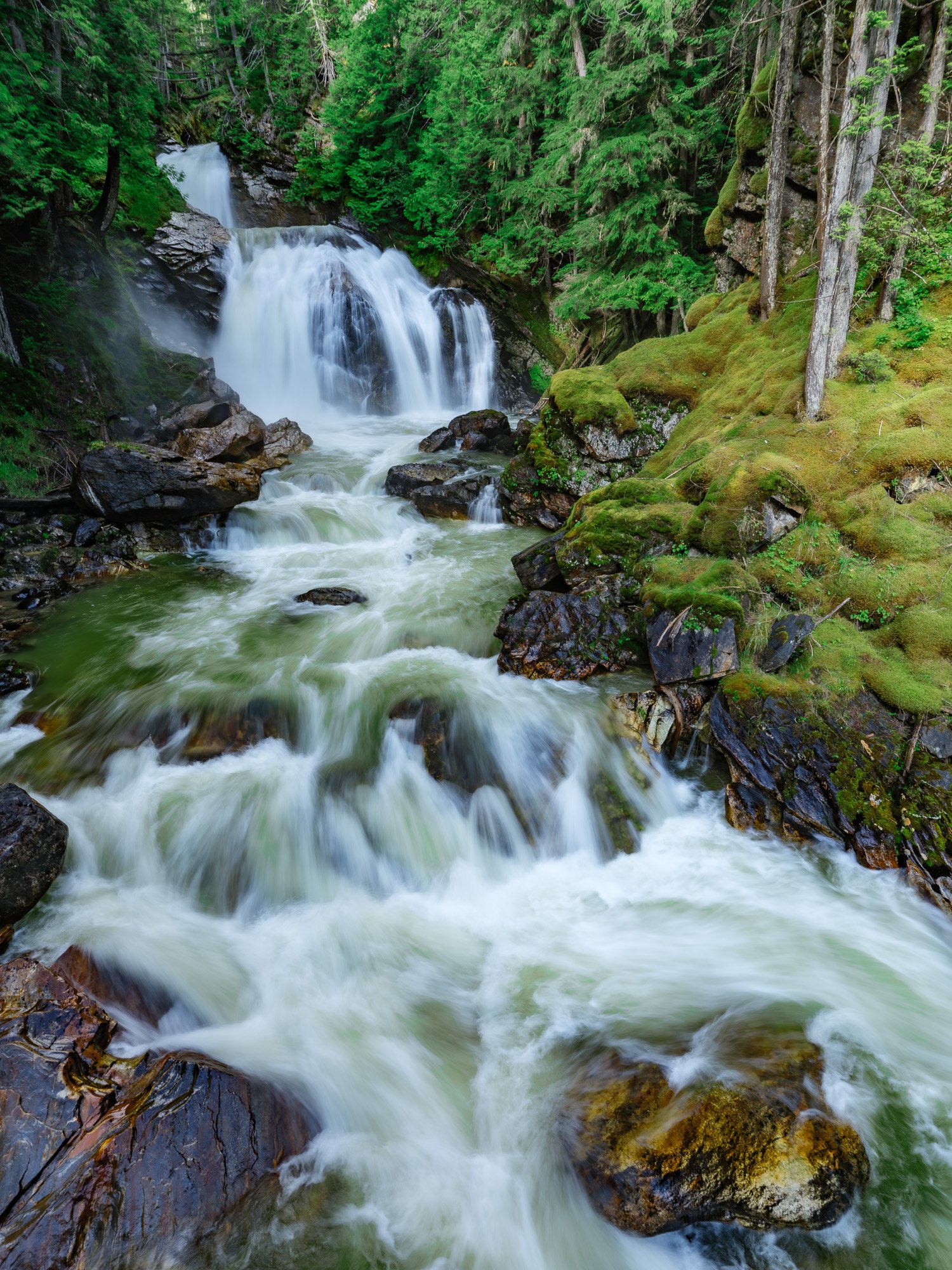
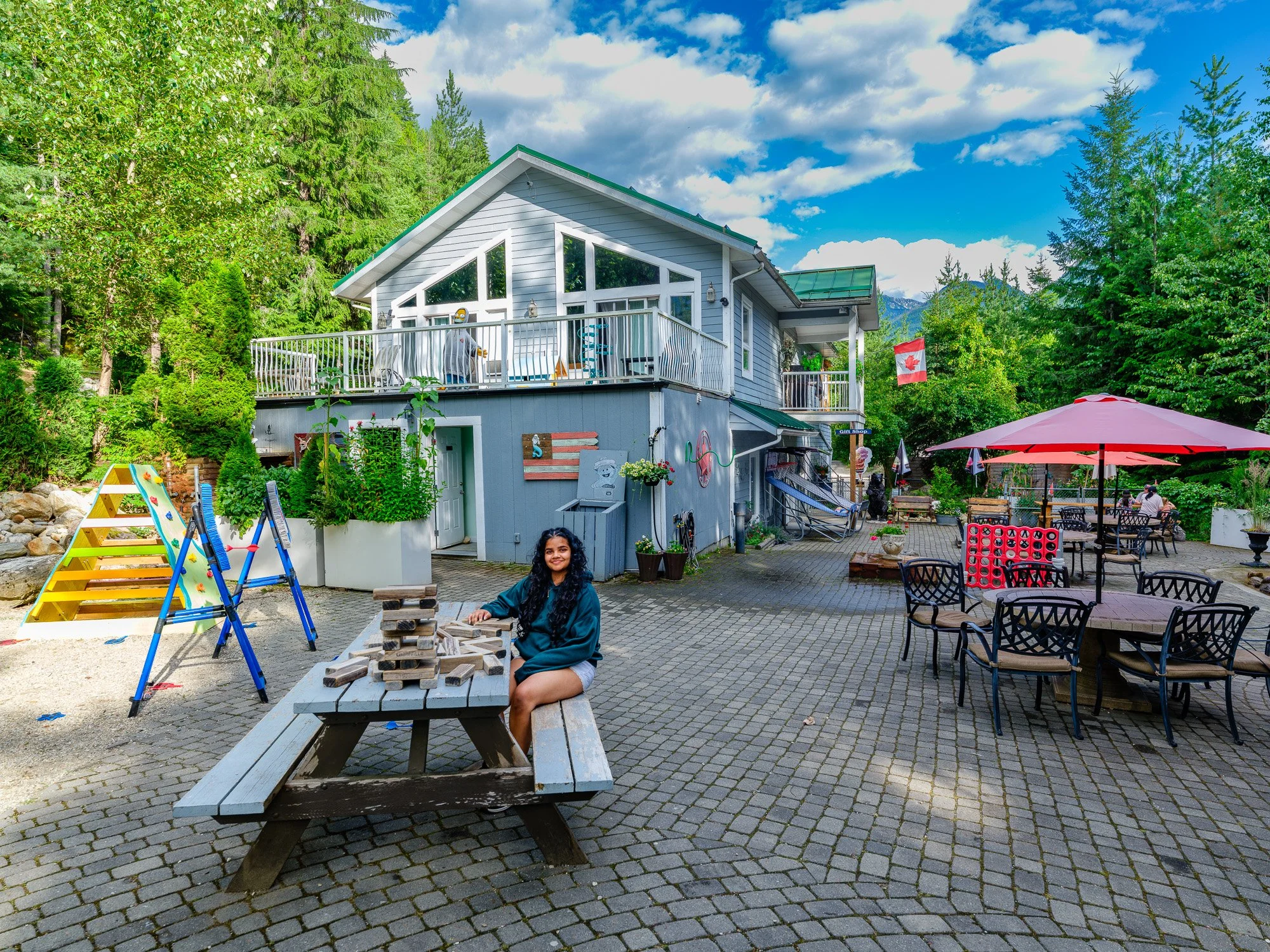
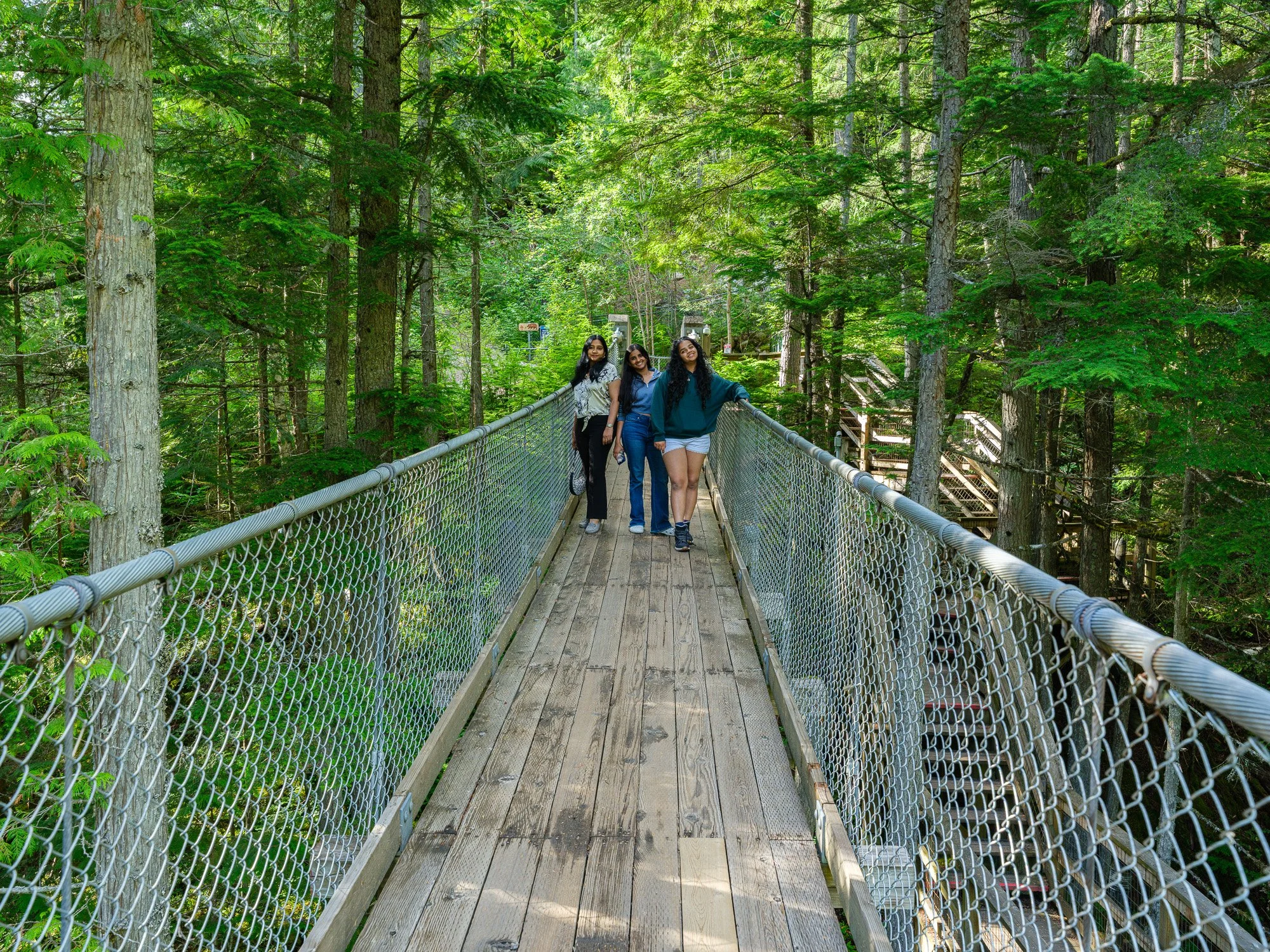
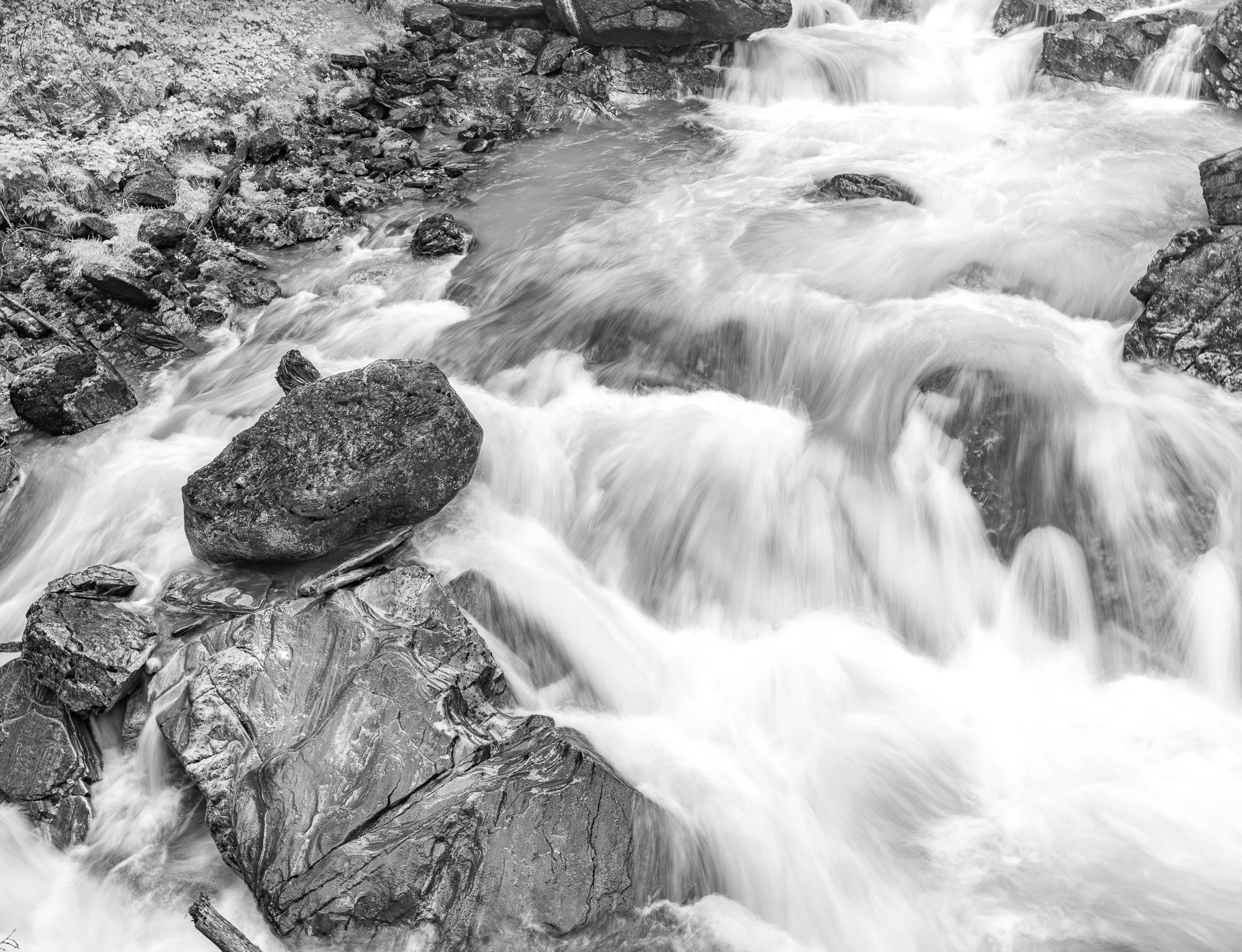
Right beside the falls there is a charming little café and rest stop with outdoor games (giant Jenga, Connect Four), hammock chairs, and a lovely courtyard. Perfect for families to stretch their legs, grab a coffee, and let the kids decompress before the final push to Kamloops.
Where we stayed:The Thompson Hotel, 650 Victoria St, Kamloops — a step up from the outbound Night 1 Quality Inn, and a lovely way to close out the trip. Downtown location, comfortable and stylish. After Crazy Creek we were tired and content — we ordered dinner via DoorDash, put our feet up, and spent the evening reminiscing about the incredible week behind us. Sometimes the best end to a perfect road trip is simply doing nothing at all.
Day 8 — Kamloops to Vancouver
Drive: ~355km, approximately 3.5 hours
The final leg. Kamloops to Vancouver via the Trans-Canada is a beautiful drive in its own right — the Thompson River canyon, the Fraser Canyon, the descent through the mountains into the Lower Mainland. By the time Vancouver's skyline appears on the horizon, you'll have experienced one of the great road journeys of the world.
The Complete Accommodation Guide
Here's a comprehensive accommodation guide you can add as a separate subsection or even a standalone blog post:
Where to Stay on a Vancouver to Banff Road Trip: A Complete Accommodation Guide
Planning a Vancouver to Banff road trip means you're covering a lot of ground across several nights — and where you stay at each stop can make or break the experience. Here's an honest, practical guide based on what we actually booked, what worked, and what we'd recommend to anyone planning the same route.
Kamloops
Kamloops is your natural first night stop on the Vancouver to Banff route — roughly 3.5 hours from Vancouver and a comfortable breaking point before the longer mountain driving begins. It's a functional city rather than a destination in itself, so the priority here is convenience, comfort, and value.
What we booked: Quality Inn, 1860 Rogers Place
A solid, no-surprises highway stopover. Clean rooms, easy parking, and crucially — just a short walk to Riverside Park Beach on the Thompson River, which is worth an evening stroll. Don't underestimate Kamloops as a stopover — the riverside area is genuinely pleasant in summer and gives the family a chance to decompress after the first day of driving.
Budget range: $120–$180 CAD per night
Other options to consider:
The Thompson Hotel (650 Victoria St) — we stayed here on the return and it's a step up in style, right in downtown Kamloops. Worth the slightly higher price if you want a more comfortable first night
Comfort Inn & Suites Kamloops — another reliable mid-range option on the highway strip
Hotel 540 — a boutique downtown option if you want something with more character
Tip: Book early if you're travelling over the July 4th long weekend — Kamloops fills up fast as it's a hub for travellers heading east and west.
Golden
Golden is the ideal second night stop, positioning you perfectly for an early morning departure to Natural Bridge, Emerald Lake, and Lake Louise. It's a small mountain town with genuine character — and those Purcell and Rocky Mountain views from almost everywhere in town are extraordinary.
What we booked: Days Inn by Wyndham Golden
Exactly what you need for a one-night mountain stopover — comfortable, well-located right off the Trans-Canada, and with mountain views from the upper floor that many more expensive hotels would envy. There's a good Indian restaurant directly across the highway which we'd highly recommend for dinner.
Budget range: $130–$200 CAD per night
Other options to consider:
Prestige Mountainside Resort Golden — the premium option in town, with lovely views and a pool. Worth it if budget allows
Ramada by Wyndham Golden — another solid mid-range option, similar profile to the Days Inn
Kicking Horse River Lodge — if you want something with more of a boutique mountain feel
Tip: Wherever you stay in Golden, request an upper floor room facing east for the best mountain views. And leave Golden early — you want to be at Natural Bridge by 9am before the tour buses arrive.
Lake Louise
This is the big one. Lake Louise is the crown jewel of the entire route and where you stay here defines your entire experience. There is really only one choice if budget allows — and there's a very specific reason beyond pure luxury.
What we booked: Fairmont Chateau Lake Louise
Yes, it is expensive. A summer peak season room will set you back $600–$1,200+ CAD per night, depending on room type and dates. But here is the thing that makes the Fairmont non-negotiable for serious travellers on this route: staying at the Fairmont is one of the most convenient ways to access the exclusive Moraine Lake Sunrise Experience, other than staying at the Moraine Lake Lodge itself
This early morning shuttle (departing 4:45am, hotel guests only, $126 per person) gets you to Moraine Lake before the general public, in perfect pre-dawn stillness, with the Valley of the Ten Peaks reflected in a mirror-still lake. It is genuinely one of the most extraordinary experiences in Canada. You simply cannot get this access any other way — the public shuttle to Moraine Lake doesn't run that early and private vehicles are no longer permitted on the Moraine Lake Road in peak season.
Beyond the Moraine Lake access, the Fairmont itself is magnificent. The grand lobby, the lakeside setting, the convenience of dining on site (we used the Glacier Saloon for both lunch and dinner — relaxed, solid food, no need to venture out after a long day of exploring). It is a bucket list hotel in a bucket list location.
Budget range: $600–$1,200+ CAD per night (book as far in advance as possible — it sells out months ahead for peak summer)
Other options to consider:
Deer Lodge (Lake Louise) — a charming, more affordable alternative right at the lake. Rustic mountain character, excellent restaurant. No Moraine Lake sunrise access but a wonderful stay
Lake Louise Inn — the most budget-friendly option at the lake itself. Basic but functional, and you're still right there at Lake Louise
Post Hotel & Spa (Lake Louise village) — a AAA Four Diamond property with an outstanding restaurant. Excellent alternative if the Fairmont is fully booked
Staying in Banff and day-tripping to Lake Louise — if budget is a serious constraint, you can stay in Banff (30–45 minutes away) and drive to Lake Louise. You'll lose the Moraine Lake sunrise access but save significantly on accommodation costs
Critical booking tip: For the Fairmont specifically, book 3–6 months in advance for July travel. The Moraine Lake Sunrise Experience should be booked as soon as you check in — or contact the hotel in advance to reserve. It sells out fast in peak season.
Banff
Banff town is your home base for the middle section of the trip and you'll want to be right in the heart of it — walkable to Banff Avenue, the Bow River, and all the restaurants and shops. Three nights here gives you proper time to breathe and explore without rushing.
What we booked: Banff Park Lodge
A well-located, mid-range property right in the centre of Banff town. Key advantages: the on-site bike rental shop (perfect for the Bow River Parkway cycling), solid on-site restaurants for tired evenings, and walking distance to everything. One honest note — there was some construction during our July 2024 stay which added dust and noise. Worth checking the current situation before booking.
Budget range: $280–$450 CAD per night
Other options to consider:
Luxury:
Fairmont Banff Springs — the iconic castle hotel on the hill above Banff. If you want to splurge in Banff the way you splurged at Lake Louise, this is it. Extraordinary setting, multiple restaurants, spa, golf course. Book months in advance
Rimrock Resort Hotel — perched on Sulphur Mountain with panoramic valley views. More intimate than the Banff Springs, outstanding restaurant
Mid-range:
Moose Hotel & Suites — one of the best mid-range options in Banff, rooftop pool with mountain views, great central location
Banff Caribou Lodge & Spa — comfortable, good value, excellent location on Banff Avenue
Elk + Avenue Hotel — boutique feel, right on Banff Avenue, well-priced for the location
Mount Royal Hotel — historic hotel right in the centre of town, good value and great character
Budget:
Banff Ptarmigan Inn — solid budget option, central location
HI Banff Alpine Centre — hostel option for budget travellers or solo adventurers
Tunnel Mountain Resort (camping/cabins) — if you want a camping experience close to town
Tip: Wherever you stay in Banff, prioritise location over luxury. Being walkable to Banff Avenue and close to the Bow River trail is worth more than a nicer room in an out-of-town property. Parking in central Banff in peak summer is a nightmare — if you're in town on foot, you'll thank yourself for it.
Kamloops
By the time you roll back into Kamloops on the return leg, you'll be tired, happy, and ready for a comfortable bed and an easy dinner. This is the night to treat yourself slightly — you've earned it.
What we booked: The Thompson Hotel, 650 Victoria St
A noticeable step up from the outbound Quality Inn — stylish downtown property with a great central location. We ordered dinner via DoorDash (no shame — we were exhausted after Crazy Creek Falls and 600km of driving) and had an early night. Perfect end to the trip before the final 3.5 hour drive home.
Budget range: $180–$280 CAD per night
Other options to consider:
Hotel 540 — boutique downtown option, excellent for the return night
Comfort Inn & Suites Kamloops — reliable mid-range if The Thompson is full
Quality Inn (same as outbound) — perfectly fine if you want consistency and value
Essential Tips for Planning Your Trip
🎫 Book the Moraine Lake Sunrise Experience early If you're staying at the Fairmont Chateau Lake Louise, contact the hotel as soon as your stay is confirmed to book the Moraine Lake Sunrise Experience. At $126 per person it is not cheap — but those two hours at dawn with the lake to yourselves are genuinely priceless. Don't risk it selling out.
🏞️ Get a Parks Canada Pass You'll need a Parks Canada Discovery Pass to enter Banff and Yoho National Parks. Buy it online before you go or at the park gates. A family/group annual pass pays for itself quickly if you're spending multiple days in the parks.
🚗 Drive the Trans-Canada, not just the destination The drive itself — particularly the stretch between Golden and Lake Louise through Yoho National Park — is one of the great scenic highways of the world. Don't rush it. Stop at pullouts, get out of the car, breathe the mountain air.
⏰ Start early every day The Canadian Rockies in July are extremely popular. The difference between arriving at Natural Bridge at 8am versus 11am is the difference between a serene wilderness experience and a crowded tourist attraction. Early starts reward you with empty parking lots, better light, and moments of genuine peace.
🌡️ Layer up for early mornings Even in peak July heat, early mornings at altitude are cool and crisp — 8–10°C at Moraine Lake at 5am. Bring a proper jacket for the family, especially for the Moraine Lake shuttle.
📅 July 4th weekend is peak season We travelled over the July 4th long weekend which is one of the busiest travel periods of the year in Western Canada. Book all accommodation well in advance — especially the Fairmont — and expect popular spots like Natural Bridge and Emerald Lake to be busy by mid-morning.
🍛 Golden has good Indian food There is an excellent Indian restaurant directly across the highway from the Days Inn by Wyndham in Golden. After a day of driving through mountain wilderness, it hits the spot perfectly.
🚴 Rent bikes at Banff Park Lodge The bike shop at Banff Park Lodge offers direct rentals — no need to arrange transport elsewhere. The Bow River Parkway cycling trail is flat, beautiful and perfect for families.
📱 DoorDash works in Kamloops If you arrive exhausted on the return leg — and you probably will — DoorDash delivers in Kamloops. Sometimes the best travel tip is the most honest one.
The Photography Highlights
For fellow photographers planning this route, these were the standout shooting locations:
🏆 Moraine Lake at sunrise (Rockpile Trail) — The single greatest landscape photography opportunity on the entire route. The 4:45am Fairmont shuttle gets you there in perfect pre-dawn stillness. Climb the Rockpile for the elevated classic shot. Bring a tripod if you want clean long exposures in the low light.
🥈 Emerald Lake — The colour of this water in medium format is extraordinary. Walk the full perimeter for angles most visitors miss. The canoes add beautiful foreground colour interest.
🥉 Natural Bridge, Kicking Horse River — Go early for the best light and smallest crowds. The water's milky turquoise colour against dark wet rock is stunning. Multiple compositions available within a small area.
Also worth shooting:
Lake Louise north shore — rocky foreground with Victoria Glacier
Bow River pedestrian bridge, Banff — reflections in the turquoise water
Crazy Creek Falls — slow shutter long exposure, both colour and monochrome
Banff Avenue — wide angle looking north toward Cascade Mountain
The Gear
For the photography enthusiasts reading this — here's what I carried:
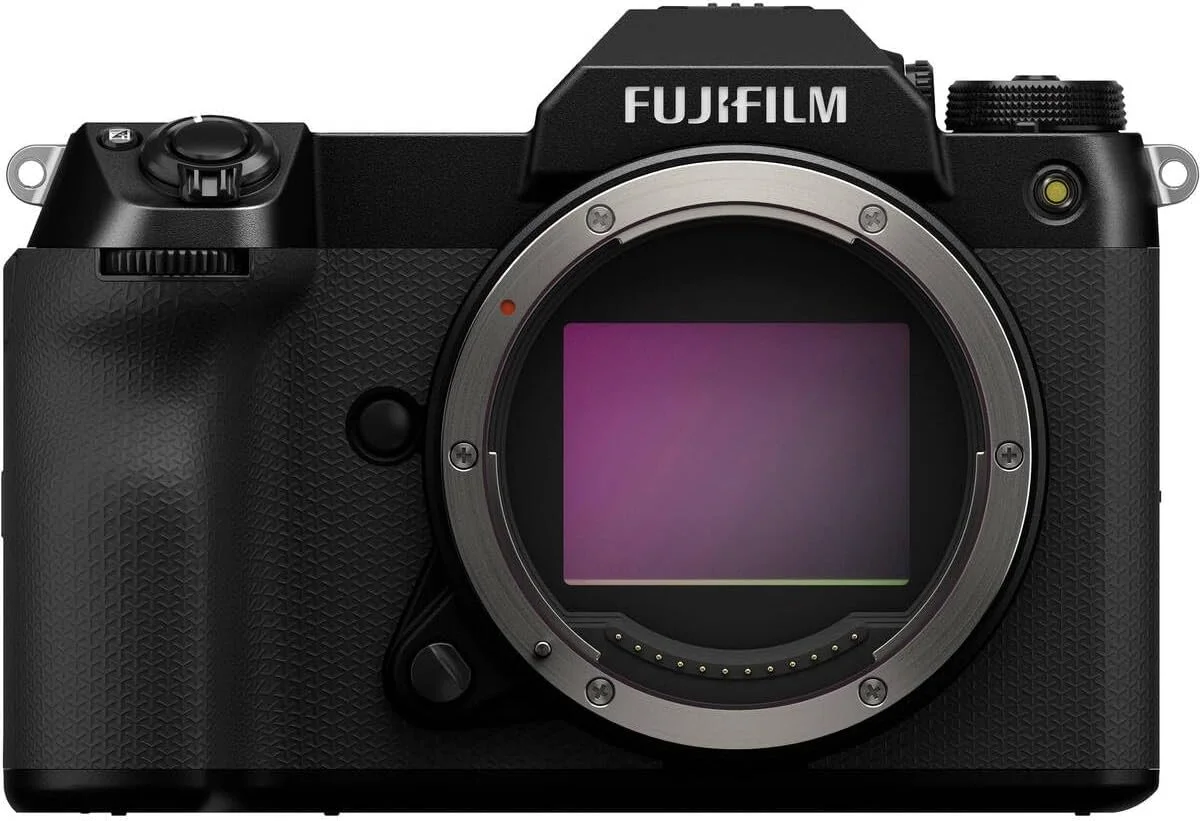
Fuji GFX 100 II and 100sII
GFX 102MP CMOS II Sensor and X-Processor 5.
📷 Fujifilm GFX 100 II (102MP medium format mirrorless) — the workhorse of this trip. If you've ever wondered why certain landscape images have that almost three-dimensional depth and colour rendering that digital cameras rarely achieve, medium format is your answer. The turquoise lakes of the Canadian Rockies are practically designed to be photographed on a GFX sensor.
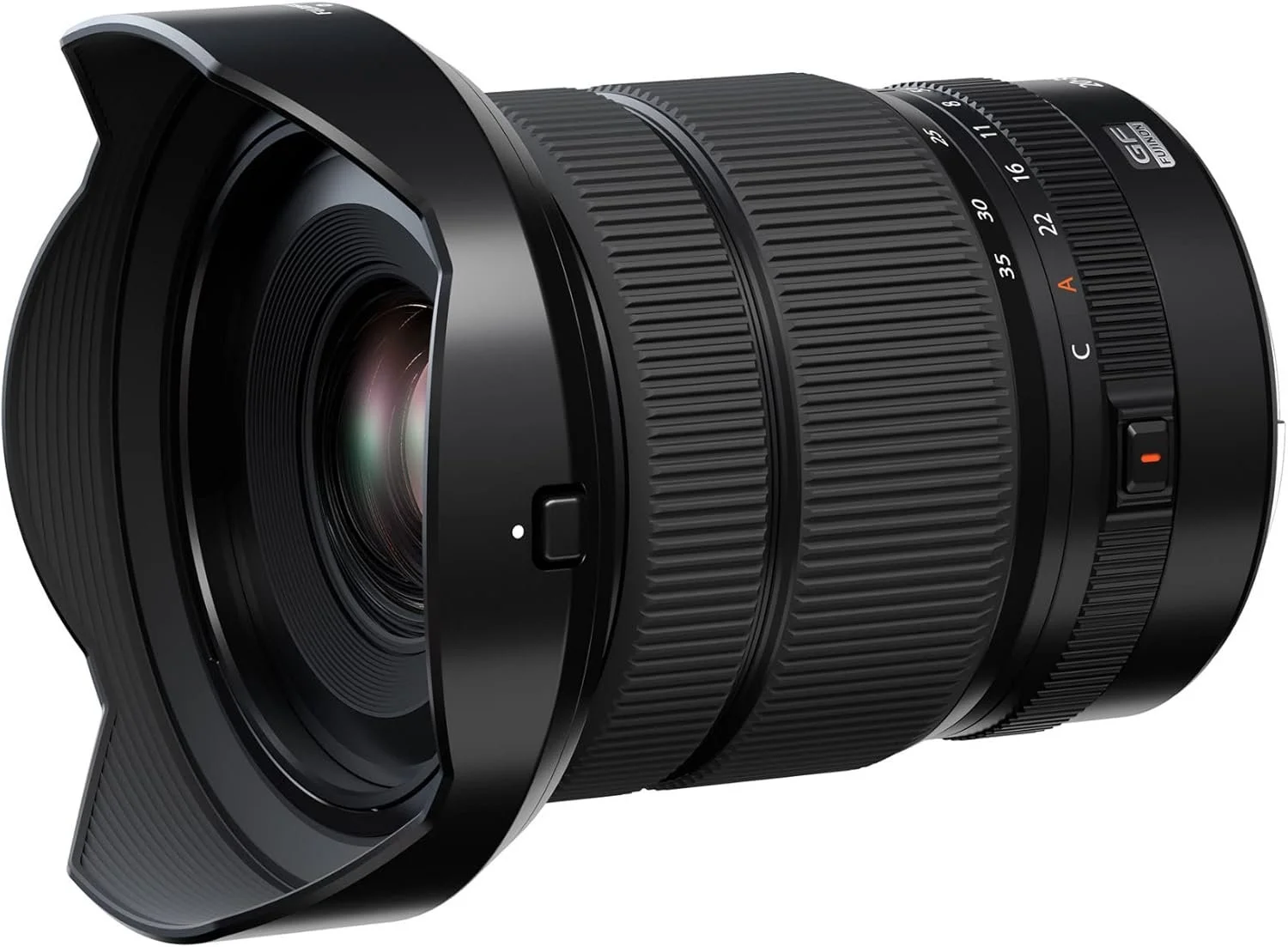
Fujifilm Fujinon GF20-35mmF4 R WR
GF20-35mmF4 R WR is an ultra wide angle zoom lens with a 35mm equivalent focal length of 16-28mm for the large GFX system. It provides high-quality, distortion-free imaging thanks to aspherical lens elements and Fujifilm Nano GI coating. With a durable, weatherproof design and a water resistant fluorine coating on the front element, it is ideal for landscape, architecture and travel creators.
🔭 GF 20-35mm f/4 — My go-to for wide landscapes, interiors (hello, Fairmont lobby), and those big establishing shots where you want to show the full sweep of a mountain valley.
🔭 GF 45-100mm f/4 — Perfect for compressing mountain scenes, portraits at the lakes, and the canoe dock shots at Moraine Lake.
🎥 DJI Osmo Pocket 3 — Compact, lightweight, and brilliant for travel video. Kept this in my pocket for the family moments and driving footage the GFX couldn't capture on the go.
One honest note for GFX shooters travelling with family: you have to pick your moments. The camera is not a casual point-and-shoot. The early mornings — Moraine Lake in particular — were when I could work properly and deliberately. During family time, I balanced between shooting and simply being present. That balance is worth finding.
Final Thoughts
Eight days. Two provinces. One unforgettable family road trip.
The Vancouver-to-Banff route via the Trans-Canada is not just one of Canada's great drives — it is one of the world's great drives. From the desert hills of Kamloops to the mountain grandeur of Golden, from the impossible turquoise of Emerald Lake to that 4:45 am moment at Moraine Lake when the Ten Peaks turn gold, and the lake sits perfectly still, and your kids are laughing and pulling their jackets tighter against the mountain cold — it is the kind of trip that stays with you.
Plan it well. Start early every day. Book the Moraine Lake sunrise experience the moment your Fairmont stay is confirmed. And when you finally pull back into Vancouver on Day 8, tired and full of mountains, know that you've done one of the great ones.
Shot on Fujifilm GFX 100 II with GF 20-35mm f/4 and GF 45-100mm f/4 lenses. Video on DJI Osmo Pocket 3.
Have questions about the route, the photography gear, or any of the stops? Leave a comment below — happy to help you plan your own version of this trip.
Want to Go Further? Add the Icefields Parkway & Jasper
If the Vancouver to Banff route leaves you wanting more — and it will — there is one natural extension that takes this road trip from extraordinary to legendary.
The Icefields Parkway stretches 232 kilometres between Lake Louise and Jasper, consistently ranked among the most scenic drives in the world. Every turn delivers mountains, glaciers, waterfalls, and turquoise lakes. Add 2–3 extra days after Banff and drive north.
The Drive — Key Stops Heading North
Start early from Lake Louise and allow a full day. The drive takes 3.5 hours non-stop, but you'll want 6–8 hours with stops. Don't miss:
Bow Lake — brilliant turquoise water framed by rugged mountains, with the Bow Glacier visible at the far end. The headwaters of the Bow River, which flows all the way through Banff and Calgary.
Peyto Lake — a 750-metre walk to a viewing platform reveals one of the most stunning turquoise lakes on the Parkway. From above, the lake famously resembles a sitting fox. On medium format, the colours here are extraordinary.
Columbia Icefield & Athabasca Glacier — the undisputed centrepiece. Standing at the base of this ancient glacier is a humbling experience. You can walk right to the glacier's toe. Consider booking the Ice Explorer glacier tour or the Skywalk glass-floored observation platform.
Sunwapta & Athabasca Falls — two powerful waterfall stops in quick succession as you approach Jasper. The upper falls at Sunwapta are right by the parking lot; Athabasca Falls lets you feel the sheer force of water cutting through rock over thousands of years.
Jasper Town
Quieter and more relaxed than Banff, Jasper has a genuine small-town mountain feel with outstanding wildlife viewing. Elk wander the streets, bears are frequently spotted on the surrounding roads, and the night skies — Jasper is a Dark Sky Preserve — are extraordinary for astrophotography.
Important note for travellers: A significant wildfire affected Jasper in July 2024. The reassuring news is that 97% of Jasper National Park was untouched — the 3% affected is closest to the town itself. Key highlights, including Maligne Lake, Athabasca Falls, Athabasca Glacier, and Patricia and Pyramid Lakes, are all accessible. Always check Parks Canada for current trail closures before visiting.
Suggested Extension Itinerary
DayRouteOvernight+Day 1Banff/Lake Louise → Icefields Parkway → JasperJasper+Day 2Jasper town & surroundingsJasper+Day 3Return south via Parkway → KamloopsKamloops
Where to stay in Jasper: The Fairmont Jasper Park Lodge is the iconic choice — a beautiful lakeside resort that largely escaped the wildfire. For mid-range, the Pyramid Lake Resort and Tonquin Inn are both solid options, well-located for exploring the park.
Is It Worth It?
Absolutely — if your schedule allows. The Icefields Parkway is one of those drives that genuinely changes how you see the world. The Vancouver to Banff route is already outstanding. Adding Jasper makes it complete.
Allow an extra 2–3 days and book accommodation in Jasper well in advance — it fills up fast in peak summer.
