
Scandinavia - 2 weeks in Denmark, Norway and Sweden
Scandinavia had been on my bucket list for a couple of years. And finally when I got a chance to travel there I decided to visit Copenhagen, Bergen and Stockholm with a short cruise through the fjords thrown in. This was to be a preview for a longer trip to Scandinavia at a later time. I decided to start with Copenhagen.
A photographer's journey through Copenhagen, Bergen, the Norwegian fjords, and Stockholm updated for 2025

Frederik's Church , popularly known as The Marble Church for its rococo architecture, is an Evangelical Lutheran church in Copenhagen, Denmark
Scandinavia has a way of defying your expectations. You arrive prepared for cold skies, reserved locals, and eye-watering prices — and then the light hits a row of 18th-century wooden townhouses reflected in harbour water, or you're standing on a hillside watching the sun set over a fjord at 9pm, and all of that recedes. This trip was always meant to be a first pass — Copenhagen, Bergen, a short cruise on Hurtigruten through the fjords, and finally Stockholm — a preview for a longer return journey I'm still planning. Here's everything I learned, updated for anyone planning a similar itinerary today.
The Route at a Glance
Copenhagen (2–3 nights) → Bergen (3 nights) → Hurtigruten Cruise: Bergen–Ålesund–Trondheim (2 nights) → Stockholm (3 nights)
All four legs are well-connected by air, and the cruise segment is the highlight that holds them together.
COPENHAGEN, DENMARK
Scandinavia had been on my bucket list for a couple of years. And finally when I got a chance to travel there I decided to visit Copenhagen, Bergen and Stockholm with a short cruise through the fjords thrown in. This was to be a preview for a longer trip to Scandinavia at a later time. I decided to start with Copenhagen.
Getting there
Copenhagen Airport (CPH) is the busiest hub in Scandinavia, handling over 28 million passengers annually. It's well-served from the Gulf and Asia — Emirates, Qatar Airways, Singapore Airlines, Cathay Pacific, Air India, and most major European carriers all fly direct or via their hubs. Within Scandinavia,
Practical tip (2025): SAS relaunched after bankruptcy restructuring in 2024 and is now part of the SkyTeam alliance. Worth checking for award redemptions if you hold miles with Air France-KLM or Korean Air.
The Metro line directly connects the airport to the city centre in around 15 minutes. No need to book a transfer.

Copenhagen Airport Image Courtesy: Copenhagen Media Center Photo By : Ty Stange
SAS (Scandinavian Airlines) and Norwegian Air provide the best regional connectivity. A practical routing from Dubai or Singapore is to transit via London, Amsterdam, or Frankfurt if you want more frequency options.
Practical tip (2025): SAS relaunched after bankruptcy restructuring in 2024 and is now part of the SkyTeam alliance. Worth checking for award redemptions if you hold miles with Air France-KLM or Korean Air.

SAS AIRLINE Image Courtesy: Copenhagen Media Center
Where to Stay at Copenhagen
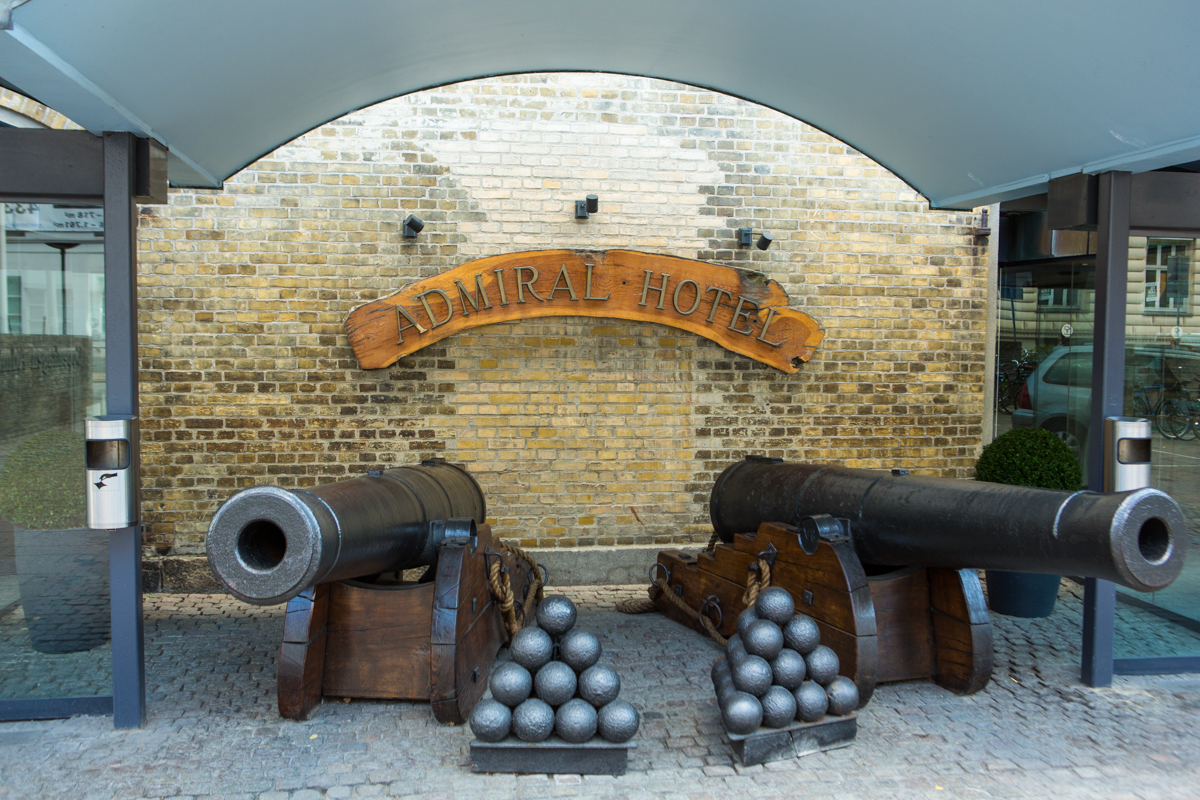
Copenhagen Admiral Hotel
The two main tourist neighbourhoods are Nyhavn (the iconic coloured harbourfront) and Indre By (the medieval old city). Staying in either puts most sights within walking distance.
I based myself in Nyhavn for the convenience — the waterfront, the palaces, the canal cruise departure points, and most guided tour pickups are all nearby.
Nyhavn/Waterfront
Copenhagen Admiral Hotel — a converted 18th-century granary with harbour views; one of the city's most characterful options
71 Nyhavn Hotel — right on the canal, small and atmospheric
Indre By (Old City)
Hotel d'Angleterre — if you want Copenhagen's finest address
Best Western Plus Hotel City Copenhagen — solid mid-range option close to Tivoli
Budget
City Hotel Nebo — consistently well-reviewed, near the central station
2025 note: Copenhagen has seen a wave of design-forward boutique hotels open in Vesterbro and Nørrebro (Nobis, SP34, Manon Les Suites) — worth considering if you want to be closer to the city's restaurant and bar scene rather than the tourist core.

Statue of CARL FREDERIK TIETGEN, Danish Industrialist who founded a number of companies and also introduced the concept of “cheque” to Denmark

Calm Night at Nyhavn
Getting Around Copenhagen
Copenhagen is one of the world's great cycling cities — over 390 km of dedicated bike lanes. Renting a bike for a day or two is genuinely one of the best ways to experience the city. Donkey Republic and Bycyklen (the city's smart e-bike system) are the main rental options.
The Metro runs 24/7 and the City Circle Line (M3), which opened in 2019, makes getting across town significantly easier than the old blog mentioned. A Copenhagen Card (24h, 48h, or 72h) covers unlimited public transport plus entry to over 80 museums and attractions — good value if you plan to visit multiple sites.
Top Copenhagen Experiences for you

Copenhagen Metro Train Image Courtesy: Copenhagen Media Center
Places to Visit and things to do in Copenhagen
Copenhagen has something for everyone. From waterfront cafes to Grand Palaces, Museums and Art Galleries. There are too many to list in this blog, but here are a few highlights
Visit Rosenborg Castle and Explore the palace grounds and King’s gardens.
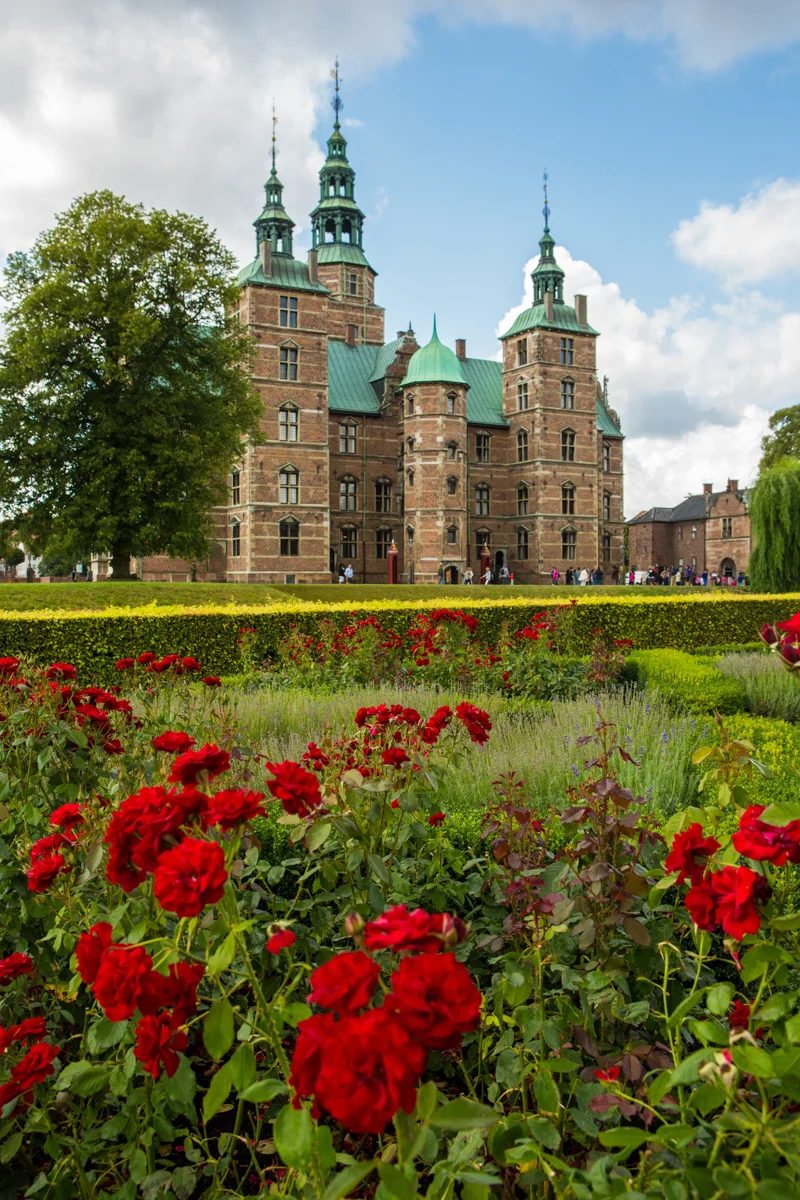
Rosenborg Castle and King's Garden
A 17th-century Renaissance castle that now houses the Danish Crown Jewels. The surrounding King's Garden (Kongens Have) is the oldest royal garden in Denmark and one of the most pleasant places in the city on a sunny afternoon.
Take in the Grandeur of Danish Aristocracy at Amalienborg Palace

The winter residence of the Danish Royal Family, made up of four near-identical palaces arranged around an octagonal courtyard. The changing of the Royal Guard happens daily at noon and is genuinely worth watching. The Amalienborg Museum inside one of the palaces is excellent — it offers an unusually intimate look at royal life over the last century.
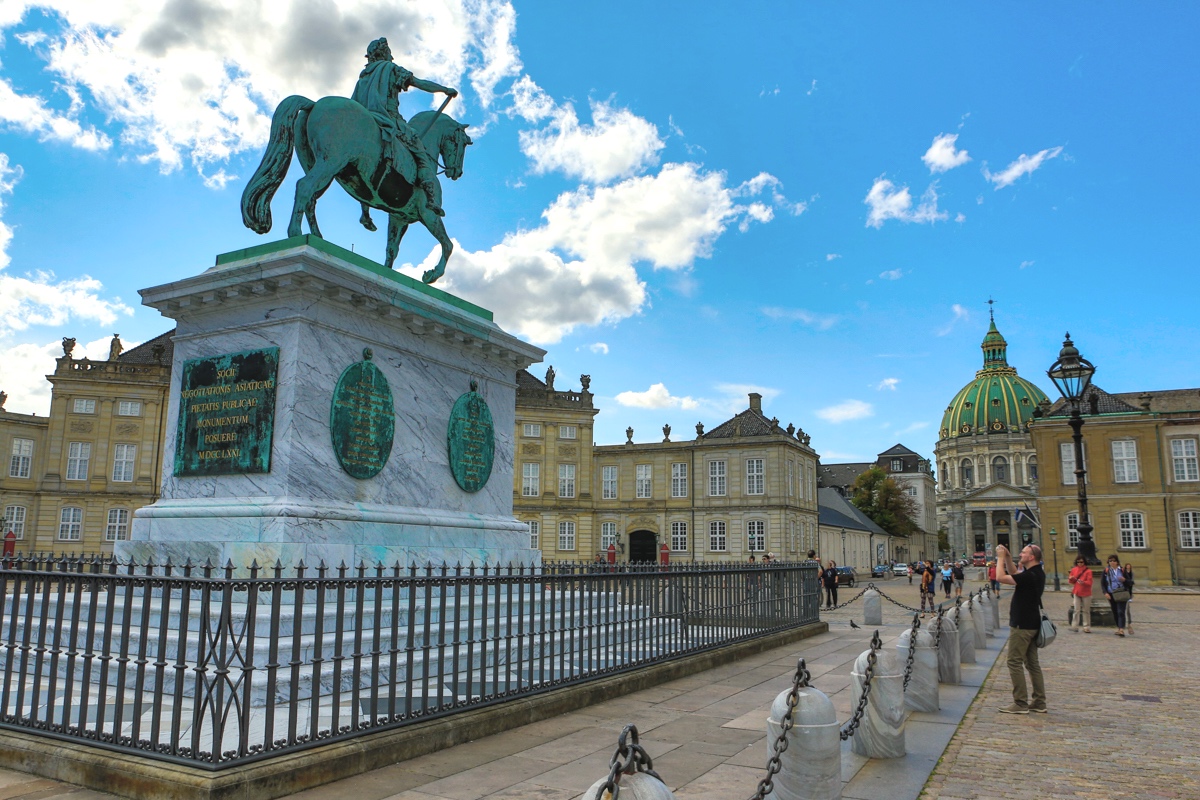
Amalienborg Palace Museum, Copenhagen Photo By : Kamal Chilaka
Revel in the energy of Nyhavn

The 17th-century canal lined with brightly coloured townhouses is exactly as photogenic as it looks in photos — but the best light is early morning before the crowds arrive, or at dusk when the reflections on the water come alive. Hans Christian Andersen lived in three different houses here. Today it's lined with restaurants and bars; pick one facing the canal and settle in.

Nyhavn is full of Dining and Drinking Options.
Become a kid again at Tivoli Gardens one of the oldest theme parks in the world. Walt Disney himself found inspiration for the Disney World here.
One of the oldest amusement parks in the world (opened 1843) and a direct inspiration for Walt Disney when he was planning Disneyland. Don't dismiss it as a tourist trap — Tivoli is genuinely beautiful, especially after dark when the lights come on. The gardens are open spring through autumn and again for an extended Christmas season; if your visit overlaps with Halloween or Christmas, the atmosphere is something special. Book tickets in advance during peak season — they do sell out.

Tivoli Gardens at Night Image Courtesy : Copenhagen Media Center Photo By : Eleonora Costi

Carousel at Tivoli Image Courtesy: Copenhagen Media Center Photo By : Anders Bøgild
The Little Mermaid and Geflon Fountain
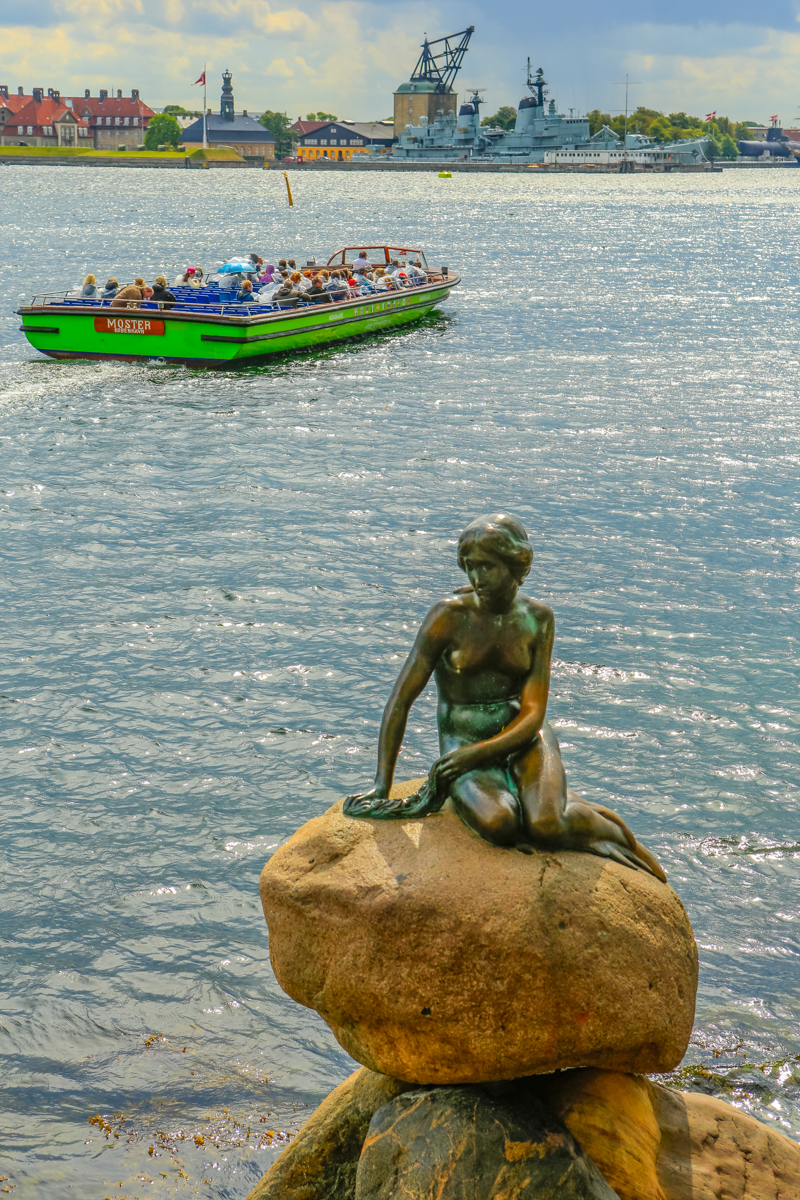
The Little Mermaid
These two are often visited together as they sit close to each other on the harbourfront. The Little Mermaid is smaller than most people expect (she's only 1.25m tall), but she's been sitting on her rock since 1913 and the mythology around her is worth knowing before you arrive. The Gefion Fountain nearby — depicting the Norse goddess driving oxen — is far more dramatic and often overlooked.

Near Geflon Fountain

Geflon Fountain
The Gefion Fountain, Copenhagen's largest monument, depicts the Norse goddess Gefjon driving four oxen through churning water — a scene drawn from Viking mythology, in which Gefjon was promised as much land as she could plough in a single night. She transformed her four sons into oxen and carved out the island of Zealand, on which Copenhagen itself stands. Sculptor Anders Bundgaard worked on the bronze for nearly two decades; it was unveiled in 1908 and remains one of the most dramatically scaled public fountains in Scandinavia. At night, lit from below with the water in full flow, it's one of the finest photo subjects in the city.
Absorb the Art of Danish and International Masters at SMK - The National Gallery of Denmark
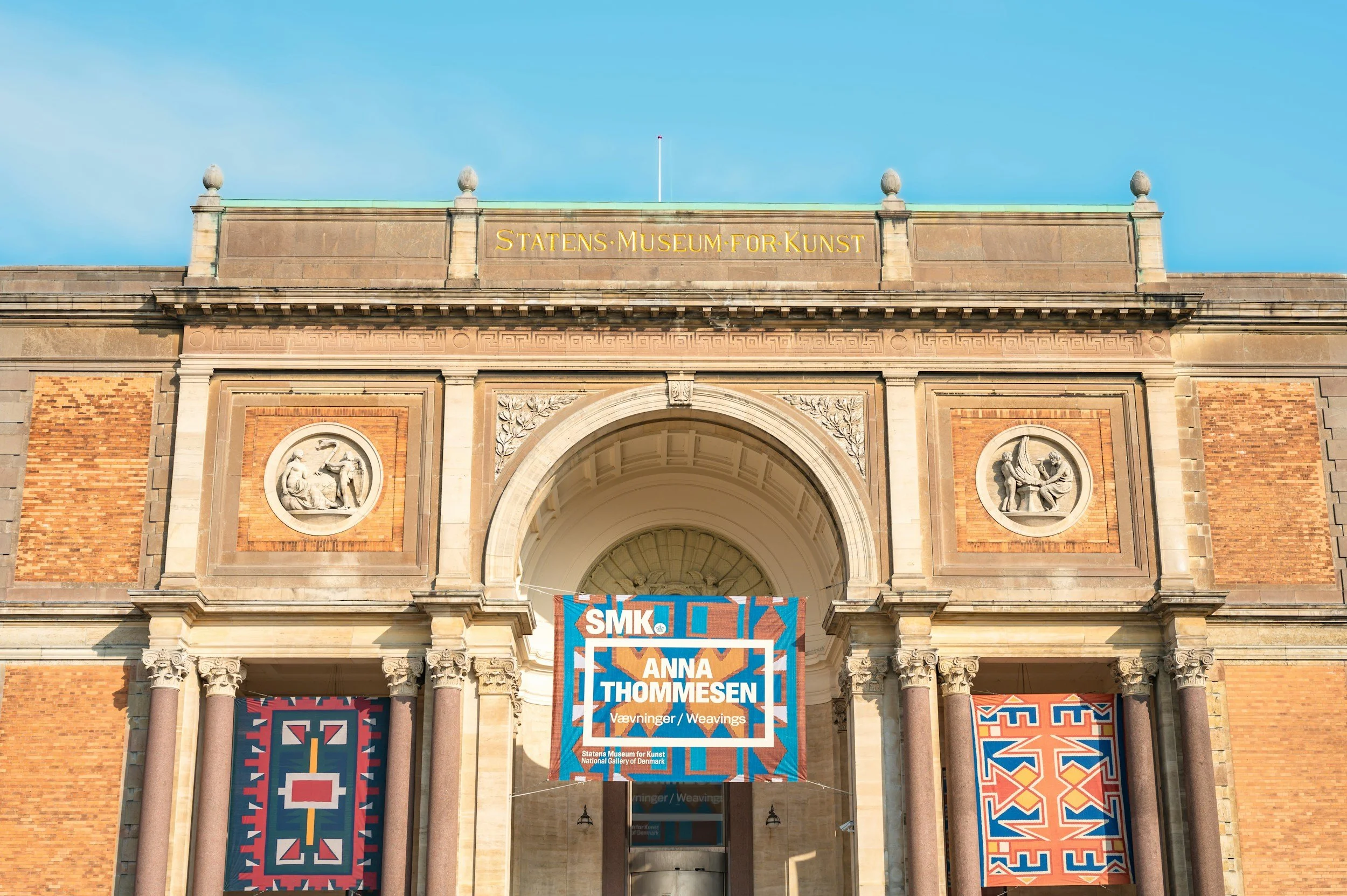
The largest art museum in Denmark, with a collection spanning seven centuries. The modern wing, connected to the historic building by a glass passageway, houses excellent 20th-century Danish and international work.
Feel the wind against your face during a Canal and Harbour Cruise

Canal and Harbour Cruises
A canal boat tour is one of the best orienting experiences in Copenhagen. Most depart from Nyhavn and loop around the harbour past the Opera House, Christianshavn, and the Black Diamond library. Trips run roughly 1 hour and offer a completely different perspective on the city's relationship with the water.

Old Opera Ferry and Building
Go Back in time at the Christiansborg Palace and Frederiksborg Castle
Frederiksborg Castle is situated in Hillerød, north of Copenhagen. This impressive Renaissance castle was built in the first decades of the 17th century by the Danish King Christian IV.
Frederiksborg Castle has housed The Museum of National History since 1878, when it was established by brewer J.C. Jacobsen, the founder of Carlsberg. The beautiful decorated rooms with portraits, history paintings, furniture, and decorative art invite visitors on a journey through Danish history and culture from the late Middle Ages to the present. The historical interiors and the splendorous rooms give a sensuous impression of changing styles and epochs. The collection of portraits is the largest and most significant in Denmark, with new works continually added to the collection.

Christiansborg Palace Image Courtesy : Copenhagen Media Center Photo by : Martin Heiberg
Christiansborg Palace
Built on the site of the original 12th-century castle, this is where the Danish Parliament (Folketing), the Supreme Court, and the Prime Minister's Office all share a building. The Royal Reception Rooms are open to visitors and are genuinely spectacular. The ruins of the original castle underneath the current building are a fascinating detour.
Be moved at the The Royal Danish Opera.

The Royal Danish Opera House
One of the most expensive opera houses ever built (cost roughly 500 million USD), it sits directly across the harbour from Amalienborg Palace. The architecture is striking from the outside, but the interior is where it impresses — worth attending a performance if your dates align.

Opera House Inside. Image Courtesy: Copenhagen Media Center. Photo by : Terry Mclaughlin
Shop for souvenirs and gifts at the High Street shops.

High Street Shopping at Nyhaven
Stroll around Copenhagen Harbour and enjoy the fresh air as you take in the sweeping views of the sea.

Copenhagen Harbour Scene
Copenhagen for Photographers
The best light in Copenhagen is during the golden hours — sunrise by the canal before the restaurants open, or sunset from the towers of the Church of Our Saviour in Christianshavn (you climb the external spiral staircase). The city's famous coloured buildings photograph best on overcast days when the colours pop without harsh shadows. Don't overlook the residential streets of Nørrebro and Vesterbro for street photography — they're far more authentic than the tourist core.
BERGEN, NORWAY

Bergen is the city that stays with you. Set among seven mountains, with a UNESCO-listed wooden wharf at its heart and fjords visible in every direction, it's one of those places where the landscape and the human history feel inseparable. It rains a lot — Bergen is one of the wettest cities in Europe — but the light after rain on the coloured wooden houses of Bryggen is extraordinary.
Getting there
By Air: Direct flights connect Bergen Airport Flesland to Copenhagen, Stockholm, London, Amsterdam, Helsinki, New York, and many European cities. The airport is 18km south of the city; airport buses (Flybussen) run every 10–15 minutes and take about 45 minutes to the city centre. A taxi takes around 30 minutes but is significantly more expensive.
By Cruise/Ferry: Hurtigruten sails from Bergen northward along the coast and is the most atmospheric arrival. DFDS and Color Line operate ferry routes from other European ports. The approach to Bergen from the sea — threading through islands and past fishing villages — is one of the great arrivals.
By Train (the Bergen Railway): The Oslo–Bergen train route is one of the great rail journeys in Europe, crossing the Hardangervidda mountain plateau at over 1,300 metres elevation. The journey takes around 7 hours from Oslo, but the scenery makes every minute worthwhile. Book well in advance on Vy Rail (vy.no) — popular departures sell out.
By Car: Driving from Oslo takes 7–8 hours depending on the route, but gives you the freedom to stop along the way. Scenic Route 7 via the Hardangerfjord is worth the slight detour.
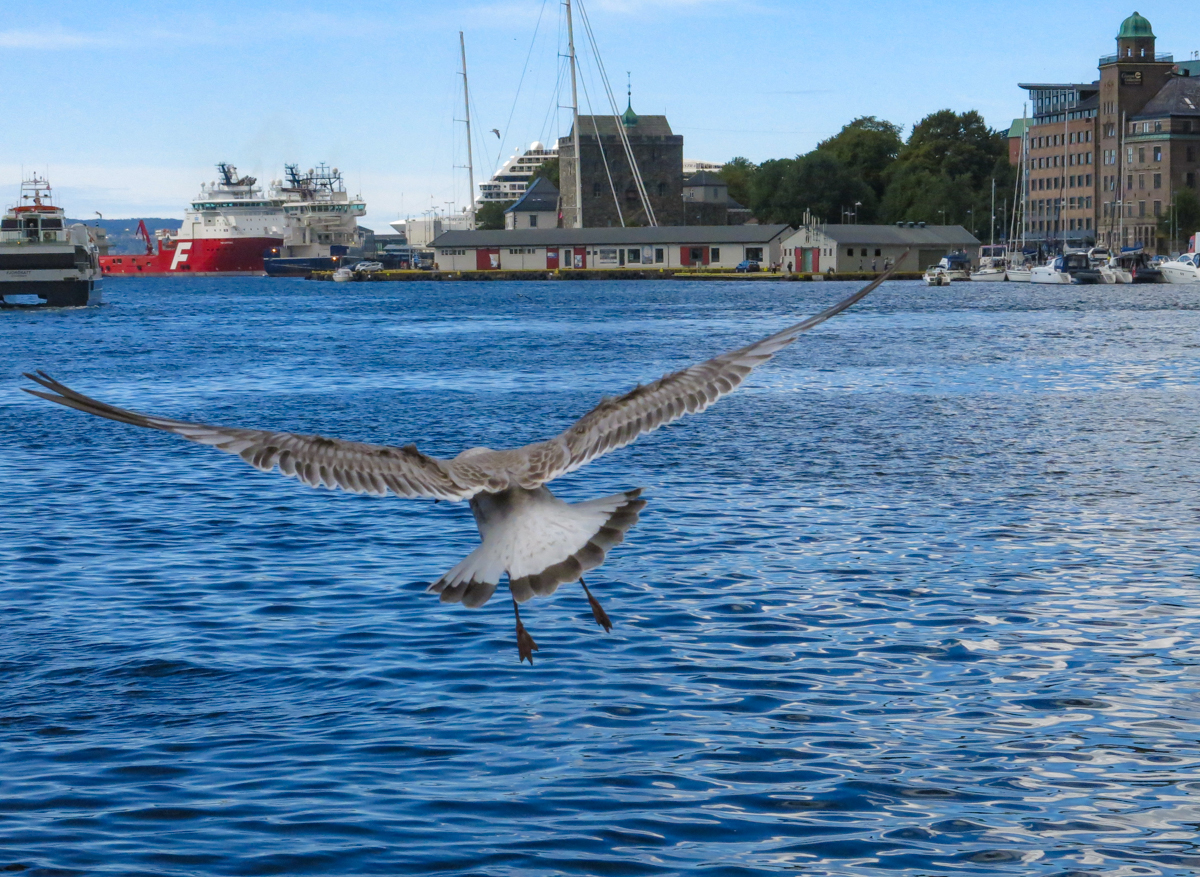
Gull and Blue Waters of Bergen Harbour
Driving there
One can drive to Bergen from Stavanger or from Oslo. The drive from Oslo to Bergen taken between 7 to 8.5 hours depending upon the route. Driving gives you more freedom to make the journey at your own pace and enjoy the scenery en-route.
Where to Stay at Bergen
I stayed at the Scandic Ørnen, which is comfortable but a walk from the centre. On reflection, the better base is somewhere closer to Bryggen harbour.
Luxury
Opus XVI — boutique hotel in a historic bank building; excellent location and design
Zander K — stylish, centrally located, strong restaurant
Mid-Range
Radisson Blu Royal Hotel Bergen — right beside Bryggen harbour; the location makes it worth the price
Thon Hotel Rosenkrantz — solid option, good central position
Budget
Marken Guesthouse — friendly, well-reviewed, short walk from centre
Bergen YMCA Hostel — the best budget option in the city
Dining at Bergen
Bergen takes its seafood seriously — the city has been a fishing port for centuries and it shows. The Fish Market(Fisketorget) on the waterfront is the obvious starting point: you can eat freshly cooked fish, shellfish, and smoked salmon at the market stalls, though prices are tourist-facing. For a proper meal, the restaurants around Bryggen offer excellent Nordic seafood in historic surroundings.
Recommendations:
Bryggeloftet & Stuene — classic Norwegian dishes in one of Bryggen's original warehouses
Lysverket — the city's standout fine dining, in the KODE art museum building
Pingvinen — traditional Norwegian home cooking (husmannskost) in a pub setting; excellent value
Bare Vestland — modern Norwegian produce-driven cooking, deservedly popular
For something more familiar, there are several international options in the city centre. Bergen has developed a strong coffee culture in recent years — Kafe Knappen and Kafé Pingvinen are both worth knowing.

TGIF Bergen

Coffee Shop at the Fish Market

Bergen City Scene
Top Bergen Experiences
Bergen Photo Ops
Bryggen Harbour and Waterfront

Bryggen Waterfront Area
Bryggen is Bergen — the UNESCO World Heritage-listed row of medieval wooden warehouse buildings that line the eastern side of the harbour. The current buildings date primarily from after the great fire of 1702, but they were rebuilt on 12th-century foundations, and the narrow alleyways between them feel genuinely unchanged. The German Hanseatic League dominated trade here for nearly 400 years from 1360, and the Hanseatic Museum inside one of the original buildings tells that story well.
Today the alleyways behind the main wharf front are filled with independent shops, craft studios, and small galleries — worth wandering slowly. Photographers: the light on the wooden facades in the late afternoon, and the reflections in the harbour water at dusk, are the signature Bergen shots.
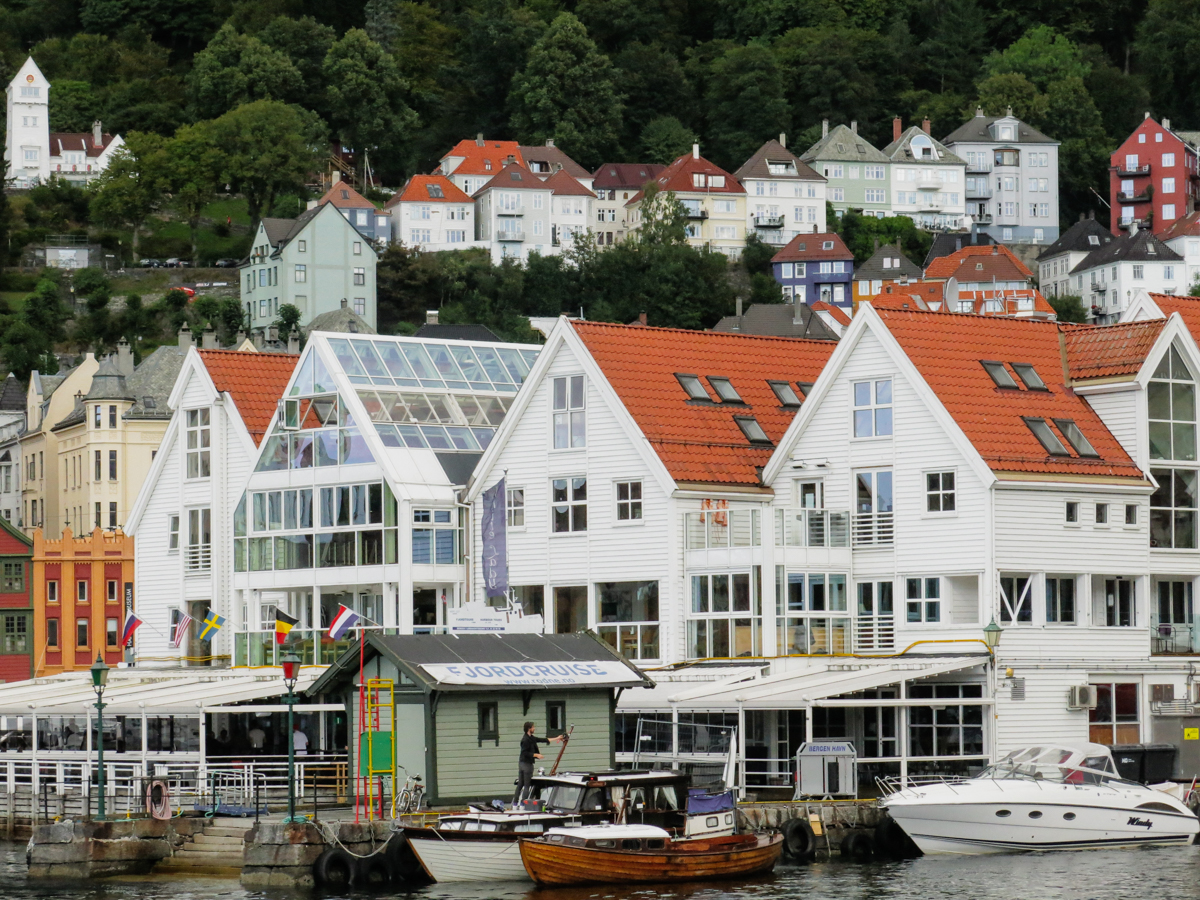
Bergen Waterfront
Bryggen is very much a living part of the cultural heritage that is still in active use in this historical area of the city. Today, there are several attractions in the area, from the Fish Market to Bergenhus Fortress and there are many cafés, restaurants and shops to choose from. Many of the shops sell traditional and unique crafts.
Explore by walking through the lanes of Bergen

Quaint by Lanes of Bergen
Take the funicular up to the Mt Floyen View Point for fantastic views of Bergen and the fjords.
The funicular station is a short walk from Bryggen harbour, and the ride up to the 320-metre summit of Mount Fløyen takes about 8 minutes. At the top: panoramic views over Bergen, the surrounding fjords, and the other six mountains. There are marked hiking trails across the plateau, a small café, and on clear evenings, a sunset that lasts until 9pm or later in summer.
Practical notes: The funicular runs until around 11pm in summer. Buy tickets at the station or in advance at floyen.no. The summit can be significantly cooler than the city below — bring a layer.

View from Top of Mt Floyen
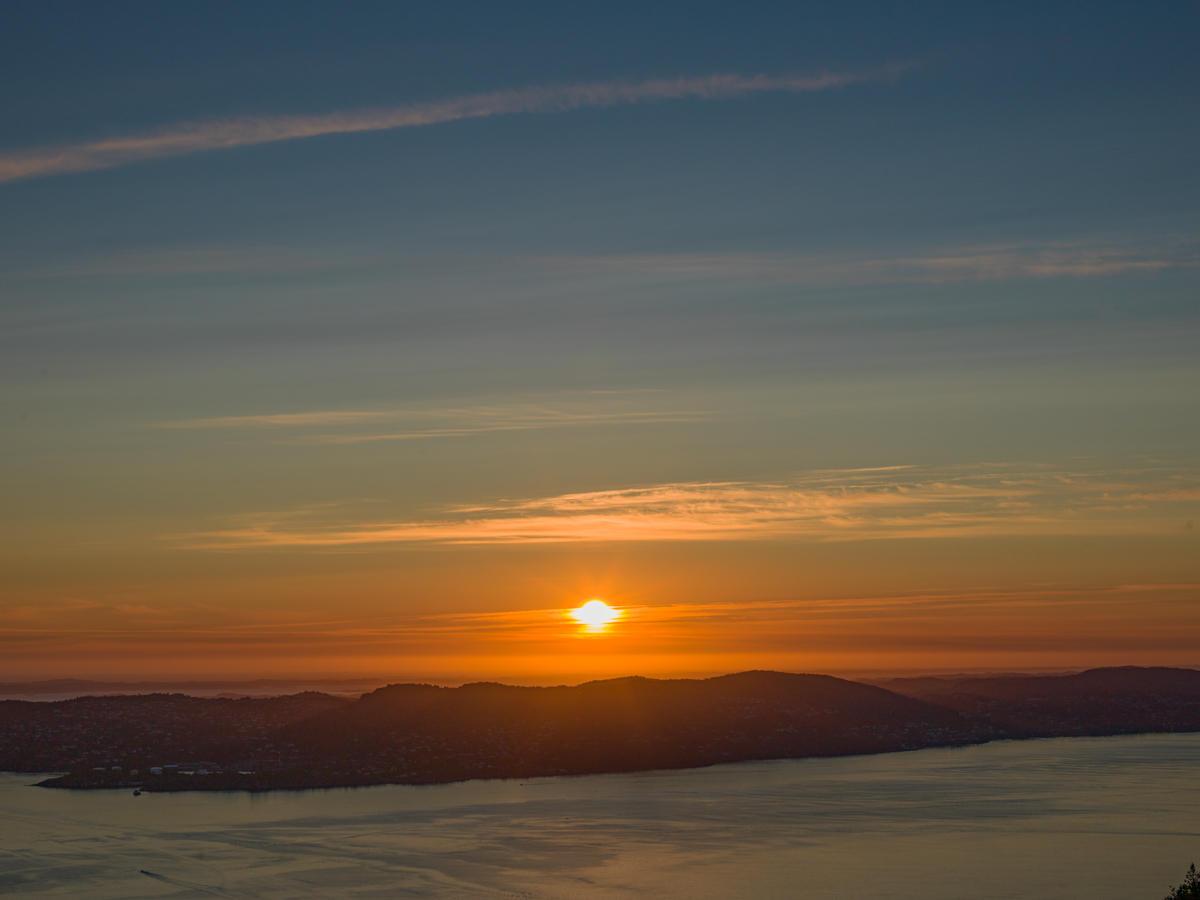
The Fløibanen funicular makes its way up through the pine forest above Bergen, with the city's waterfront, Nordnes peninsula, and the open fjord spreading out below. This single image explains why Bergen is considered Norway's most beautiful city — mountain, forest, city, and sea occupying the same frame. The funicular has been running this 844-metre track since 1918, climbing 320 metres in under 8 minutes. What you can't see from up here is the rain — Bergen receives around 2,250mm of rainfall annually, making it one of the wettest cities in Europe. The light when it finally breaks through, as it has here at dusk, makes every wet day worth it.
Sunset in summer is quite late around 9 pm and it can be quite sunny up at the view point even if you get up there by 6 pm. But its worth the wait and you can ensure you have a good spot reserved to view the Sun set over the fjords.

Tourists and Jogger enjoying the sunset at Mt Floyen Viewing Point
Mount Ulriken Cable Car
For even more dramatic views, the cable car to the top of Mount Ulriken (642 metres, the highest of Bergen's seven mountains) offers a 360-degree panorama that includes the open sea, the fjords, and the full sweep of the city. The base station is about 4km from the city centre; a dedicated bus runs from the Bygarasjen bus terminal. There's a restaurant at the summit and several marked hiking routes.
People Watching at Bergen Center

Bergen City Center

Street Musician at Lille Lungegårdsvannet , Bergen

School kids out on a trip
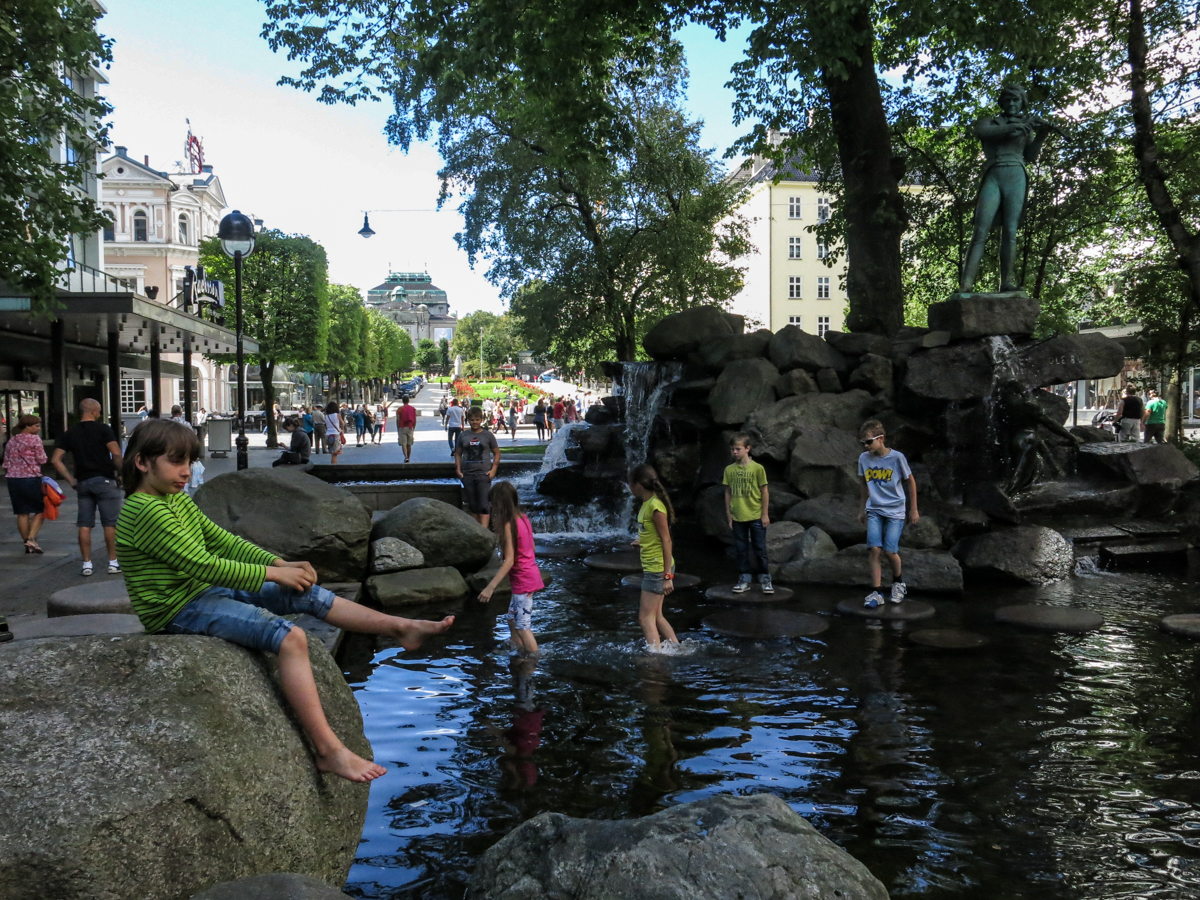
Kids cooling off at a fountain near city center
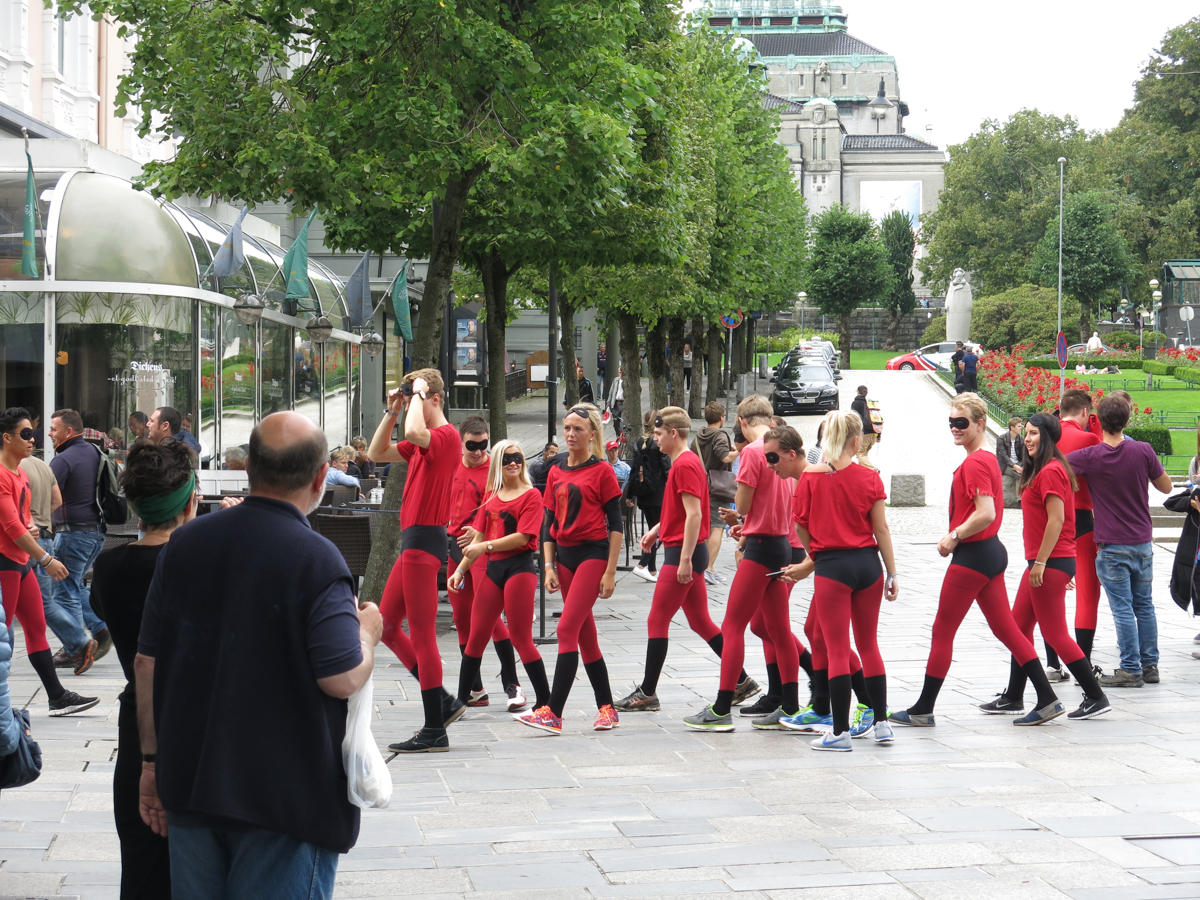
Youngsters having fun masquerading

A Wedding group at Bergen.
After 3 days of a fairy tale stay at Bergen and with a promise to return for a longer stay that I set off onto the next leg of my journey which was the cruise on Hurtigruten from Bergen to Alesund and Trondheim.
HURTIGRUTEN CRUISE: Bergen to Trondheim via Ålesund
What is Hurtigruten?
Hurtigruten (literally "the express route") has been sailing the Norwegian coast since 1893. Originally a working postal and passenger ferry connecting isolated coastal communities, it now operates as a passenger cruise line while still serving as a lifeline for many small towns along the route. This isn't a traditional luxury cruise — the ships are expedition-style vessels, the emphasis is on the landscape rather than onboard entertainment, and the other passengers tend to be serious travellers rather than package tourists.
The full Bergen–Kirkenes voyage is 11 days; I had two nights and one full day, which covered the Bergen–Ålesund–Trondheim section. Even this short segment passes through some of the most dramatic coastal scenery in the world.
2025 update: Hurtigruten has split into two companies — Hurtigruten Expeditions (operating in Arctic and Antarctic regions) and HX (the Norwegian coastal route). Booking is through hurtigruten.com for the coastal voyage. Prices have increased substantially since the pandemic, but the experience remains exceptional. For a Bergen–Trondheim segment, budget roughly €300–600 per person for a sea-view cabin including meals (costs vary widely by season and cabin class).
BERGEN-ALESUND-TRONDHEIM

Inside Hurtigruten Terminal at Bergen.This where the passengers check in and wait to board the Cruise Ships
Hurtigruten has sailings from Bergen to KIrkenes and back via Alesund and Trondheim (Norwegian Discovery Voyage)which is a 11 day voyage. I had only a couple of days and nights to spare for the cruise so decided to sail just the Bergen -Alesund-Hardangerfjord-Trondheim section which was 2 nights and 1.5 days.
You can see more details on the Hurtegruten website.
To explore the fjords and the surrounding countryside further take a day trip or two during the cruise. They are a little pricey but the arrangements are excellent and leaves you free to just take in the scenery.

The Ship
My sea-view cabin was compact but comfortable. The dining area operates on an open-seating system with buffet meals that lean heavily on Norwegian ingredients — fish, reindeer, root vegetables, and excellent bread. The upper viewing deck is where you spend most of your time: wrapped in a blanket, watching the coastline pass. There's a lounge, a small bar, and lecture programmes about the areas you're sailing through.

Dining Area in the Ship
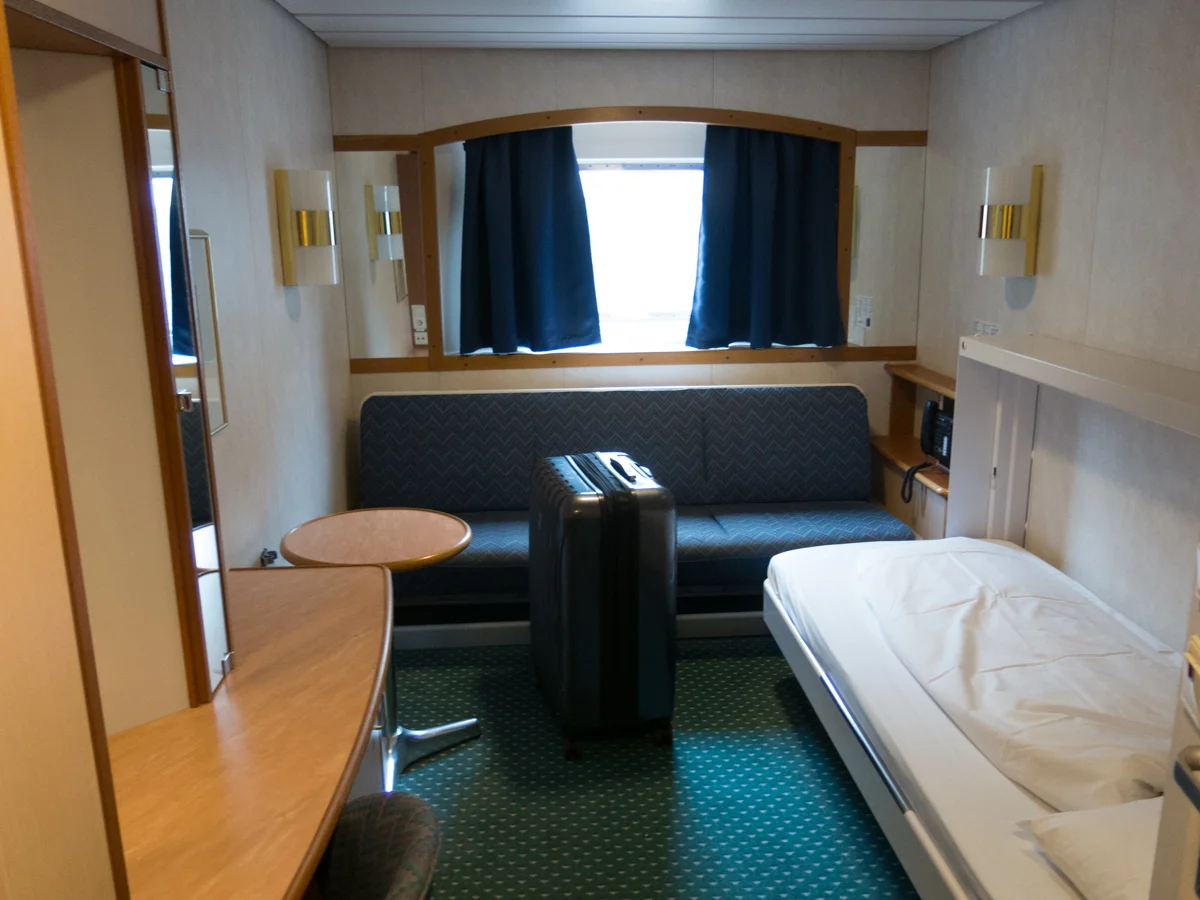
My Sea View Cabin for the Cruise
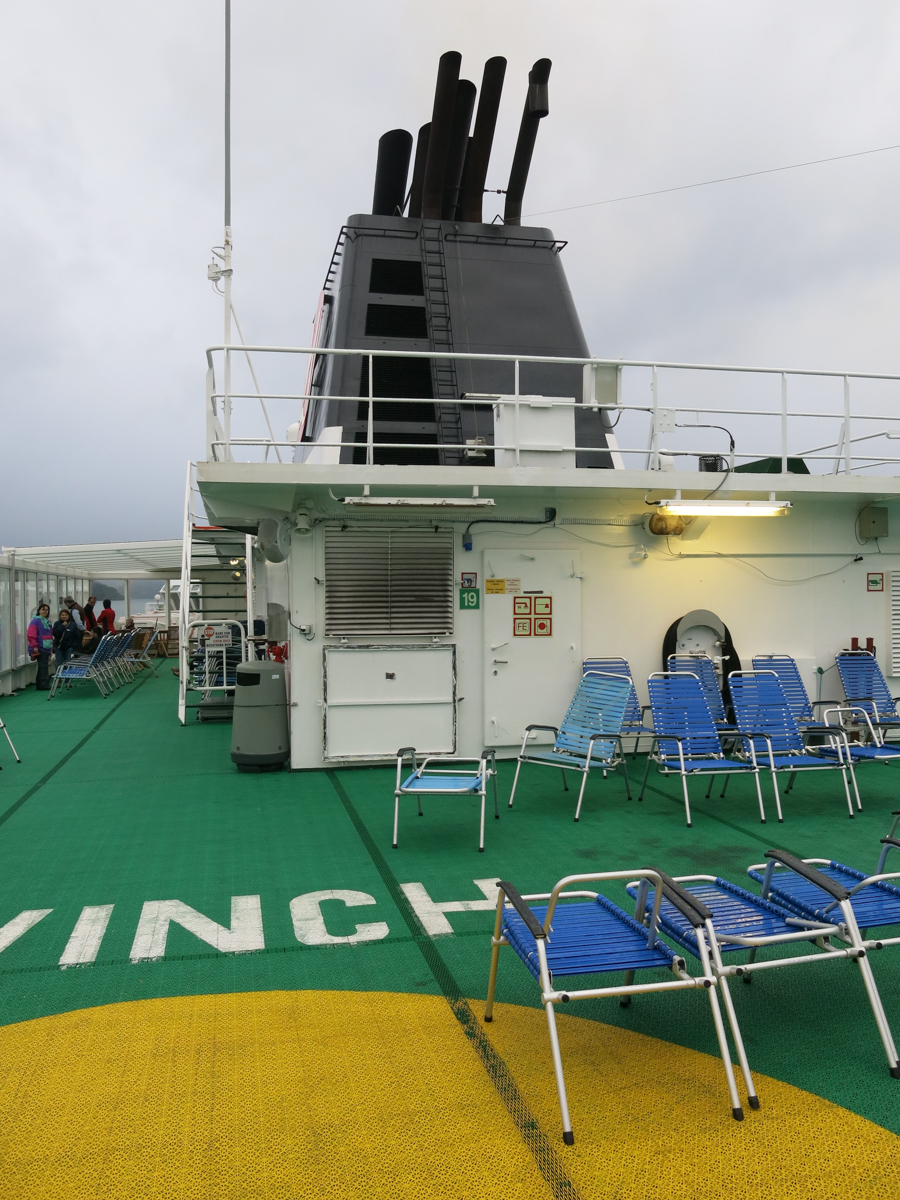
upper viewing deck

Typical Norwegian Fishing Hamlet in the fjords
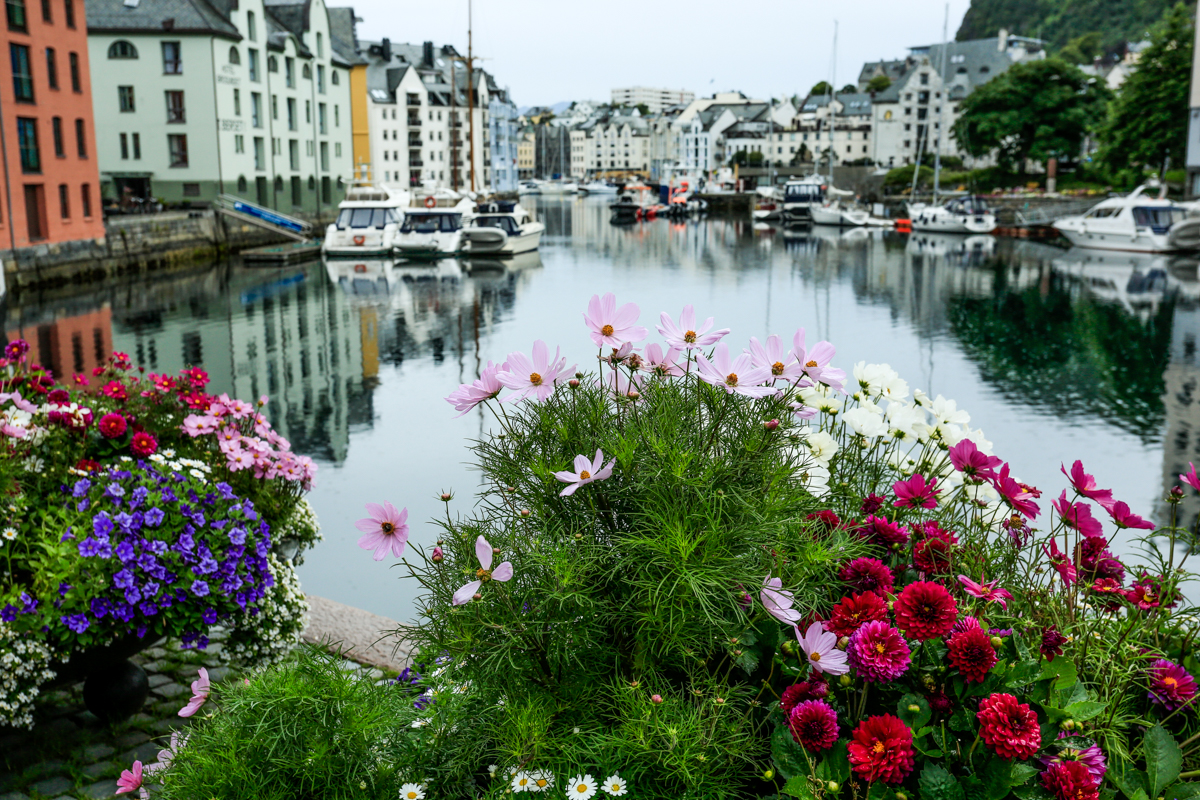
Ålesund
Ålesund is the jewel of the mid-Norwegian coast. The town was almost destroyed by fire in 1904 and rebuilt almost simultaneously in Art Nouveau style, creating one of the most architecturally coherent townscapes in the country. Set on a narrow peninsula between two fjords, it's small enough to walk in an hour or two — but that hour is one of the most photogenic in Norway.
The cruise docks for a few hours, enough to walk the main street, climb the 418 steps up Aksla hill for the panoramic view, and have a coffee. If your schedule allows a longer stop, Ålesund deserves it.

Alesund
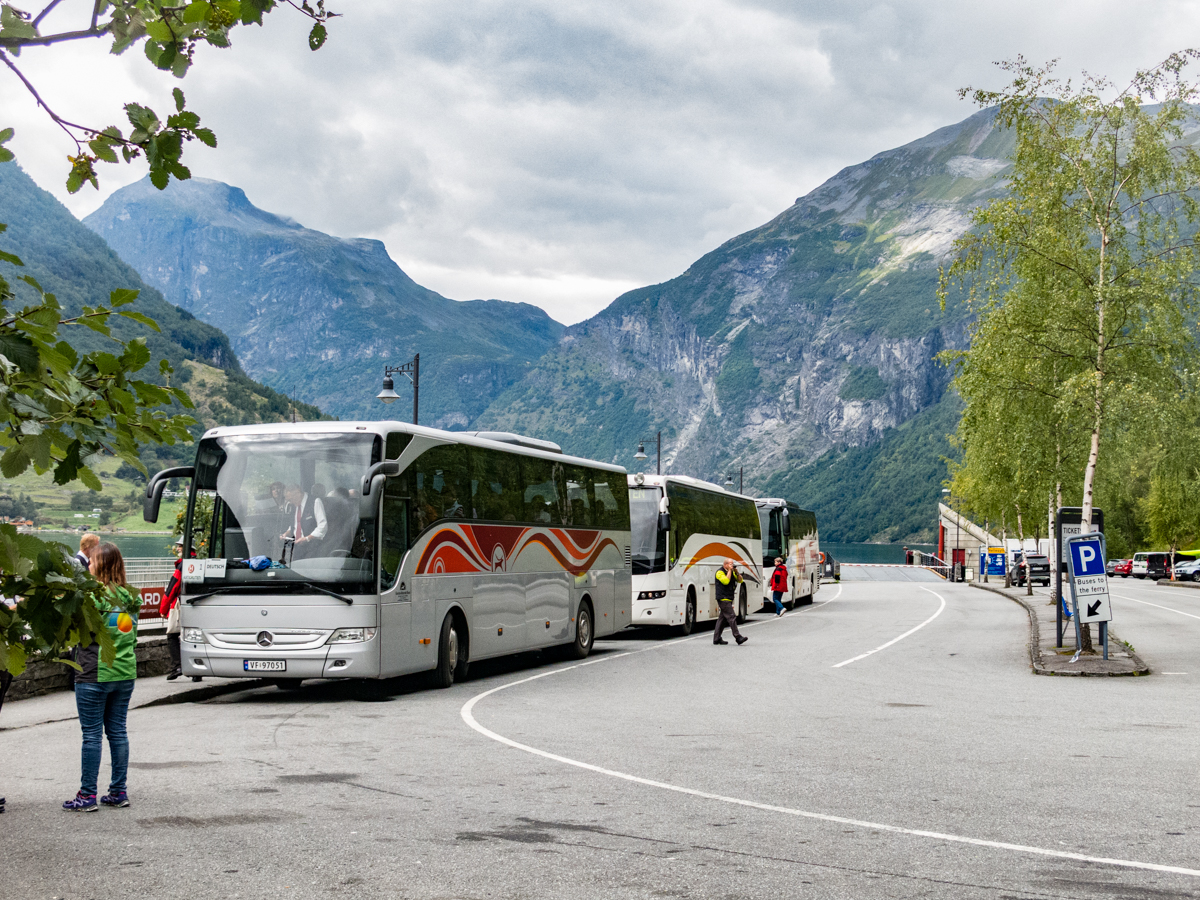
Coaches Ready to take Cruise Passengers on a day trip Day Trip: Trollstigen and Hardangerfjord
Hurtigruten offers shore excursions that depart during port stops; I took a full-day coach tour from Ålesund that went through the Hardangerfjord area and included a stop at Trollstigen (the Troll's Path) — a dramatically serpentine mountain road with 11 hairpin bends carved into a near-vertical rock face, with a waterfall tumbling alongside it. The visitor centre at the top is well-designed and the view is genuinely breathtaking.
These excursions are pricier than doing things independently, but the logistics on a tight cruise schedule make them worth it.

View of Hardengerfjord from a view point.

Near Trollstigen Pass

Visitor Center and Curio Shop at Trollstigen Pass

Trondheim Walkway
The third-largest city in Norway, Trondheim served as the capital of Viking-era Norway and is home to Nidaros Cathedral — the northernmost medieval cathedral in the world and the traditional coronation site of Norwegian monarchs. The old wooden Bryggen-style district on Nedre Elvehavn is excellent for a walk, and the city has a lively student culture thanks to NTNU (the Norwegian University of Science and Technology). I had one night here before flying on to Stockholm, which was barely enough — Trondheim rewards at least two days.
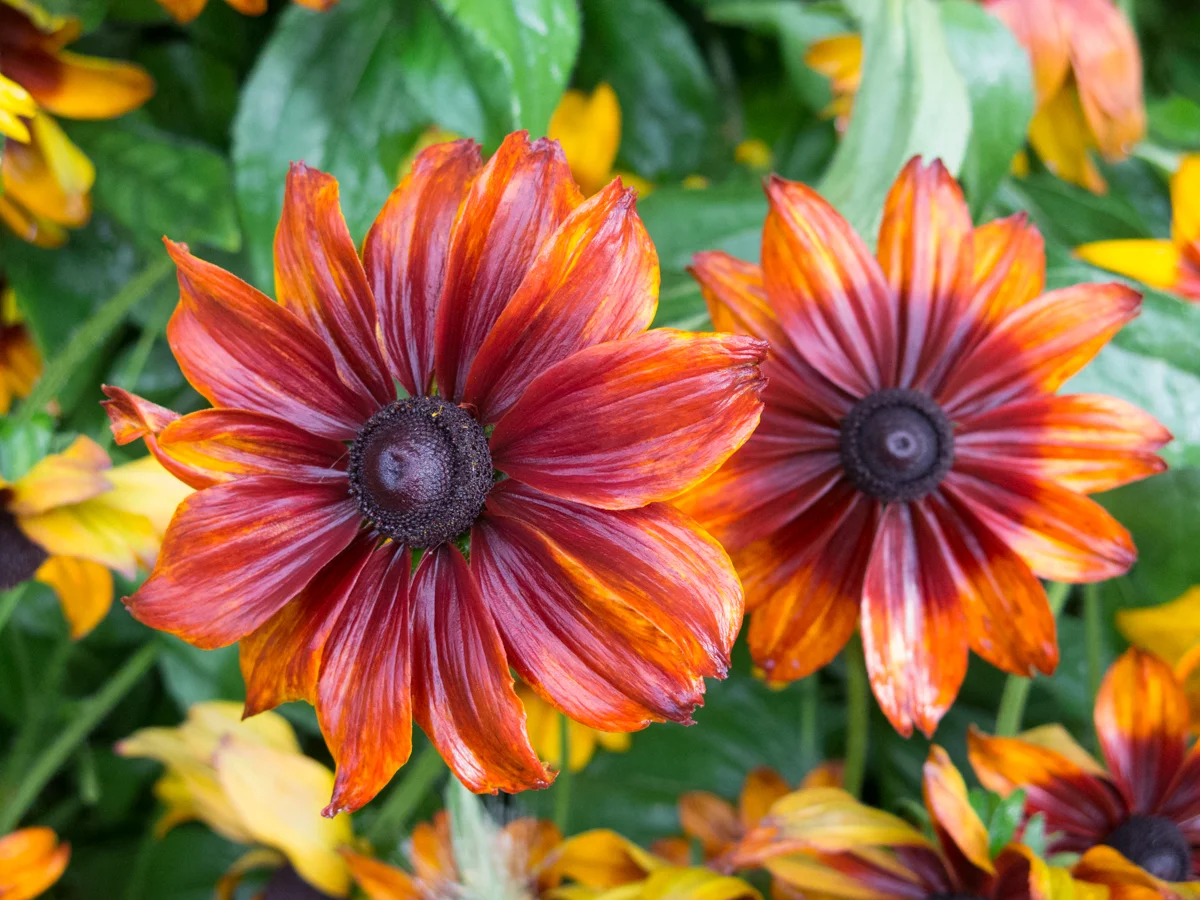
Summer Flowers at Trondheim

Trondheim Scene
At Trondheim I parted with the Cruise and rested for a night before flying on to Stockholm.
STOCKHOLM, SWEDEN
Stockholm is built across 14 islands where Lake Mälaren meets the Baltic Sea, and the city never lets you forget it — water is visible from almost everywhere, and the light here has a particular northern quality that makes it a photographer's city in a way that's hard to explain until you see it.
Where to Stay at Stockholm
Stockholm's best-located neighbourhood for first-time visitors is Norrmalm (around the central station) or Södermalm(Stockholm's most characterful island, with independent restaurants and a creative scene).
Luxury
Berns Hotel — legendary Stockholm address, Art Nouveau ballroom, central location
At Six — the city's best design hotel, in Norrmalm
Radisson Blu Waterfront Hotel — strong views and direct access to the central station
Mid-Range
Hotel Skeppsholmen — on its own island, surrounded by water, excellent restaurant
Miss Clara by Nobis — in a converted school building; good Östermalm location
Budget
Scandic Upplandsgatan — reliable, well-located, straightforward
Bed & Breakfast 66 — good reviews, Södermalm location
Getting around Stockholm
Stockholm's public transport system (SL) is excellent and includes the Metro, buses, trams, and some ferries on a single integrated ticket. Single tickets are valid for 75 minutes; day and multi-day passes are available through the SL app or at ticket terminals. Important: cash is not accepted on buses or trams. Failing to present a valid ticket during inspection carries a SEK 1,500 fine.
The Stockholm Metro (T-bana) is genuinely one of the world's great underground systems — more on that below.
By Boat: The ferry network across the islands is one of the most pleasant ways to move around the city; the same SL tickets work here too. Routes from Nybroviken and Djurgården are the most useful for tourists.
Cycling: Stockholm has expanded its cycling infrastructure significantly in recent years. City Bikes (citybikes.se) operates seasonal stations across the city; Voi and Tier scooters are also widely available.

Riding the Stockholm Subway
Photo Ops in Stockholm
Stockholm Waterfront

Stockholm Harbour and Traditional Sailing Ship
Gamla Stan (The Old Town)
Founded in 1252, Gamla Stan is one of the best-preserved medieval city centres in Europe. The main streets — Västerlånggatan and Österlånggatan — are lined with amber and terracotta buildings, craft shops, and restaurants; the side alleys, some barely wide enough for two people, lead you past iron doors and cobbled courtyards that feel genuinely unchanged. It's unavoidably touristy on summer afternoons; go early morning for the full effect.
The Royal Palace (Kungliga Slottet) is one of the largest palaces in the world still used for its intended purpose, and several of its museums are open to visitors — the Treasury, the Royal Armoury, and the State Apartments.
Stortorget, the main square, is one of the most photographed in Scandinavia. Its coloured facades are best shot on a cloudy day.

Gamla Stan Old Town
Gamla Stan, the Old Town, is one of the largest and best preserved medieval city centers in Europe, and one of the foremost attractions in Stockholm. This is where Stockholm was founded in 1252.

Gamla Stan (Old Town)
All of Gamla Stan and the adjacent island of Riddarholmen are like a living pedestrian-friendly museum full of sights, attractions, restaurants, cafés, bars, and places to shop. Gamla Stan is also popular with aficionados of handicrafts, curious, and souvenirs.

Street in Gamla Stan
I walked around, taking in the sights and capturing images in Gamla StanVästerlånggatan, Gamla Stan's main pedestrian thoroughfare, with the copper-green tower of Storkyrkan (Stockholm's Cathedral, consecrated in 1306) rising above the roofline. The street has been a trading route since the 13th century — the ochre and terracotta facades lining it today date largely from the 17th and 18th centuries, built on medieval foundations that have never moved. Storkyrkan is where Swedish monarchs have been married and crowned for seven centuries; the street below it still sells everything from handmade jewellery to elk leather.
The Stockholm Underground Art
Stockholm’s subway system is truly one of a kind. One hundred stations, each with unique art on its platform, walls or waiting hall. Since 1957 artists have played a key role when new stations have been built.

T-Centralen (Blue Line) T-Centralen, Stockholm's main interchange station, where Per Olof Ultvedt's sweeping blue vine motifs cover every surface of the raw rock ceiling — a design that has defined the T-bana's visual identity since 1975. This is where most visitors get their first glimpse of what Stockholm means when it calls its metro "the world's longest art gallery."
And over time the metro’s older stations – planned and built without any art – have been spruced up with beautiful statues, murals, and installations.

Kungsträdgården (Blue Line)
The deepest station on the blue line, Kungsträdgården sits 30 metres below street level in a cavern that was carved through what turned out to be the site of a 16th-century royal garden. Rather than erase the history, the designers leaned into it — sculptor Ulrik Samuelson filled the tunnels with ancient artefacts, mythological figures, and a ceiling painted like a Renaissance fresco, all set against exposed bedrock walls. No two sections look the same.

Rådhuset (Blue Line)
Rådhuset offers possibly the most dramatic arrival of any station on the T-bana — a vast cathedral of warm amber rock, the bare granite walls left deliberately unfinished and lit to glow like embers. Opened in 1975, it remains one of the purest examples of the T-bana's founding philosophy: that the tunnel wall itself is the canvas.
Stockholm Sightseeing Canal Boat

One of Stockholm Sightseeing's classic canal vessels moored on the Strömmen waterway, with Södermalm's waterfront and the Engelbrekts column rising behind. Stockholm's geography — 14 islands connected by 57 bridges — means that a canal tour isn't just sightseeing; it's genuinely one of the best ways to understand how the city fits together. The historical guided route covers everything from the Royal Palace to the Vasa Museum in about 50 minutes.
Fotografiska, Södermalm

Fotografiska, Stockholm, Possibly the worlds best photography Gallery
The former customs house on Stadsgårdshamnen that became one of the world's most visited photography galleries when Fotografiska opened here in 2010. The 1906 brick building sits hard against the Södermalm cliff face, which gives the exterior its distinctive compressed, theatrical quality — all industrial red brick, bare rock, and bicycle-stacked cobblestones. Inside, four floors of rotating exhibitions cover the full spectrum from documentary photography to fine art. The rooftop restaurant, with views across the water to Gamla Stan, is reason enough to visit even between shows

Inside Fotografiska
2025 note: Fotografiska has expanded to New York, London, Berlin, and Tallinn since my original visit, but the Stockholm location remains the flagship. Check the current programme at fotografiska.com — exhibitions change roughly every two months and booking ahead is recommended.
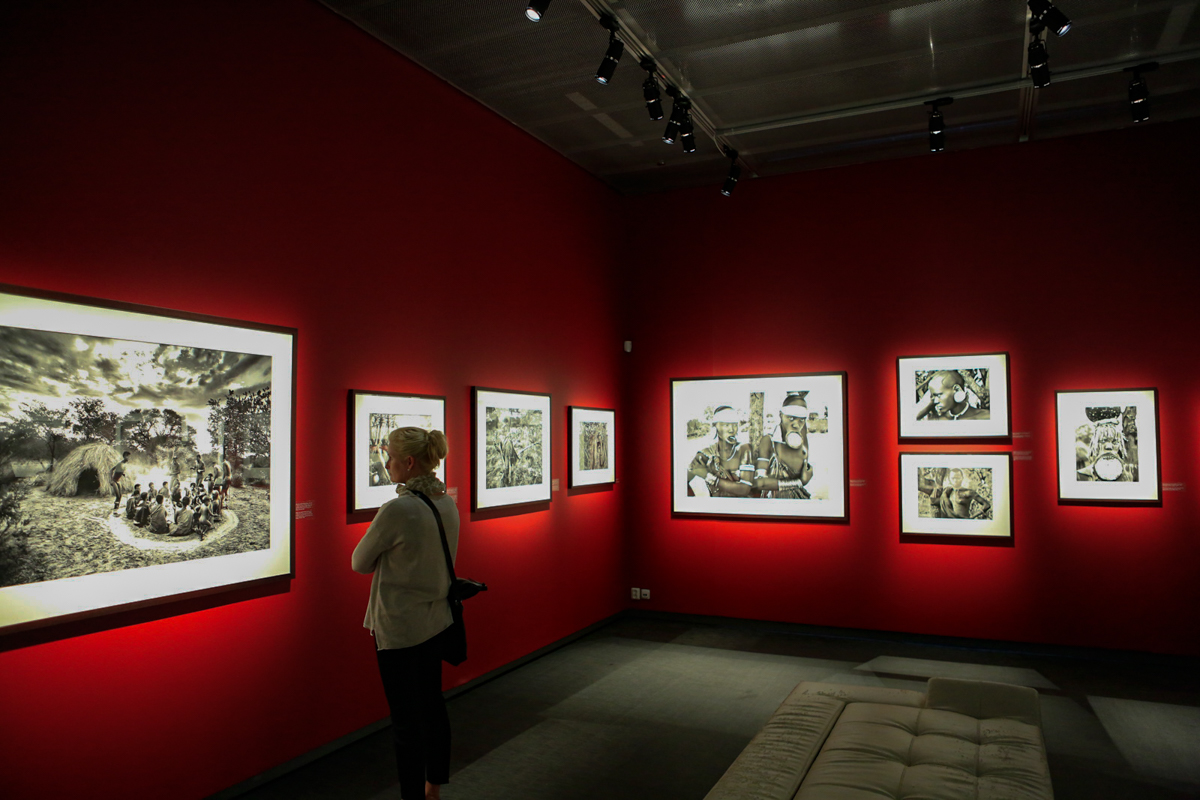
Exhibit of Sebastiao Selgado’s Genesis at Fotografiska
Södermalm
Stockholm's most livable island is where the city's independent restaurants, design shops, coffee roasters, and vintage stores have concentrated. The Monteliusvägen cliff path offers sweeping views over Gamla Stan and the waterfront. Boutiques and vintage shops on Götgatan and the surrounding streets are worth an afternoon.
Camera Gear Suggestions for this Trip
If I were packing for a Scandinavian trip today, I'd likely travel with a mirrorless system — the Sony A7 series or Canon R5 — for the weight reduction on a trip that involves a lot of walking. A 24–70mm and a 70–200mm cover most situations. Neutral density filters are worth having for the waterfall shots around Bergen and the fjords.
Scandinavia light summary: Summer light is extraordinary — golden hours run from around 9pm to nearly 11pm in June, and civil twilight never fully ends at the higher latitudes. This means soft, directional light at hours when most tourist sites are quiet. Plan your key shots for evening. Winter brings the reverse: short days but potentially aurora borealis, and the snow-covered wooden houses in Bergen are a different kind of spectacular.
Curated Camera Gear based on Photographer type
Point and Shoot - Canon PowerShot G7 X Mark III
Amateur - Sony Alpha 7CⅡ
Pro - Canon EOS R6 Mark II
Video - Panasonic Lumix S9,
Vlogging - DJI Osmo Pocket 3 Creator Combo Kit
Practical Information (Updated 2025)
When to Go
June–August is the most popular period: long daylight hours, mild temperatures (15–25°C), all attractions open. Bergen and coastal Norway can see rain at any time; pack layers regardless.
September–October offers fewer crowds, beautiful autumn colours (particularly around Bergen and the fjords), and still reasonable weather.
November–March brings the possibility of northern lights in Bergen and especially in Trondheim and further north; expect short days and cold temperatures. Stockholm's Christmas markets are excellent from late November.
Currency
Denmark uses the Danish Krone (DKK). Norway uses the Norwegian Krone (NOK). Sweden uses the Swedish Krona (SEK). All three countries are almost entirely cashless in practice — cards (contactless) are accepted everywhere. There is no need to carry significant cash for any of these destinations in 2025.
Costs
Scandinavia is expensive. Budget roughly:
Copenhagen: €200–300/night for a mid-range hotel, €30–50 for a restaurant main
Bergen: €180–280/night for a mid-range hotel, similar food costs
Stockholm: €180–260/night for a mid-range hotel, slightly lower food costs than Norway
The Oslo Pass, Copenhagen Card, and Stockholm Pass can provide meaningful savings if you plan to use public transport heavily and visit multiple paid attractions.
Visa
Scandinavia is part of the Schengen Area. Citizens of the EU, US, UK, Australia, Canada, and most GCC countries can enter without a visa for up to 90 days. The EU's ETIAS travel authorisation system is now required for certain non-EU nationalities — check current requirements at etias.com before travel.
Connectivity
SIM cards or eSIMs from providers like Airalo, Holafly, or local providers (Telia, Telenor) provide affordable data across all three countries. EU roaming rules mean that EU SIMs work across all three Scandinavian countries at no extra cost.
Final Thoughts
Two weeks is barely a preview of what Scandinavia offers — and that's exactly how this trip was designed. I came away with a long list of return-trip items: the full Hurtigruten voyage from Bergen to Kirkenes, the Lofoten Islands in winter, the Stockholm archipelago by kayak, the Norwegian Scenic Routes by car. The region rewards slow travel and multiple visits.
If you're planning your first trip and have limited time, the Copenhagen–Bergen–Hurtigruten–Stockholm circuit is a genuinely strong introduction. It covers three distinct countries, two major cities, and one of the great landscape experiences in Europe without requiring too much logistics.
Bring a good camera. The light here will use it well.
All images © Kamal Chilaka Photography.
Gear used: Canon 5D Mark III, Canon 17–40mm f/4L, Canon 70–200mm f/2.8L IS, Canon G12, Gitzo tripod, Arca Swiss C1 head.