Fine Art Landscape Photography for the Dubai Home: What Collectors and Decorators Need to Know

Scene from New England in Fall
If you're looking for original art to transform your walls, fine art landscape photography offers something that interior design trends come and go but never quite replace — a window into the world's most breathtaking places, made permanent. For art collectors and home decorators in Dubai, the opportunity to own world-class landscape photography has never been more accessible.
This guide walks you through what to look for, how to choose the right piece for your space, and why original landscape photography from around the world belongs on your walls.
Why Landscape Photography is Having Its Moment in Interior Design
Walk through any seriously considered home in Dubai today — in Emirates Hills, Palm Jumeirah, or a penthouse in Downtown — and you'll notice a shift. Generic canvas prints and mass-produced wall art are being replaced by something more considered. Art collectors and discerning decorators are turning to original fine art photography, and landscape work in particular, because it does something no other medium quite manages.
It brings the world inside.
A single large-format photograph of Iceland's volcanic coastline, the ancient forests of the Pacific Northwest, or the golden light falling across the Scottish Highlands can entirely define a room. It creates depth, atmosphere, and conversation. It reflects the taste and curiosity of the person who chose it. And unlike a decorative print, it holds its value.
What Sets Fine Art Landscape Photography Apart
Not all photography sold as wall art is created equal, and the distinction matters — both for your enjoyment and for the long-term value of your purchase.
Fine art landscape photography is made with deliberate artistic intent. The photographer is not simply documenting a place. They are interpreting it — using light, timing, composition, and years of craft to distil a location into a single, emotionally resonant image. Every decision, from standing in freezing water before dawn to the final colour grade of the print, is intentional.
Limited editions are the foundation of fine art photography's value. Serious photographers limit each image to a small number of prints — typically between 5 and 25 worldwide. Once an edition is sold out, it is closed permanently. Your print is not one of thousands; it is one of a handful in existence.
Archival print quality means your photograph will outlast you. Museum-grade pigment inks on acid-free papers or aluminium substrates are engineered to resist fading for over a century. This is categorically different from the printing processes used for commercial posters or décor prints.
Artist oversight ensures that what arrives on your wall matches the photographer's creative vision exactly. Colour, contrast, and finish are not delegated — they are controlled.
Provenance documentation — a signed certificate of authenticity, edition number, and full details of the work — gives you confidence in your purchase and is essential if you ever wish to resell or insure the piece.
Landscapes From Around the World: What to Look For
One of the great privileges of collecting landscape photography is that geography is no barrier. Some of the world's most extraordinary environments have been captured by photographers who have spent years — in some cases decades — seeking out conditions most people will never witness. As a collector or decorator, you have access to all of it.
Here are some of the landscape environments that translate most powerfully into interior spaces.
High Altitude and Desert Plateaus Places like Ladakh in northern India sit at the edge of what feels inhabitable — vast, silent, and lit by a quality of sun that exists nowhere at lower elevations. Photographs from these environments carry an otherworldly stillness that works powerfully in large format, particularly in minimalist, contemporary interiors where the image is given space to breathe.
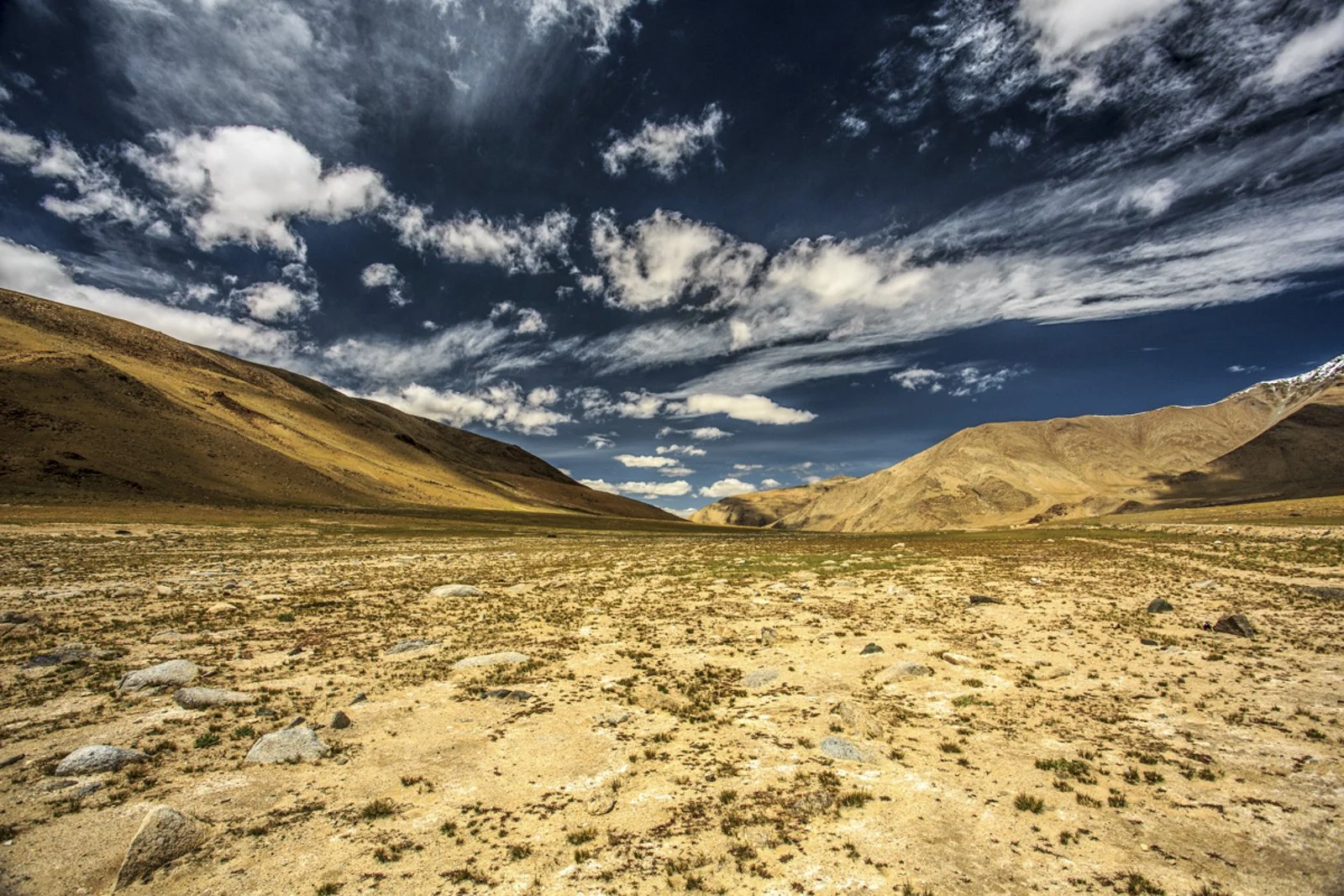
Scene from Ladakh Plateau
Autumn Forests and Seasonal Colour Few natural spectacles match the deciduous forests of New England in autumn. The colour range — from deep amber through burnt orange to blazing crimson — produces images of extraordinary warmth and richness. These prints bring life and depth into rooms that lean toward neutral tones and natural materials.
Autumn Scene from New England
Ancient Cultural Landscapes Japan's temple towns, photographed during cherry blossom season, offer something rare in landscape work — a sense of place that is simultaneously natural and deeply human. These images carry an emotional resonance that appeals to collectors drawn to beauty with cultural weight behind it.
Epic Wilderness New Zealand, the Pacific Northwest, and the Canadian Rockies around Banff represent landscape photography at its most commanding. Turquoise glacier lakes, ancient forests disappearing into mist, coastlines of raw and elemental drama. These are images that define a room rather than simply fill a wall, and they reward the commitment to large-format printing.
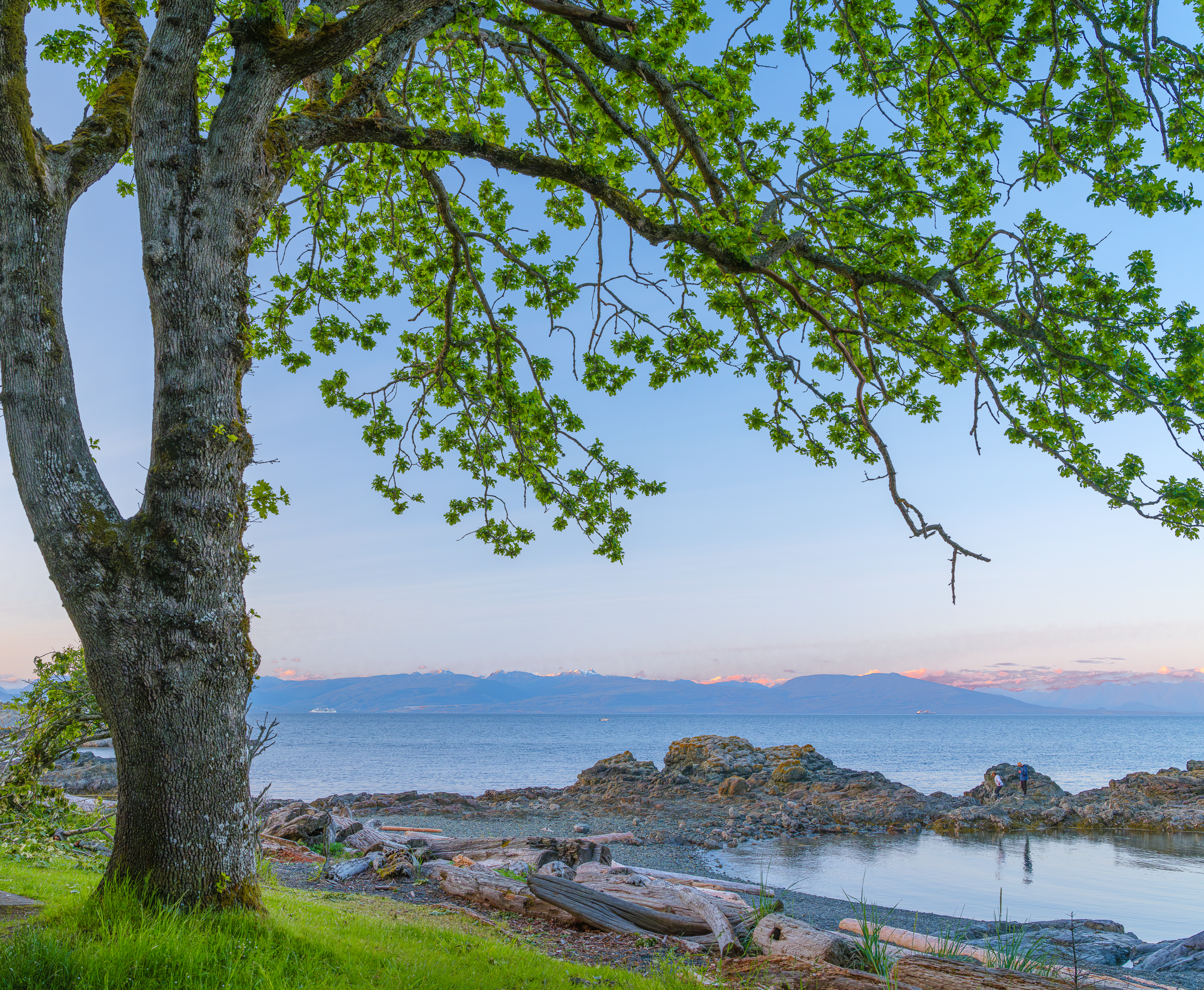
Scene from Vancouver Island, BC, Canada
Agricultural and Rolling Landscapes The Palouse region of Washington State is less immediately obvious than a mountain panorama or a dramatic coastline, but it is among the most visually seductive landscapes on earth. Rolling wheat fields ripple with colour and texture in a way that feels closer to painting than photography. These images work beautifully in both residential and commercial spaces, and tend to appeal strongly to collectors who want something quietly extraordinary rather than overtly dramatic.

Abstract Landscape from Washington, USA
How to Choose the Right Landscape Print for Your Space
Collecting art and decorating with it are not mutually exclusive, and making a considered choice means thinking about both.
Start with the room. What is the wall space you are working with? What are the dominant colours, materials, and light conditions? A high-contrast, graphically strong image — a black and white seascape or a deep-toned forest — can anchor a neutral, contemporary space. A warmer, colour-rich landscape might be the natural choice for a room with rich wood tones or warm textiles.
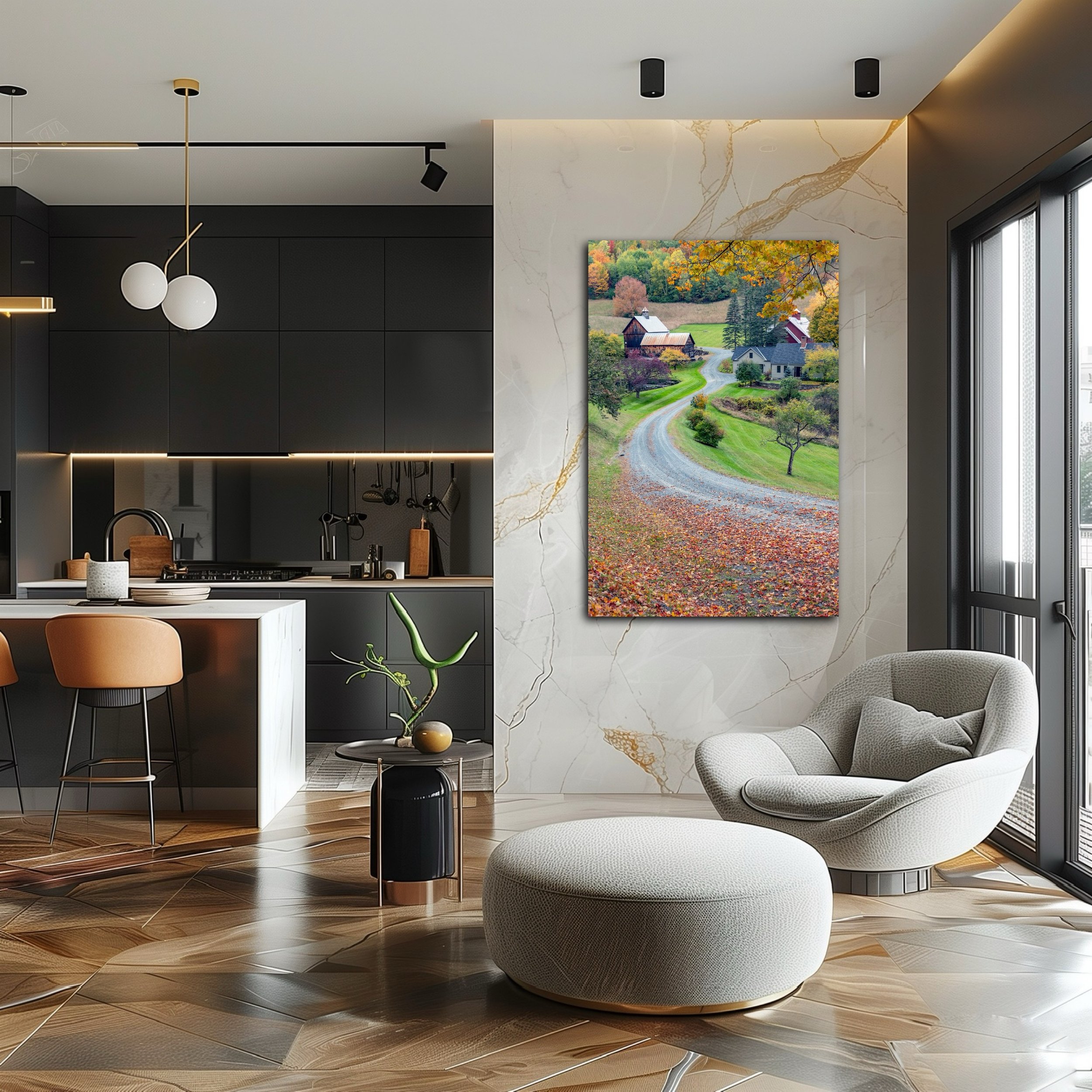
Commit to scale. This is the single most common mistake in buying photography for the home. Prints that look generous online often arrive and disappear on a wall. In most living spaces, a landscape photograph needs to be at least 100cm wide to command the wall. Many of the most successful installations I see are considerably larger — 150cm, 180cm, or running the full width of a feature wall as a diptych or triptych.

Sunset Scene from Vermont, USA
Choose your substrate thoughtfully. The material a photograph is printed on significantly changes the experience of looking at it.
Fine art paper (matte or satin finish) has a classical, gallery-quality. It suits almost any interior and tends to appeal to traditional collectors.
Acrylic (Diasec) produces extraordinary colour depth. The image appears luminous, almost three-dimensional. It suits modern, high-specification interiors and works powerfully in spaces with strong architectural lines.
Aluminum (metal print) is clean, contemporary, and exceptionally durable. It suits commercial spaces, modern apartments, and any environment where a frameless, flush aesthetic is preferred.
Canvas brings warmth and texture. It softens the photograph's precision slightly, lending it a quality closer to painting. It appeals to buyers who want the authenticity of photography with the tactile warmth of a more traditional medium.
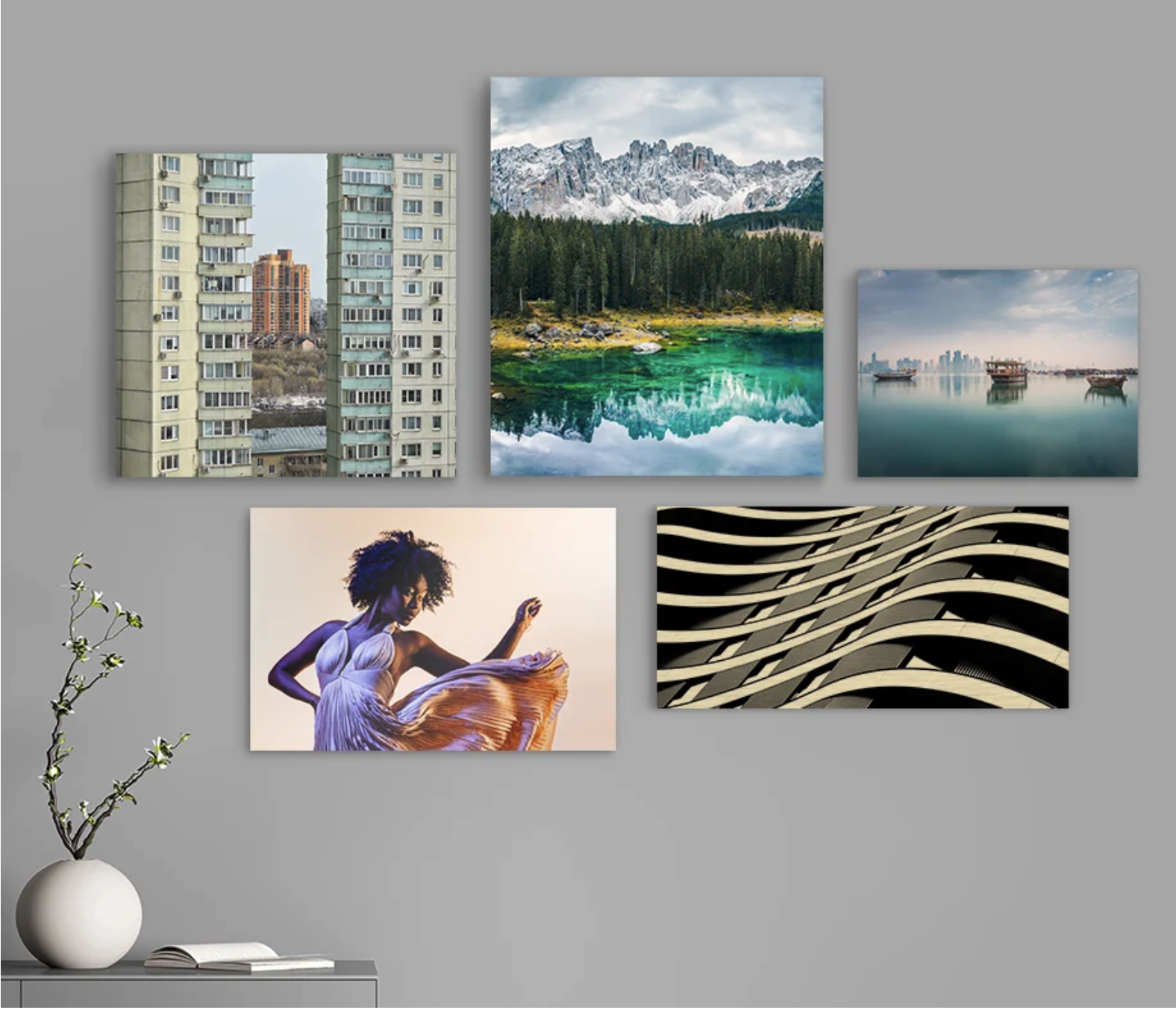
Choose the right Print Medium
Think about the story you want your walls to tell. The most thoughtfully decorated homes I encounter have a curatorial logic. The art doesn't match the sofa — it reflects the owner's world, interests, and experiences. A collection of landscape photographs from places you have visited, or places you are drawn to, creates a deeply personal environment that no interior designer working from a catalogue can replicate.
For Art Collectors: Why Fine Art Photography Deserves a Place in Your Collection
Photography has been accepted as a serious fine art medium for decades, and the secondary market for landscape photography by established artists is robust and growing. Prints by recognized photographers regularly sell at auction for multiples of their original issue price.
The key factors that drive value are the ones already discussed — limited editions, print quality, provenance, and the photographer's reputation. But there is something else worth noting: landscape photography, perhaps more than any other photographic genre, tends to appreciate in cultural significance over time. An image of a glacier that no longer exists, a coastline changed by development, or a landscape captured in light conditions that may never recur — these images accrue meaning as the world changes around them.
Buying early in a photographer's career, when editions are still available, and prices reflect potential rather than established reputation, has historically been one of the most rewarding strategies for photography collectors.
Bringing It Together: Original Art for a Home That Reflects the World
Dubai is one of the most internationally connected cities on earth. Its residents have lived, travelled, and been shaped by places across every continent. The walls of a home here can — and should — reflect that breadth.
Original fine art landscape photography from around the world offers the most direct way to bring that experience into your living space. Not as a postcard or a memory aid, but as a genuine work of art — made with craft, printed with precision, and chosen with intention.
If you'd like to explore available works, discuss a specific location or environment you're drawn to, or talk through the right scale and substrate for your space, I'd love to hear from you.
The world is a remarkable place. Your walls should show it.
All prints of my prints are produced as strictly limited editions on museum-grade archival materials and come with a signed certificate of authenticity. Commissions and bespoke consultations are available on request. KC
